
Non-FictionBusiness BriefOrganizationMoving
Downsizing Possessions Timeline Manual eBook
Create a twelve month decluttering schedule, value
Create a twelve month decluttering schedule, value items for sale, and coordinate donation logistics before moving.
Formats
Free sample
Chapter 1: The Reverse Procurement Mindset––You are about to make a mistake. Not a small one—a costly, exhausting, and entirely avoidable error that millions of people make every year when they downsize for a move. You will pack boxes you never open. You will pay movers to transport furniture you don’t have room for. You will stand in your new home, surrounded by cardboard, and wonder why you brought that bread maker from 2007 or the dining table that blocks the kitchen doorway.The mistake is this: you are thinking like a shopper when you need to think like a liquidator.For your entire adult life, you have been trained to acquire.
You see a clearance tag, and your brain releases dopamine. You inherit your grandmother’s china, and guilt forbids you from releasing it. You keep “just in case” items because letting go feels like waste. These are the instincts of a procurement mindset—the endless accumulation of things.Downsizing for a move requires the opposite. You must become a ruthless editor of your own life’s acquisitions.
Every item you decide to keep will be handled, lifted, packed, loaded, driven, unloaded, carried, and unpacked. That process costs money, time, and physical energy. Most people calculate moving costs by truck size or number of bedrooms. That is like calculating the cost of a restaurant meal by the number of plates—technically related but missing the real expense.The real expense is what this chapter calls the Reverse Procurement Mindset. You are not moving to a new home.
You are conducting a final audit of a lifetime of purchasing decisions. And the auditor’s job is not to justify keeping things. The auditor’s job is to ask one uncomfortable question about every object you own: Does this item deserve to earn its place in your future home, or is it merely surviving on past momentum?This chapter will rewire your decision-making instincts before you touch a single box. You will learn two powerful financial metrics—the One Square Foot Rule and the Carrying Cost of Clutter—that strip away sentimental fog and reveal the true cost of keeping anything. You will calculate the hidden moving tax you have been ignoring.
And you will create a Moving Budget of Space that acts as your constitution for the next eleven months.By the end of this chapter, you will see your possessions not as memories or investments or potential future projects, but as cargo. And you will finally understand that the cheapest thing to move is the thing you leave behind.The Fundamental Error of Spring Cleaning Thinking Most people approach downsizing as a slightly more intense version of spring cleaning. They start in the garage on a Saturday morning. They fill three trash bags. They feel virtuous.
Then they repeat the process every weekend until moving day, never making a dent in the total volume because they are only skimming the surface.Spring cleaning is about removing obvious dirt, expired food, and broken items. It is maintenance. Downsizing for a move is about removing functional possessions that no longer serve your future life. That is not maintenance. That is surgery.The difference matters because surgery requires a different mental state.
When you spring clean, you look for reasons to throw away. When you downsize for a move, you must look for reasons to keep. And the default answer should be no.Consider the kitchen drawer full of takeout menus. In spring cleaning, you might keep them “just in case” you order from that Thai place again. In downsizing, you realize that every menu takes up space that could hold something you actually use.
More importantly, every menu adds weight to the moving truck. Weight costs money. That Thai menu might cost you fifty cents to move. Multiply by fifty menus, and you have paid twenty-five dollars to transport paper you could reprint from the internet.This is the shift: from “can I use this someday?” to “is this worth the cost of moving it?”The reverse procurement mindset means you stop asking what an item is worth to you emotionally and start asking what it will cost you to keep. Those are two different numbers.
And for most of your possessions, the cost to keep will far exceed the value you receive.The One Square Foot Rule: Your New Home Has a Price Per Inch Here is the most important financial concept you will learn in this book. It is simple enough to calculate on a napkin but powerful enough to change how you see every piece of furniture you own.Your new home has a cost per square foot. You probably know this number already—it is the purchase price or annual rent divided by the square footage. If you bought a 1,500-square-foot home for $300,000, your cost per square foot is $200. If you rent a 1,000-square-foot apartment for $24,000 per year, your cost per square foot is $24.Most people think of this number only when comparing real estate deals.
They never apply it to their possessions. That is a mistake.Every item you bring into your new home occupies square footage. A dresser that is three feet wide and two feet deep occupies six square feet. At $200 per square foot, that dresser is consuming $1,200 worth of your new home’s value. Not the dresser’s value—the space’s value.
You are paying $1,200 (either in mortgage or in lost opportunity cost) to store that dresser.Now ask yourself: Is that dresser worth $1,200 to you? Would you pay $1,200 today to own it? If the answer is no, you should not move it.This rule exposes the lie of “free” furniture. That coffee table your friend gave you for free is not free anymore. It will cost you square footage in your new home.
If it occupies four square feet at $200 per square foot, that “free” table costs you $800. You could buy a smaller, better-fitting table for less.Apply the One Square Foot Rule to everything large: sofas, beds, desks, bookshelves, exercise equipment, entertainment centers, dining tables, and area rugs. For each item, calculate its footprint (length times width in feet). Multiply by your new home’s cost per square foot. If the result exceeds what you would pay to buy that item new today, do not move it.This rule is not theoretical.
I have watched people spend $2,000 to move a sectional sofa that cost $1,200 new and did not fit through the new apartment door. They paid more in moving costs than the sofa was worth, then paid again to have it hauled away. The One Square Foot Rule would have told them to donate it before the movers arrived.The Carrying Cost of Clutter: Weight, Labor, and the Hidden Moving Tax Square footage is not the only cost. Movers charge by weight. Every pound you move costs between fifty cents and one dollar, depending on distance, fuel prices, and whether you hire full-service movers or rent a truck.That does not sound like much.
But pounds add up faster than you think. A standard bookcase filled with hardcovers weighs 200 pounds. That is $100 to $200 just to move…
This is the end of the free sample. Get the eBook to keep going. Buy now
About this book
Details
- Author
- Baumann Tierra
- Publisher
- SamEnrico
- Language
- English
- Genre
- Non-Fiction, Business Brief, Organization, Moving
- Released
- 2026-06-09
- Pages (approx.)
- 157
- Available as
- eBook, Audiobook

Read better in the ZLOADR app
Your eBooks on your phone or tablet. Sign in with your SamEnrico account and start reading.
More by Baumann Tierra
 Difficult Talks with ContractorsBaumann Tierra$11.99
 Digital Planner Etsy Shop Launch GuideBaumann Tierra$11.99
 Sleep and Depression MemoryBaumann Tierra$11.99
 Sulfa Drugs First AntibioticsBaumann Tierra$11.99
 Whispers from the Hypnogogic VoidBaumann Tierra$11.99
 Bones & Badges: The Unsolved Mystery of the Saddle Ridge HoardBaumann Tierra$11.99
 Understanding Cholestasis, Progressive Familial Intrahepatic 2Baumann Tierra$17.99
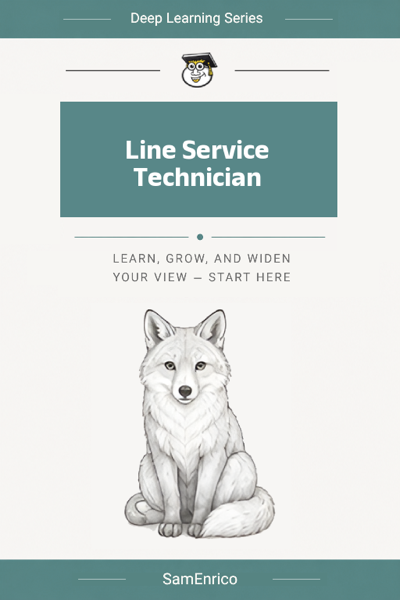 Line Service TechnicianBaumann Tierra$11.99
 Support Group as Board MemberBaumann Tierra$12.99
 Global Team Wiki Best PracticesBaumann Tierra$12.99
 Ultimate Handbook Guide to Panjin : (China) Travel GuideBaumann Tierra$11.99
You may also like
 Hong Kong Handover 1997Dunn Johnnie$11.99
 Zumba For Postnatal Recovery CourseNeal Christian$11.99
 Zumba for BeginnersLadner Nikia$11.99
 YouTube Comment Mining GuideHumes Pandora$12.99
 Worry Box MeditationCarlin Rudy$11.99
 Workplace Stress MeditationNguyen Lynn$11.99
 Workplace Stress and Sleep RepairHawley Ivory$11.99
 Workplace Perfectionism CureDelaney Jeffry$11.99
 Workplace Injustice Anger GuideWallen Isabelle$11.99
 Work Addiction and Burnout LinkGreenwood Ester$11.99
 Women in Yoga and WellnessBeattie Galina$11.99
 Women in Stand Up ComedyChun Evangeline$11.99