
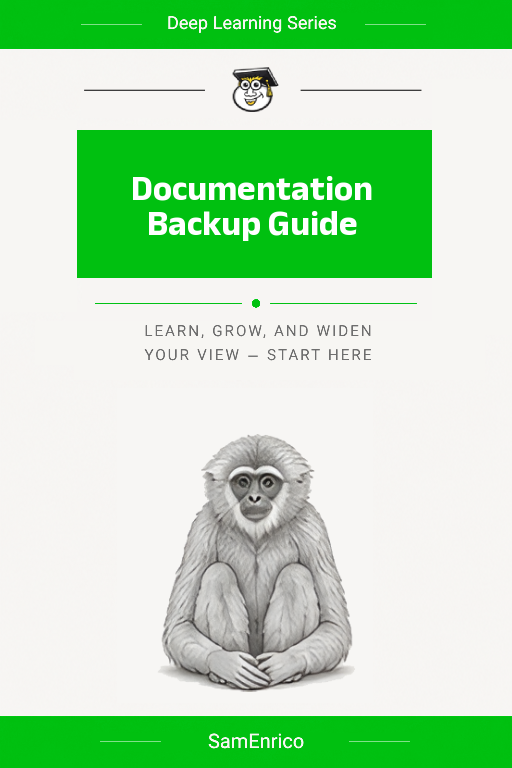
Documentation Backup Guide eBook
Store digital and physical copies of critical docu
Store digital and physical copies of critical documents outside the unstable country.
Formats
Free sample
Chapter 1: The 3AM Embassy Nightmare...--–- The call always comes at 3 AM. Not at noon when you're alert, not at 6 PM when you can still find a flight. It comes at 3 AM because that is when the world's worst things happen—when embassies are closed, when banks are frozen, when the only sound is your own heartbeat and the crackle of a bad connection telling you that everything you thought was safe is gone.Elena Marquez learned this on a Tuesday in August. She was a dual citizen—American by birth, Venezuelan by marriage—living in Caracas with her husband and two children. Like many expats, she kept her important documents in a fireproof safe bolted to the floor of her bedroom closet.
Her passport, her children's birth certificates, her marriage license, the deed to her apartment, her university diplomas, her medical records. All of it organized in labeled folders, all of it protected by a combination lock she checked every three months.When the riot reached her neighborhood at 2:47 AM, she grabbed her children first. Then her phone. Then her wallet. She did not grab the safe because the safe weighed forty pounds and because in the moment between hearing the first explosion and feeling the floor shake, her brain stopped thinking and started reacting.
This is not weakness. This is biology. The amygdala hijacks the prefrontal cortex when cortisol floods the system, and your body prioritizes survival over paperwork every single time.By morning, her building was still standing. Her safe was still bolted to the floor. But the government building that held her children's official birth records—the ones she would need to prove their citizenship to any embassy—had been set on fire.
The digital backups she thought she had? Her Google Drive was still accessible, but the scans were low-resolution, notarization stamps didn't render properly, and the Venezuelan civil registry was offline indefinitely. The cloud provider she trusted? They complied with local subpoenas within hours of the state of emergency being declared. Her account was flagged for "suspicious activity" (she had searched for "how to leave the country" three times) and frozen.She spent eleven months in a refugee camp before a consular officer finally accepted her case.
Eleven months of her children asking when they could go home. Eleven months of not being able to work because she couldn't prove she had a degree. Eleven months of watching families who had prepared differently walk past her to the front of the line.This book exists so that you are not Elena.The Three Pillars of Catastrophic Document Loss Before we build your offshore lifeline, you need to understand exactly what you are protecting against. Document loss is not a single failure mode. It is three distinct failure modes, each requiring a different defense.Pillar One: Physical Destruction Fire.
Flood. Hurricane. Earthquake. Tornado. The Federal Emergency Management Agency estimates that 43 percent of businesses that experience a catastrophic fire never reopen, and the primary reason is not destroyed inventory—it is destroyed records.
For individuals, the math is worse. Your home safe has a fire rating, but that rating is measured at 1,200 degrees Fahrenheit for thirty minutes. A house fire burns at 2,000 degrees for two hours. Your safe is a suggestion, not a guarantee.The 2018 Camp Fire in Paradise, California destroyed 18,804 structures. Among the survivors, the most common lament was not the loss of photos or furniture—it was the loss of documents that could not be replaced.
Birth certificates from closed courthouses. Property deeds from bankrupt title companies. Medical records from doctors who had retired or died. One woman I interviewed had her safe's contents reduced to a single legible corner: the corner of her passport that showed her photo, but not her name or number. She spent fourteen months proving she was who she said she was.Pillar Two: Digital Seizure and Freezing Physical destruction is visceral and obvious.
Digital seizure is silent and often invisible until it is too late. When you store documents in a commercial cloud provider—Google Drive, Dropbox, i Cloud, One Drive—you are entering into a legal relationship governed by the laws of the jurisdiction where that provider's servers sit. If that jurisdiction is your home country, or if your home country has a Mutual Legal Assistance Treaty with that jurisdiction, your data can be frozen or seized without warning.Consider the case of a Syrian-American journalist who stored encrypted backups of his investigation files on Dropbox. When the Syrian government requested his data under a mutual legal assistance treaty, Dropbox complied. The journalist learned of the seizure when he tried to access his account and received a message: "This account has been restricted due to legal process." He had not been notified in advance.
He had no recourse. His investigation, and his ability to prove his identity to a consulate, was gone.Even without government seizure, cloud providers can freeze your account for terms-of-service violations that have nothing to do with you. A common trigger? Searching for "how to leave the country," "how to apply for asylum," or "offshore backup" from an IP address in an unstable country. These searches trip fraud algorithms designed to catch money laundering and human trafficking.
Your account gets flagged, frozen, and reviewed by a compliance team that may take weeks to respond. In a crisis, weeks are forever.Pillar Three: Human Panic and Cognitive Failure This is the pillar that most preparedness books ignore because it cannot be solved with technology alone. You can have the most perfect offshore backup system in the world, but if you cannot remember your password, locate your hardware key, or recall the name of your trusted agent when you are shaking and sleep-deprived and watching your city burn, the system fails.Dr. Amanda Ripley, in her book The Unthinkable: Who Survives When Disaster Strikes—and Why, identifies three stages of human response to catastrophe: denial, deliberation, and the decisive moment. In the denial stage, you convince yourself that the news is exaggerated, that the riot will stop, that the fire won't reach your neighborhood.
In the deliberation stage, you waste precious minutes trying to decide what to take—your grandmother's necklace or your passport? Your laptop or your children's medications? In the decisive moment, you grab whatever is closest and run.Ripley's research shows that the people who survive disasters are not the strongest or the luckiest. They are the ones who have practiced their response until it becomes muscle memory. Pilots train on simulators not because they expect engine failure on every flight, but because when engine failure happens, they need their hands to move without consulting their conscious mind.
You need the same muscle memory for document retrieval.The safe in Elena's closet was not her enemy. Her lack of a drilled, practiced, muscle-memory retrieval system was her enemy. She had never practiced grabbing her documents in under thirty seconds. She had never simulated a 3 AM evacuation. She had never tested whether her cloud provider would comply with a local subpoena.
She assumed, and assumption is the mother of catastrophic failure.Defining the Unstable Country Throughout this book, you will see the phrase…
This is the end of the free sample. Get the eBook to keep going. Buy now
About this book
Details
- Author
- Conaway Tanna
- Publisher
- SamEnrico
- Language
- English
- Genre
- Non-Fiction, Crisis Management, Documents
- Released
- 2026-05-30
- Pages (approx.)
- 143
- Available as
- eBook, Audiobook

Read better in the ZLOADR app
Your eBooks on your phone or tablet. Sign in with your SamEnrico account and start reading.
More by Conaway Tanna
 Sam Sheppard Brain Surgery DefenseConaway Tanna$11.99
 Pre Sleep Problem StatementConaway Tanna$11.99
 Yes And Improv FoundationConaway Tanna$11.99
 Brain Fog Clarity StrategiesConaway Tanna$11.99
 Nutrition for Exam PerformanceConaway Tanna$11.99
 Morning Routine for LawyersConaway Tanna$11.99
 Difficult Conversation JournalConaway Tanna$11.99
 Frank Welker Animal SoundsConaway Tanna$11.99
 The Quantum Alchemists of Timbuktu: Unveiling the Forgotten Genius of African ScienceConaway Tanna$11.99
 The Great Unraveling: How a 19th-Century Vote Toppled a KingConaway Tanna$11.99
 How to Start a Conveyor for Underground Mining Business (Beginners Guide)Conaway Tanna$11.99
 How to Produce Vehicle Carpet and Upholstery CleanersConaway Tanna$11.99