
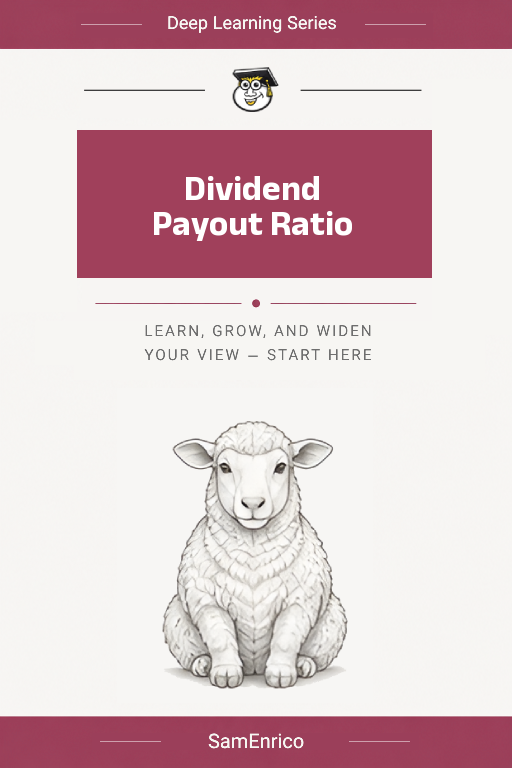
Non-FictionStudent's ShortcutDividends
Dividend Payout Ratio
Calculate dividends distributed using Dividends pe
Calculate dividends distributed using Dividends per Share divided by Earnings per Share.
Formats
About this book
Free sample
Chapter 1: The $47,000 Mistake--–- The alarm on my phone read “GE Dividend – Record Date Tomorrow.” It was April 30, 2018. I owned 4,000 shares of General Electric. I had bought them over three years, averaging 28pershare.Thedividendatthattimewas28 per share. The dividend at that time was 28pershare.Thedividendatthattimewas0.12 per share per quarter. Every three months, like clockwork, $480 landed in my brokerage account.
I used that money to help pay my mother’s assisted living bills. It wasn’t life-changing money, but it was reliable money. Or so I believed.Two days later, on May 2, 2018, GE announced it was slashing its quarterly dividend from 0.12to0.12 to 0.12to0.01 per share. One penny. My 480perquarterbecame480 per quarter became 480perquarterbecame40.
My mother’s bills did not adjust downward. I sat at my kitchen table staring at the Bloomberg terminal on my laptop. The stock had already fallen 30% over the previous year. Now the dividend – the very reason I had bought the stock – was gone. I had done the research.
I had read the annual reports. I had listened to the earnings calls. I had checked the dividend yield (it was 5.8% when I bought most of my shares, which seemed reasonable). I had checked the payout ratio. Or so I thought.I had looked at GE’s dividend payout ratio in 2016.
It was 52%. In 2017, it was 58%. Both numbers seemed safe – well below the 70% threshold that many investing books warn about. I had followed the rules. I had lost $47,000 in market value plus a future income stream that would take years to replace.
The rules had failed me. Or rather, I had failed to understand the rules.What I did not know in 2018 – what most investors still do not know today – is that a single year’s payout ratio is almost meaningless. I had looked at 52% and 58% and thought, “Safe.” What I had not done was calculate the five-year rolling payout ratio. If I had, I would have seen that GE’s DPR had risen from 38% in 2010 to 52% in 2014 to 58% in 2016 to 82% in 2017 (using normalized earnings that excluded one-time asset sales). The trend was not stable.
The trend was a slow-motion disaster. And the disaster arrived exactly on schedule.This book exists because of that kitchen table.…
This is the end of the free sample. Get the eBook to keep going. Buy now
Contents
- Chapter 1
- Chapter 2
- Chapter 3
- Chapter 4
- Chapter 5
- Chapter 6
- Chapter 7
- Chapter 8
- Chapter 9
- Chapter 10
- Chapter 11
- Chapter 12
Details
- Author
- Higginbotham Kris
- Publisher
- SamEnrico
- Language
- English
- Genre
- Non-Fiction, Student's Shortcut, Dividends
- Released
- 2026-05-29
- Pages (approx.)
- 146
- Available as
- eBook, Audiobook

Read better in the ZLOADR app
Your eBooks on your phone or tablet. Sign in with your SamEnrico account and start reading.
More by Higginbotham Kris
 Assertiveness for Therapists GuideHigginbotham Kris$11.99
 Pet Loss Alone GuideHigginbotham Kris$11.99
 Law Case Palace MethodHigginbotham Kris$11.99
 Wholesaling Insurance GuideHigginbotham Kris$11.99
 The Penile Implant GuideHigginbotham Kris$11.99
 Freelance Skills UpgradeHigginbotham Kris$11.99
 Diabetes and Erectile DysfunctionHigginbotham Kris$11.99
 Apocalypse Nightmare GuideHigginbotham Kris$11.99
 The Timbuktu Code: The Heist That Saved Africa's Lost KnowledgeHigginbotham Kris$11.99
 The Divine Fire: Mozart’s Genius and the Birth of Classical MusicHigginbotham Kris$11.99
 How to Produce False Eyelash AdhesiveHigginbotham Kris$11.99
 How to Produce Ribbons and TrimHigginbotham Kris$11.99
You may also like
 Hong Kong Handover 1997Dunn Johnnie$11.99
 Zumba For Postnatal Recovery CourseNeal Christian$11.99
 Zumba for BeginnersLadner Nikia$11.99
 YouTube Comment Mining GuideHumes Pandora$12.99
 Worry Box MeditationCarlin Rudy$11.99
 Workplace Stress MeditationNguyen Lynn$11.99
 Workplace Stress and Sleep RepairHawley Ivory$11.99
 Workplace Perfectionism CureDelaney Jeffry$11.99
 Workplace Injustice Anger GuideWallen Isabelle$11.99
 Work Addiction and Burnout LinkGreenwood Ester$11.99
 Women in Yoga and WellnessBeattie Galina$11.99
 Women in Stand Up ComedyChun Evangeline$11.99