
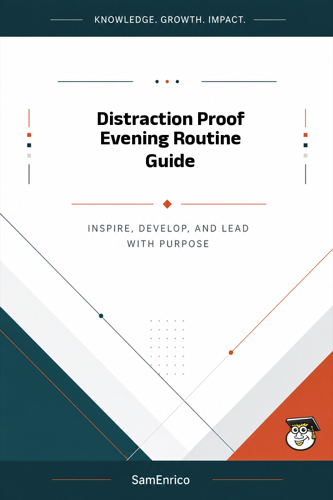
Non-FictionSelf-HelpEvening Rituals
Distraction Proof Evening Routine Guide eBook
Wind down without digital noise to improve sleep a
Wind down without digital noise to improve sleep and next-day attention capacity.
Formats
Free sample
Chapter 1: The Attention Hangover--It is 7:15 on a Tuesday morning. Your alarm has just gone off for the third time. You slept for seven and a half hours—technically enough—but you feel as though you have been hit by a truck made of cotton balls and vague regret. Your eyes are dry. Your thoughts are sluggish.
You lie in bed for fifteen minutes not because you are savoring the warmth, but because the idea of forming a sentence feels impossible. You finally drag yourself to the kitchen, pour coffee into a mug, and stand there staring at the wall while it cools. By 9:00 AM, you have answered eleven emails, scrolled through two news alerts, and forgotten what you intended to accomplish for the day. Around 11:00 AM, you finally start doing actual work—three hours late. You tell yourself you are just “not a morning person.” You blame the alarm clock, the mattress, the phase of the moon.
But here is the truth you have not been told: you are not tired. You are hungover. Not from alcohol. From attention.This is the Attention Hangover. It is the cognitive fog, irritability, and profound lack of focus that arrives every morning not because you slept too little, but because your brain spent the night processing digital debris you fed it during the two hours before bed.
You have been treating sleep as if it is a light switch—off at night, on in the morning—when in fact sleep is a washing machine. And you have been throwing rocks into it.Most books about productivity focus on what you do between 9 AM and 5 PM. They teach you time blocking, Pomodoro timers, and the sacred art of the to-do list. These are good tools. But they are like building a sandcastle while the tide is coming in.
You can optimize your morning all you want, but if your evening is a fire hose of notifications, cortisol, and blue light, you are not starting from zero each day. You are starting from negative ten. The Attention Hangover is the reason you cannot focus at 10 AM. It is the reason you read the same paragraph three times. It is the reason you feel vaguely anxious for no reason, like you forgot something important even when your inbox is empty.This chapter will give you a new language for what you have been experiencing.
You will learn why your brain does not simply “turn off” when you close your eyes. You will see the science of the 2 AM Rehearsal Loop, the architectural damage evening scrolling does to your sleep stages, and the exact mechanism by which a single notification can sabotage your next morning. More importantly, you will take the Morning Test—a self-assessment that will tell you, once and for all, whether you are suffering from simple sleepiness or a full-blown Attention Hangover. By the end of this chapter, you will never look at your evening scrolling the same way again. And you will understand why the quality of your tomorrow is determined not by your alarm clock, but by what you did at 10:47 PM the night before.The Great Deception: Why “Tired” Is Not the Real Problem Let us start with a simple experiment that you can do right now, even if you are reading this in the middle of a workday.
Think back to the last time you slept eight full hours—no interruptions, no bathroom breaks, just solid, unbroken sleep. Now ask yourself: did you wake up feeling sharp and ready? If you are like most people reading this book, the answer is no. You woke up groggy anyway. You might have even felt worse than when you sleep six hours because the contrast between expectation (eight hours should feel great) and reality (it does not) was so jarring.This is the great deception.
We have been told a simple story: sleep duration equals morning performance. If you get enough hours, you will feel good. If you feel bad, you must need more hours. But this story is missing a variable. Sleep is not just a quantity.
It is a quality—specifically, the quality of your brain’s cleanup process during the night. And that quality is directly, measurably, irreversibly damaged by what you do in the two to three hours before bed.Here is the mechanism. Your brain does not sleep like a computer going into hibernation. It sleeps like a stadium emptying after a concert. There is a sequence.
First, the crowd stops cheering (the transition from wakefulness to light sleep). Then the aisles clear (the move into slow-wave sleep, where the brain flushes out metabolic waste). Then the last few stragglers leave, and the cleanup crew comes in (REM sleep, where emotional memories are filed and reconsolidated). If you have ever been to a concert where the staff starts flashing the lights and yelling “everybody out” before the encore is over, you know that the sequence matters. You cannot skip to the cleanup crew while people are still dancing.Evening digital noise—specifically, notifications, emotionally charged content, and the infinite scroll—keeps the crowd dancing.
It sends your brain into the night with open loops, unresolved stimuli, and elevated cortisol. And then you wonder why you wake up feeling like the cleanup crew never showed up.The 2 AM Rehearsal Loop: Why Your Brain Practices While You Sleep Let me introduce you to a phenomenon that sleep researchers have known about for decades but that almost no one talks about in productivity books. It is called the 2 AM Rehearsal Loop. Here is how it works.Around two o’clock in the morning—give or take an hour, depending on when you fell asleep—your brain cycles through a stage of light sleep that is particularly vulnerable to intrusion. During this stage, your brain does something remarkable: it replays the emotionally salient events of the previous day.
It is not dreaming, exactly. It is rehearsing. It is testing scenarios. It is asking, “Did I handle that argument correctly? Should I have sent that email differently?
What was that notification I saw right before bed?” This is a normal, adaptive process. Your brain is trying to learn from experience and prepare for future threats.But here is the problem. If you fed your brain high-density digital input during the evening—a heated exchange in a group chat, a distressing news headline, a work email that made your stomach drop—that is what your brain will rehearse at 2 AM. It will not rehearse the pleasant conversation you had at dinner. It will not rehearse the feeling of your head on the pillow.
It will rehearse the thing that triggered your sympathetic nervous system right before sleep, because evolution has taught your brain that threats before rest are the most important threats to remember.So at 2:15 AM, you wake up just slightly—not fully conscious, just enough to feel a vague sense of unease. You roll over, check the time, and fall back asleep. You do not remember it in the morning. But your body does. Your cortisol has already spiked.
Your heart rate has already increased. Your deep sleep has already been interrupted. And when you wake up at 7:00…
This is the end of the free sample. Get the eBook to keep going. Buy now
About this book
Details
- Author
- Quinones Valentina
- Publisher
- SamEnrico
- Language
- English
- Genre
- Non-Fiction, Self-Help, Evening Rituals
- Released
- 2026-06-08
- Pages (approx.)
- 153
- Available as
- eBook, Audiobook

Read better in the ZLOADR app
Your eBooks on your phone or tablet. Sign in with your SamEnrico account and start reading.
More by Quinones Valentina
 Relationship Habit GuideQuinones Valentina$11.99
 Women in Media JournalismQuinones Valentina$11.99
 Effort Versus Talent GuideQuinones Valentina$11.99
 Ma Anand Sheela Prison InterviewQuinones Valentina$11.99
 Dubai Study Destination GuideQuinones Valentina$11.99
 Online Twelve Step MeetingsQuinones Valentina$11.99
 The Skykeepers of Meroë: Astronomy and the Wisdom of KushQuinones Valentina$11.99
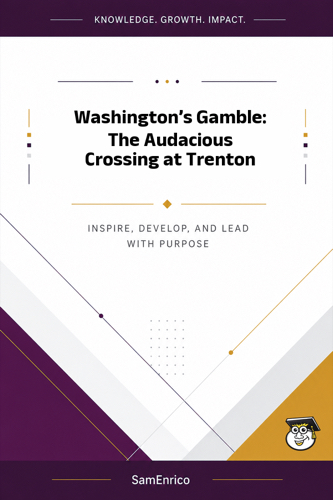 Washington’s Gamble: The Audacious Crossing at TrentonQuinones Valentina$11.99
 A Collector's Handbook to the Chevrolet Ea MasterQuinones Valentina$11.99
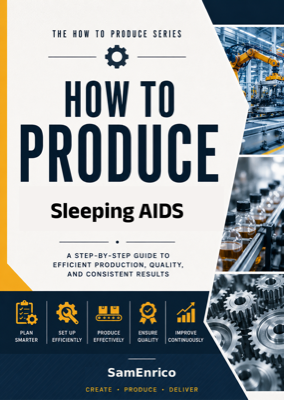 How to Produce Sleeping AIDSQuinones Valentina$11.99
 Fulbright Scholarships for African StudentsQuinones Valentina$12.99
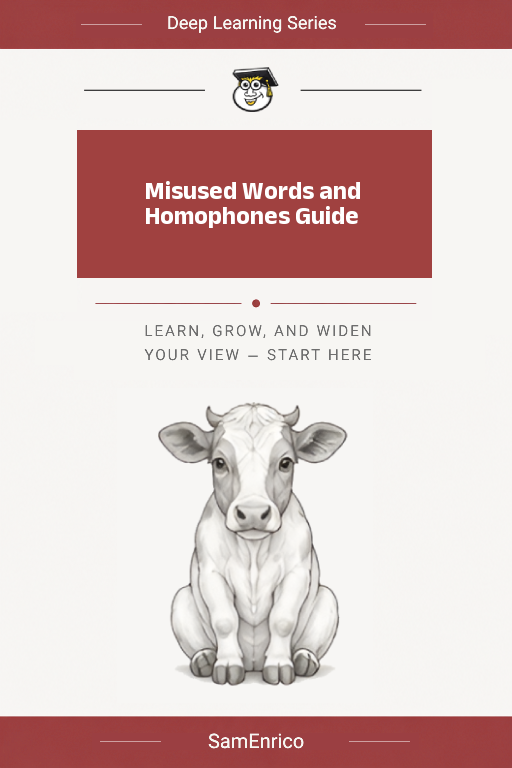 Misused Words and Homophones GuideQuinones Valentina$12.99
You may also like
 Hong Kong Handover 1997Dunn Johnnie$11.99
 Zumba For Postnatal Recovery CourseNeal Christian$11.99
 Zumba for BeginnersLadner Nikia$11.99
 YouTube Comment Mining GuideHumes Pandora$12.99
 Worry Box MeditationCarlin Rudy$11.99
 Workplace Stress MeditationNguyen Lynn$11.99
 Workplace Stress and Sleep RepairHawley Ivory$11.99
 Workplace Perfectionism CureDelaney Jeffry$11.99
 Workplace Injustice Anger GuideWallen Isabelle$11.99
 Work Addiction and Burnout LinkGreenwood Ester$11.99
 Women in Yoga and WellnessBeattie Galina$11.99
 Women in Stand Up ComedyChun Evangeline$11.99