
Non-FictionTrue Crime / Disaster Victim ID
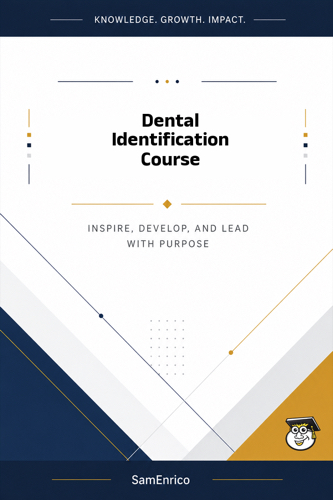
Dental Identification Course
Covers antemortem and postmortem records compariso
Covers antemortem and postmortem records comparison for disaster victims.
Formats
About this book
Free sample
Chapter 1: The Silent Witness...-- Every human being carries within their mouth a record more durable than skin, more persistent than memory, and often more revealing than a fingerprint. Unlike the loops and whorls of a fingertip, which can be burned, scarred, or surgically altered, the teeth remain—through fire, through decomposition, through decades of neglect or meticulous care. They are the body's silent witnesses, and for the forensic odontologist, they tell a story that no other tissue can tell.This chapter establishes the foundational scientific rationale for why dentition serves as a primary identifier in forensic science and disaster victim identification (DVI). The concept introduced here—that teeth are uniquely suited for human identification—will be referenced throughout this book as the bedrock upon which all subsequent methods rest. Before we can compare antemortem records to postmortem remains, before we can weigh concordant features or reconcile discrepancies, we must first understand what makes a tooth a biological signature of individuality.The Uniqueness of the Human Dentition For centuries, forensic practitioners have recognized that no two mouths are identical—not even those of identical twins.
While monozygotic twins share the same genetic blueprint, environmental factors, epigenetic influences, and stochastic developmental events create differences in tooth morphology, eruption patterns, and dental history that render their dentitions distinguishable. This principle, established in landmark forensic odontology texts including the Manual of Forensic Odontology, provides the scientific justification for dental identification as a legally admissible form of evidence.Teeth are unique for several interrelated reasons. First, they develop through a complex process of morphogenesis involving hundreds of genes, each susceptible to minor variations in expression. Second, the oral environment—p H, bacterial flora, dietary habits, trauma history—shapes each dentition differently over a lifetime. Third, dental treatment introduces deliberate, documented alterations that function as artificial fingerprints.
A root canal performed in 2005, a porcelain-fused-to-metal crown placed in 2012, an amalgam restoration with a distinct contour—these are not merely medical records; they are forensic markers.The Durability of Dental Evidence Teeth are the hardest substances in the human body. Enamel, the outermost layer, consists of approximately…
This is the end of the free sample. Get the eBook to keep going. Buy now
Contents
- Chapter 1
- Chapter 2
- Chapter 3
- Chapter 4
- Chapter 5
- Chapter 6
- Chapter 7
- Chapter 8
- Chapter 9
- Chapter 10
- Chapter 11
- Chapter 12
Details
- Author
- Griffin Jeanne
- Publisher
- SamEnrico
- Language
- English
- Genre
- Non-Fiction, True Crime / Disaster Victim ID
- Released
- 2026-06-07
- Pages (approx.)
- 160
- Available as
- eBook, Audiobook

Read better in the ZLOADR app
Your eBooks on your phone or tablet. Sign in with your SamEnrico account and start reading.
More by Griffin Jeanne
 Compulsive Spending in SeniorsGriffin Jeanne$11.99
 Anticipatory Grief Support GuideGriffin Jeanne$11.99
 Yoga Nidra for Menopause InsomniaGriffin Jeanne$11.99
 The Adoption Postpartum GuideGriffin Jeanne$11.99
 Emotional Intelligence for AddictionGriffin Jeanne$11.99
 Self Hypnosis Scripts for HabitsGriffin Jeanne$11.99
 Body Language for TeachersGriffin Jeanne$11.99
 Tropical Fire: How Three Cuban Musicians Invented the MamboGriffin Jeanne$11.99
 The Labors of Hephaestus: Forging the Gods' DownfallGriffin Jeanne$11.99
 How to Produce Penalty Cards and FlagsGriffin Jeanne$11.99
 A Collector's Handbook to the Vauxhall Padx CrestaGriffin Jeanne$11.99
 Product Listing Optimization for AmazonGriffin Jeanne$12.99
You may also like
 Hong Kong Handover 1997Dunn Johnnie$11.99
 Zumba For Postnatal Recovery CourseNeal Christian$11.99
 Zumba for BeginnersLadner Nikia$11.99
 YouTube Comment Mining GuideHumes Pandora$12.99
 Worry Box MeditationCarlin Rudy$11.99
 Workplace Stress MeditationNguyen Lynn$11.99
 Workplace Stress and Sleep RepairHawley Ivory$11.99
 Workplace Perfectionism CureDelaney Jeffry$11.99
 Workplace Injustice Anger GuideWallen Isabelle$11.99
 Work Addiction and Burnout LinkGreenwood Ester$11.99
 Women in Yoga and WellnessBeattie Galina$11.99
 Women in Stand Up ComedyChun Evangeline$11.99