
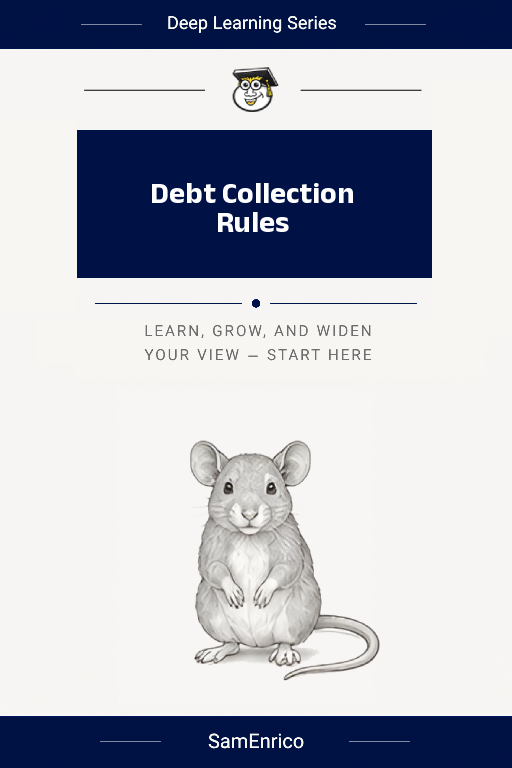
Debt Collection Rules
Comply with FDCPA and CFPB debt collection rules f
Comply with FDCPA and CFPB debt collection rules for fintech offering collection services or lending.
Formats
About this book
Free sample
Chapter 1: The First-Party Delusion--–- When Alex Chen founded Fast Loan, a fintech offering two-minute approval for small-dollar loans, he did what any sensible founder would do. He hired a compliance lawyer, drafted ironclad terms of service, and built a sleek mobile app. What he did not do was worry about debt collection rules. After all, Fast Loan collected its own debt. It never sold loans to third parties.
It never hired a collection agency. In Alex's mind, the Fair Debt Collection Practices Act—the FDCPA, the federal law that makes debt collectors' lives miserable—simply did not apply. He was a first-party creditor. He was safe.Eighteen months later, the Consumer Financial Protection Bureau served Fast Loan with a Notice of Charges alleging that its internal collections team had engaged in abusive practices. Simultaneously, a California man filed a class action under the Rosenthal Act, claiming that Fast Loan's automated phone calls violated state law.
The combined settlement demand: $12 million. Alex's first call was not to his mother. It was to his insurance carrier, who informed him that his policy excluded "collection-related liabilities" because he had checked a box stating the company did not engage in debt collection.Fast Loan's story is fictional. But it is based on a composite of dozens of real fintechs that learned the hard way: the "first-party exemption" is a myth—or at least, a dangerously incomplete truth. This chapter dismantles that myth.
It explains precisely who is covered by federal collection laws, who is covered by state laws, and why every fintech that lends money must build a compliance infrastructure regardless of whether it technically meets the definition of a "debt collector." By the end of this chapter, you will understand why no fintech is truly exempt, and you will have a framework for determining exactly which rules apply to your specific business model.The Three Sources of Collection Liability Before diving into the details of who qualifies as a debt collector, it is essential to understand that fintechs face collection-related liability from three distinct sources. The first is the one everyone worries about…
This is the end of the free sample. Get the eBook to keep going. Buy now
Contents
- Chapter 1
- Chapter 2
- Chapter 3
- Chapter 4
- Chapter 5
- Chapter 6
- Chapter 7
- Chapter 8
- Chapter 9
- Chapter 10
- Chapter 11
- Chapter 12
Details
- Author
- Shin Eleonora
- Publisher
- SamEnrico
- Language
- English
- Genre
- Non-Fiction, Annual Checkup, Fintech, FDCPA
- Released
- 2026-05-29
- Pages (approx.)
- 145
- Available as
- eBook, Audiobook

Read better in the ZLOADR app
Your eBooks on your phone or tablet. Sign in with your SamEnrico account and start reading.
More by Shin Eleonora
 Anti Inflammatory Diet AgingShin Eleonora$11.99
 Pornography Use Relationship GuideShin Eleonora$11.99
 Farm and Ranch Insurance GuideShin Eleonora$11.99
 Metta for Test Anxiety CourseShin Eleonora$11.99
 Guided Imagery for Migraine ReliefShin Eleonora$11.99
 The Billion-Dollar Heist: How a Small Town Took Down a Wall Street GiantShin Eleonora$11.99
 Echoes of the Cosmos: The Cosmic Detectives of North AmericaShin Eleonora$11.99
 Public Relations ManagerShin Eleonora$11.99
 Understanding Dentatorubral-pallidoluysian AtrophyShin Eleonora$17.99
 Turkish Student Networking GuideShin Eleonora$12.99
 How to Become a Scooping-machine TenderShin Eleonora$11.99