
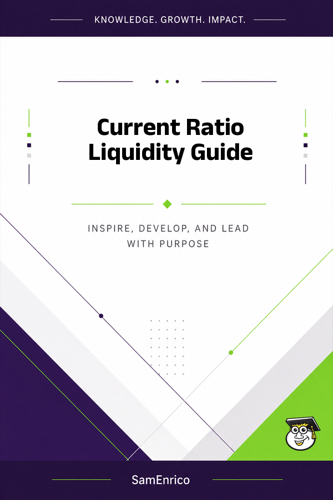
Non-FictionBusiness BriefLiquidity Analysis
Current Ratio Liquidity Guide Audiobook
Evaluate a company's short term financial health u
by Gantt Mimi
Evaluate a company's short term financial health using this fundamental analysis workbook.
Formats
Free sample
Chapter 1: The Oxygen Myth--–- On a Thursday morning in September 2018, the management team of a seemingly profitable electronics retailer gathered in a glass-walled conference room to celebrate. Circuit Star had just reported its fifteenth consecutive quarter of revenue growth. Gross margins had expanded from 18% to 23% over three years. The company had been featured in a prominent business magazine as a "turnaround success story." The CEO was scheduled to ring the opening bell at a major stock exchange the following week.Thirty-seven days later, Circuit Star filed for Chapter 11 bankruptcy.No fire. No fraud investigation.
No industry collapse. The company simply ran out of cash to pay its suppliers. The irony was lost on no one who studied the case: Circuit Star was profitable on paper the entire time.This is not a cautionary tale about bad accounting. It is a cautionary tale about the difference between two words that most people—including many professional investors—treat as interchangeable: profitability and liquidity.If you take nothing else from this book, remember this: Profitability is a story about the past. Liquidity is a question about tomorrow morning.The Most Dangerous Sentence in Finance Walk into any business school classroom or scroll through any investing forum, and you will hear some version of this sentence: "As long as the company is profitable, it will be fine."That sentence has destroyed more wealth than any bear market in history.Profitability measures whether a company's revenues exceed its expenses over a reporting period—a quarter, a year, a fiscal cycle.
It is an abstraction, a mathematical construct governed by accounting rules that allow for estimates, deferrals, and allocations. Profit is an opinion.Liquidity measures whether a company has enough cash—right now, at this moment, in its bank account or in assets that can become cash within days—to pay its obligations when they come due. Cash is a fact.The Circuit Star case illustrates this distinction with brutal clarity. The company's income statement showed rising sales and improving margins. Its balance sheet showed growing current assets.
But a closer examination of the composition of those current assets revealed the trap: Days Sales Outstanding (DSO)—the average time between selling a product and receiving cash—had ballooned from 30 days to 90 days. The company was selling more, but collecting much later. Simultaneously, suppliers, nervous about the industry, had reduced payment terms, shrinking Days Payable Outstanding…
This is the end of the free sample. Get the Audiobook to keep going. Buy now
About this book
Details
- Author
- Gantt Mimi
- Publisher
- SamEnrico
- Language
- English
- Genre
- Non-Fiction, Business Brief, Liquidity Analysis
- Released
- 2026-06-08
- Pages (approx.)
- 158
- Available as
- eBook, Audiobook

Listen in the VoxFlicks app
Audiobooks and audio dramas wherever you go. Sign in with your SamEnrico account and press play.
More by Gantt Mimi
 Letting Go of Imposter SyndromeGantt Mimi$11.99
 Alone But Not Lonely GuideGantt Mimi$11.99
 Self Esteem for Political WorkplacesGantt Mimi$11.99
 Reddit Addiction RecoveryGantt Mimi$11.99
 Postal Worker Who ConnectedGantt Mimi$11.99
 Growth Mindset for DesignersGantt Mimi$11.99
 Heavens Gate Last Meal RecordsGantt Mimi$11.99
 Volcanic Enlightenment: How the Thinkers of the 18th Century Lit the Fires of ProgressGantt Mimi$11.99
 The Ruby Robbers: The 1930s Heist That Shocked the Gem TradeGantt Mimi$11.99
 How to Produce Tub and TileGantt Mimi$11.99
 Angel Investment Pitch Deck GuideGantt Mimi$12.99
 Rwanda Cooperative Agency PrimerGantt Mimi$12.99
You may also like
 Hong Kong Handover 1997Dunn Johnnie$11.99
 Zumba For Postnatal Recovery CourseNeal Christian$11.99
 Zumba for BeginnersLadner Nikia$11.99
 YouTube Comment Mining GuideHumes Pandora$12.99
 Worry Box MeditationCarlin Rudy$11.99
 Workplace Stress MeditationNguyen Lynn$11.99
 Workplace Stress and Sleep RepairHawley Ivory$11.99
 Workplace Perfectionism CureDelaney Jeffry$11.99
 Workplace Injustice Anger GuideWallen Isabelle$11.99
 Work Addiction and Burnout LinkGreenwood Ester$11.99
 Women in Yoga and WellnessBeattie Galina$11.99
 Women in Stand Up ComedyChun Evangeline$11.99