
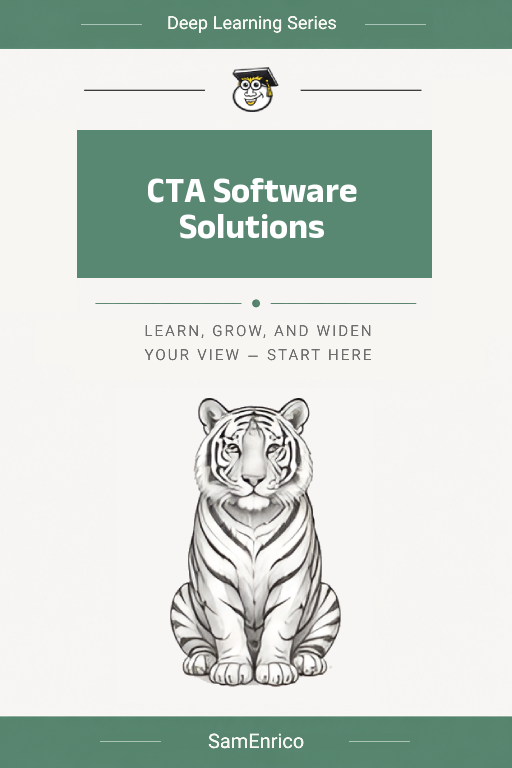
Non-FictionAnnual CheckupSoftwareAutomation
CTA Software Solutions eBook
Compare CTA compliance software tools for BOI repo
Compare CTA compliance software tools for BOI reporting including automation and deadline tracking.
Formats
Free sample
Chapter 1: The Ownership Maze--–- In February 2024, a mid-sized manufacturing company in Ohio received a letter from Fin CEN that its owner would later describe as “a punch to the gut.” The company had formed a simple LLC in 2023 to hold a single warehouse. The owner, a 62-year-old who had started the business in his garage, had no idea that the Corporate Transparency Act existed. He certainly did not know that he had missed a 90-day filing deadline. The penalty notice was for 500perday,accruingdaily,withapotentialcapof500 per day, accruing daily, with a potential cap of 500perday,accruingdaily,withapotentialcapof10,000. His first question to his attorney was not “How do I fix this?” but “What is a BOI report?” His second question was “Can software have saved me?” The answer to both questions, as this chapter will demonstrate, is far more nuanced than a simple yes or no.The Corporate Transparency Act (CTA), effective January 1, 2024, represents the most significant change to U.S.
anti-money laundering regulations in over two decades. For the first time, millions of small and medium-sized business entities must report their beneficial owners—the real people who ultimately own or control them—to the Financial Crimes Enforcement Network (Fin CEN). Prior to the CTA, shell companies could be formed in Delaware or Wyoming with no disclosure of who actually stood behind them. The CTA closes this loophole, but in doing so, it has created a compliance burden that touches an estimated 33 million existing entities and millions more newly formed each year.This chapter decodes the CTA beyond the headlines. It moves past the simplified summaries found on law firm blogs and into the practical, operational realities that determine whether you will file correctly, miss a deadline, or accidentally claim an exemption that does not apply.
By the end of this chapter, you will understand not only what the CTA requires but also how different software solutions handle the law’s most confusing provisions—from the 23 exemptions to the March 2025 interim final rule to the critical distinction between ownership and substantial control. More importantly, you will understand why a purely manual approach to CTA compliance is no longer a viable option for any firm managing more than a handful of entities.The 33 Million Entity Problem: Scope and Scale To appreciate the magnitude of the CTA’s impact, consider a single number: 33 million. That is the conservative estimate of existing entities that Fin CEN believes will need to file initial BOI reports over the next several years. Add to that approximately 2 million new entities formed annually in the United States, and the total compliance volume exceeds the capacity of manual processing by several orders of magnitude.The entities subject to the CTA are not just large corporations. In fact, the largest corporations are almost entirely exempt.
The CTA targets precisely the opposite end of the spectrum: small to medium-sized LLCs, limited partnerships, closely held corporations, and foreign entities registered to do business in any U.S. state. A single-member LLC formed online in fifteen minutes is a reporting company. A family investment vehicle holding a vacation rental property is a reporting company. A real estate partnership with four passive investors is a reporting company.
Each of these entities must identify every beneficial owner, collect their personal information, and file a report with Fin CEN.The reporting requirement applies to both domestic entities (created by filing a document with a U.S. state secretary of state) and foreign entities (created under foreign law but registered to do business in any U.S. state). If you have ever formed an LLC, a corporation, or a limited partnership, you almost certainly have a reporting obligation unless you qualify for one of the 23 exemptions.But here is where the complexity begins: the definition of a “reporting company” excludes certain types of entities that might otherwise seem similar. A sole proprietorship that never filed formation documents with a state is not a reporting company.
A general partnership formed by oral agreement with no state filing is not a reporting company. However, a single-member LLC that elected to be taxed as a sole proprietorship but was formed by filing articles of organization with a state absolutely is a reporting company. The distinction hinges on the act of state filing, not on tax treatment or business size.Software solutions handle this threshold question differently. High-volume platforms like CCH Axcess and CT Corporation typically begin with a client intake questionnaire that asks: “Has this entity been created by filing a document with a Secretary of State or similar office?” A “no” answer ends the CTA workflow immediately. Agile platforms like File Forms and Snap BOI take a similar approach but embed the question within a conversational interface that guides the user through conditional logic.
The best software also flags edge cases: for example, a foreign entity that has a U.S. state registration but claims it does not “do business” in that state—a distinction that Fin CEN has explicitly rejected.The 23 Exemptions: A Roadmap Through the Exceptions The CTA exempts 23 categories of entities from the definition of “reporting company.” If an entity qualifies for any exemption, it has no BOI filing obligation whatsoever. However, and this is critical, an entity that files an initial report and later qualifies for an exemption must file what Fin CEN calls a “newly exempt” report. This is not an automatic exemption. The filing documents the change in status.
We will explore this nuance in depth in Chapter 10, but for now, understand that exemption status is not permanent and must be tracked.The most common exemptions are the ones that trap unsuspecting filers. Here are the top five exemptions that software must handle correctly:1. The Large Operating Company Exemption This is the exemption that most mid-sized businesses hope to claim. To qualify, an entity must meet all three of the following tests:More than 20 full-time employees in the United States (not counting independent contractors or part-time employees)More than $5 million in gross receipts or sales (net of returns and allowances) as shown on its prior year’s tax return An operating presence at a physical office in the United States (not a co-working space, virtual office, or mailing address)The third test is the one that causes the most confusion. A virtual company with twenty-five remote employees working from home offices across the country does not have a physical operating presence for purposes of this exemption.
Neither does a company that leases a small mailing address but conducts all operations remotely. The physical office must be regularly staffed and used for the entity’s core business activities.Software solutions handle this exemption by asking a series of yes/no questions that mirror the three tests. The best systems also include explanatory text for each test, warning users about common misinterpretations. For example, when a user answers “yes” to having a physical office, some platforms (notably CT Corporation) display a follow-up question: “Does this office serve as the entity’s primary place of business and is it staffed at least 30 hours per week?” This level of detail prevents false claims of exemption.2. The Subsidiary Exemption An entity is exempt if it is wholly owned, directly or indirectly…
This is the end of the free sample. Get the eBook to keep going. Buy now
About this book
Details
- Author
- Swanson Benjamin
- Publisher
- SamEnrico
- Language
- English
- Genre
- Non-Fiction, Annual Checkup, Software, Automation
- Released
- 2026-05-28
- Pages (approx.)
- 154
- Available as
- eBook, Audiobook

Read better in the ZLOADR app
Your eBooks on your phone or tablet. Sign in with your SamEnrico account and start reading.
More by Swanson Benjamin
 Sustainable Success Habits WorkbookSwanson Benjamin$11.99
 Daycare Insurance BrokersSwanson Benjamin$11.99
 Pump and Dump Case FilesSwanson Benjamin$11.99
 Beginner Fitness in Small SpacesSwanson Benjamin$11.99
 Antwerp Diamond Heist Interrogation RoomSwanson Benjamin$11.99
 The Last Flight of Flight 752: A Rescue Mission in the ShadowsSwanson Benjamin$11.99
 Frozen Genes: The Arctic Expedition That Rewrote Evolutionary ScienceSwanson Benjamin$11.99
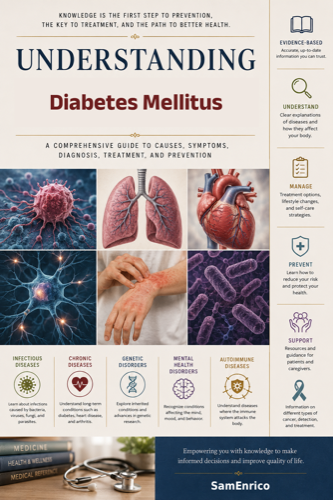 Understanding Diabetes MellitusSwanson Benjamin$17.99
 EU Beneficial Ownership GuideSwanson Benjamin$12.99
 Active Directory EngineerSwanson Benjamin$11.99
 How to Start a Hobby in JuggerSwanson Benjamin$11.99
You may also like
 Hong Kong Handover 1997Dunn Johnnie$11.99
 Zumba For Postnatal Recovery CourseNeal Christian$11.99
 Zumba for BeginnersLadner Nikia$11.99
 YouTube Comment Mining GuideHumes Pandora$12.99
 Worry Box MeditationCarlin Rudy$11.99
 Workplace Stress MeditationNguyen Lynn$11.99
 Workplace Stress and Sleep RepairHawley Ivory$11.99
 Workplace Perfectionism CureDelaney Jeffry$11.99
 Workplace Injustice Anger GuideWallen Isabelle$11.99
 Work Addiction and Burnout LinkGreenwood Ester$11.99
 Women in Yoga and WellnessBeattie Galina$11.99
 Women in Stand Up ComedyChun Evangeline$11.99