
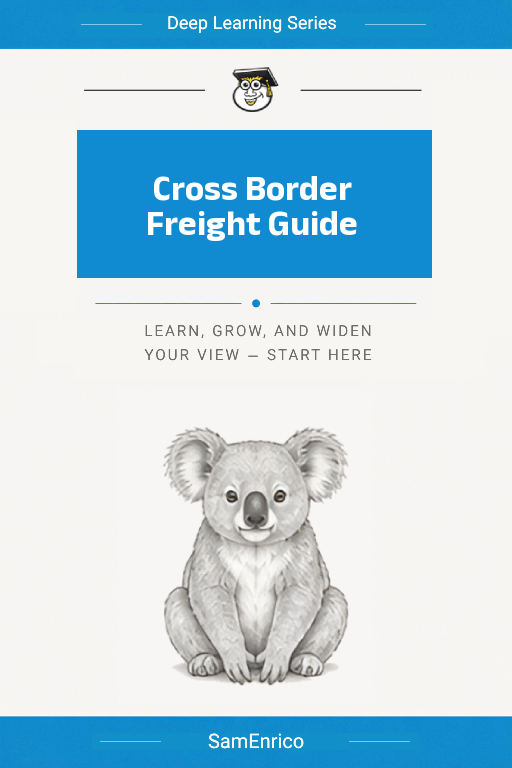
Non-FictionForecast & OutlookCross-Border
Cross Border Freight Guide Audiobook
Project USMCA, EU-UK, and ASEAN customs digitizati
Project USMCA, EU-UK, and ASEAN customs digitization and trade lane growth through 2030.
Formats
Free sample
Chapter 1: Digital Custody Wins–- The warning arrived at 3:47 AM on a Tuesday, buried in a flood of routine customs notifications that no one in the supply chain department had been trained to recognize as existential. The EU Customs Data Hub had issued an automated risk score of ninety-four out of one hundred for a single container of lithium-ion batteries en route from Shanghai to Rotterdam. Within minutes, the container was flagged for a full physical inspection. By noon, it was sitting in a bonded warehouse in Antwerp, where it would remain for eleven days while customs officials manually verified the Harmonized System codes, the country of origin certificates, and the value declarations. The importer, a mid-sized German electronics distributor, lost its largest customer when the holiday shipment arrived twelve days late.The importer had done nothing wrong by the standards of 2024.
The paperwork was flawless. The broker was experienced. The freight forwarder was a global leader. Yet a machine in Brussels had decided, based on patterns no human at the company could see, that this container was a risk. And the company had no API connection to the Hub, no pre-arrival data pipeline, no way to challenge or remediate the risk score before the container reached European waters.
The company did not have digital custody of its own shipment.That term—digital custody—is the central argument of this book. By 2030, the primary competitive advantage in cross-border freight will not be physical assets: not the ships, not the trucks, not the warehouses, not even the ports. The primary advantage will be the ability to move data as seamlessly as goods. It will be the ability to control the API connections, the pre-arrival clearance workflows, the real-time risk scores, and the algorithmic trust signals that determine whether a container moves through a border in thirty seconds or thirty days. The companies that master digital custody will win.
The companies that do not will be surprised at 3:47 AM.This chapter establishes the urgent reality of customs in 2026 and introduces the book's unifying framework. It argues that previous "digital transformation" efforts largely failed because companies merely digitized paper forms—converting PDFs instead of faxes—without reengineering the underlying processes that create friction. By 2026, however, three major trading blocs—the USMCA, the European Union, and the Association of Southeast Asian Nations—have shifted to a digital mandate. Electronic submission is no longer optional. Paper declarations…
This is the end of the free sample. Get the Audiobook to keep going. Buy now
About this book
Details
- Author
- Humphrey Jonnie
- Publisher
- SamEnrico
- Language
- English
- Genre
- Non-Fiction, Forecast & Outlook, Cross-Border
- Released
- 2026-06-01
- Pages (approx.)
- 149
- Available as
- eBook, Audiobook

Listen in the VoxFlicks app
Audiobooks and audio dramas wherever you go. Sign in with your SamEnrico account and press play.
More by Humphrey Jonnie
 Sugar Microbiome Brain DamageHumphrey Jonnie$11.99
 Resentment Toward StepfamilyHumphrey Jonnie$11.99
 Political Campaign Manager Stress HandbookHumphrey Jonnie$11.99
 Solar Temple Escapee AccountHumphrey Jonnie$11.99
 Breaking the Blackjack Addiction CycleHumphrey Jonnie$11.99
 Orpheus: The Lyre That Moved the GodsHumphrey Jonnie$11.99
 A Beginners Guide to Die Macher (Volume 1)Humphrey Jonnie$11.99
 Understanding Larynx AtresiaHumphrey Jonnie$17.99
 Cardiothoracic SurgeonHumphrey Jonnie$11.99
You may also like
 Hong Kong Handover 1997Dunn Johnnie$11.99
 Zumba For Postnatal Recovery CourseNeal Christian$11.99
 Zumba for BeginnersLadner Nikia$11.99
 YouTube Comment Mining GuideHumes Pandora$12.99
 Worry Box MeditationCarlin Rudy$11.99
 Workplace Stress MeditationNguyen Lynn$11.99
 Workplace Stress and Sleep RepairHawley Ivory$11.99
 Workplace Perfectionism CureDelaney Jeffry$11.99
 Workplace Injustice Anger GuideWallen Isabelle$11.99
 Work Addiction and Burnout LinkGreenwood Ester$11.99
 Women in Yoga and WellnessBeattie Galina$11.99
 Women in Stand Up ComedyChun Evangeline$11.99