
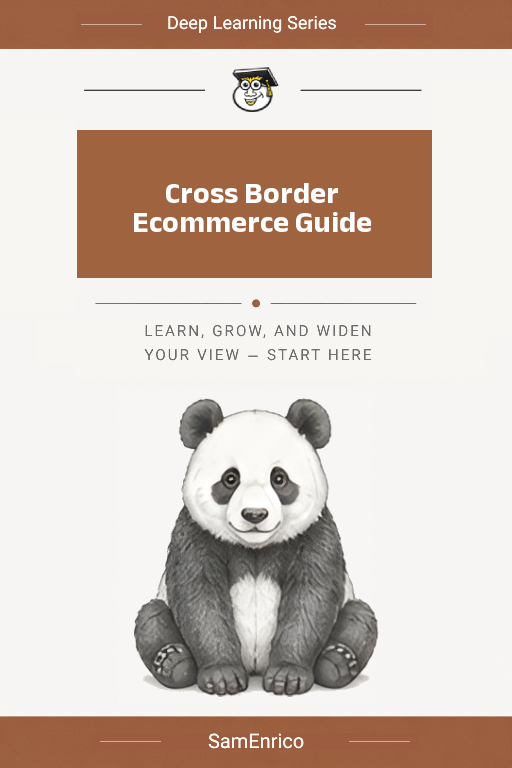
Non-FictionForecast & OutlookCross-Border Trade
Cross Border Ecommerce Guide eBook
Analyze marketplaces like Mercado Libre, cross-bor
Analyze marketplaces like Mercado Libre, cross-border shipping, and customs brokerage services.
Formats
Free sample
Chapter 1: Platform Physics--–- In 2019, I lost $47,000 in ninety days. Not because my product was bad. Not because my marketing was weak. Because I believed a lie that the ecommerce industry had been selling for years: that going global was as simple as clicking a button labeled “Expand to New Markets.”I had been selling on Amazon for three years. My kitchen gadget brand, “Quick Chef,” was doing respectable numbers in the United States—about $40,000 per month with healthy margins.
I felt ready. I felt invincible. I clicked the “Global Selling” option, checked boxes for Mexico, Brazil, and the United Kingdom, and waited for the money to roll in.Nothing happened.Well, that’s not entirely true. Things did happen. My products got listed on Amazon Mexico with automated translations that read like a drunk robot wrote them.
My shipping times to Brazil stretched to forty-five days because I had no local fulfillment. Customers in the UK received their orders but then returned them at three times the normal rate because I hadn’t accounted for different electrical standards.By the end of the third month, I had sold exactly 142 units across three countries, processed 89 returns, and spent 12,000onshippingandcustomsfeesthat Ihadn’tbudgetedfor.The12,000 on shipping and customs fees that I hadn’t budgeted for. The 12,000onshippingandcustomsfeesthat Ihadn’tbudgetedfor.The47,000 loss wasn’t just inventory and shipping—it was the opportunity cost of time I could have spent growing my US business.I tell you this story not to scare you, but to introduce you to a fundamental truth that every top-selling cross-border book of the past three years has converged upon: the era of “set it and forget it” global ecommerce is dead. Consumers no longer browse the open web. They live inside dedicated digital ecosystems—Tik Tok Shop, Mercado Libre, Shopee, and yes, still Amazon, but on their terms, not yours.
And each of these ecosystems operates according to its own unique “physics”: its own rules for logistics, payments, customer behavior, and algorithmic preference.This chapter is not a gentle introduction. It is a declaration of war on the lazy thinking that has drowned countless sellers in red ink. You are going to learn why your Amazon-first strategy is failing in emerging markets, how to diagnose which platform ecosystem actually fits your products, and the single most important question you need to ask before spending a single dollar on cross-border expansion.The Great Unbundling of Global Commerce Let’s rewind to 2015. If you wanted to sell internationally, the advice was simple: list on Amazon, enable international shipping, and wait. The logic was compelling.
Amazon had already built the logistics, the payment infrastructure, and the customer base. Your job was just to add products.That world is gone.Over the past three years, a phenomenon that industry analysts call the “Great Unbundling” has reshaped global ecommerce. Rather than one monolithic platform dominating every market, we now have regional super-apps that combine marketplace, payments, logistics, and even social media into closed-loop ecosystems. These platforms don’t just want your products—they want to own the entire customer relationship from discovery to delivery to returns.Consider the evidence. In Latin America, Mercado Libre has evolved far beyond its origins as an e Bay clone.
Today, Mercado Pago processes more payment volume than many traditional banks. Mercado Envíos operates its own last-mile delivery network across Brazil and Mexico. Mercado Ads has become the dominant advertising channel for ecommerce in the region. A seller who uses all three gets algorithmic preference, faster payment settlements, and better dispute resolution. A seller who treats Mercado Libre as “just another marketplace” gets buried.In Southeast Asia, Shopee has built an ecosystem where social features drive discovery and gamified engagement keeps users returning daily.
In China, Tik Tok Shop has blurred the line between entertainment and commerce so completely that users can buy a product without ever leaving a video.And in the middle of all this sits Amazon—still powerful in the United States and Europe, but no longer the default answer for global expansion. Amazon Brazil holds approximately 30 percent market share compared to Mercado Libre’s 55 percent. Amazon Mexico fares better but still trails the local giant. The message is clear: dominance in one market does not guarantee dominance in another.This unbundling creates both danger and opportunity. The danger is that you waste time and money trying to replicate a strategy that worked in one ecosystem but fails in another.
The opportunity is that by understanding the physics of each platform, you can commit deeply to the right one and build a competitive moat that casual sellers cannot cross.The Ecosystem Audit: Your New Best Friend Before you ship a single unit to a new country, you need to answer three questions. Together, they form what I call the Ecosystem Audit—a diagnostic framework that has saved my clients millions of dollars in failed launches.Question One: Does this platform require its own fulfillment network?In some ecosystems, “Fulfilled by Amazon” or “Fulfilled by Mercado” is not an option—it’s a requirement for visibility. Mercado Libre’s “Full” badge (their equivalent of Prime) is so heavily weighted in search algorithms that products without it can expect conversion rates one-third as high as those with it. The platform is essentially saying: if you trust us with your inventory, we will trust you with our customers.But here’s where it gets tricky. Not every platform requires the same level of integration.
Tik Tok Shop, for example, allows direct shipping from China for low-value items, with much lower fulfillment expectations. Shopee has a hybrid model where local fulfillment is preferred but not mandatory.The key insight is that you must match your operational capabilities to the platform’s requirements. A seller who tries to use a direct-from-China model on Mercado Libre will fail not because their product is bad, but because they are violating the platform’s physics.Question Two: Does this market prefer social commerce or traditional marketplace search?This question separates the old world from the new. In the United States and Europe, most ecommerce purchases still begin with a search query on Amazon or Google. The funnel is intentional: the customer knows what they want and goes looking for it.In emerging markets, especially among younger demographics, discovery happens through social media.
A buyer might see a product on Tik Tok, watch a review from a micro-influencer on Instagram, and then search for that specific product on Mercado Libre. The platform’s role shifts from “search engine” to “transaction processor.”The practical implication is enormous. If your target market prefers social discovery, your marketing budget needs to flow toward Tik Tok and Instagram creators, not just Amazon PPC or Mercado Ads. You need content that works in a feed, not just a search result page. And you need to make sure your product listings are optimized for the keywords that social-savvy buyers will use when they finally do search.Question Three: Is there a dominant local payment method that your platform must support?This is the question that kills more cross-border sellers than any other.
In the United States, credit cards are universal. In Europe, Pay Pal and bank transfers dominate. But in many high-growth…
This is the end of the free sample. Get the eBook to keep going. Buy now
About this book
Details
- Author
- Barrera Patrick
- Publisher
- SamEnrico
- Language
- English
- Genre
- Non-Fiction, Forecast & Outlook, Cross-Border Trade
- Released
- 2026-06-01
- Pages (approx.)
- 144
- Available as
- eBook, Audiobook

Read better in the ZLOADR app
Your eBooks on your phone or tablet. Sign in with your SamEnrico account and start reading.
More by Barrera Patrick
 Household Chore Anger GuideBarrera Patrick$11.99
 Burnout In Helping ProfessionsBarrera Patrick$11.99
 Stepfamily Blended Home Self Worth WorkbookBarrera Patrick$11.99
 The Uruguay Digital Nomad GuideBarrera Patrick$11.99
 Hotel Staff De escalationBarrera Patrick$11.99
 Shadows of the Kuroda Clan: The Fox and the Shogun's SecretBarrera Patrick$11.99
 HVAC ApprenticeBarrera Patrick$11.99
 Understanding Lymphoblastic LymphomaBarrera Patrick$17.99
 A Beginners Guide to Duathlon (Volume 1)Barrera Patrick$11.99
 Executive Summary Software ToolsBarrera Patrick$12.99
You may also like
 Hong Kong Handover 1997Dunn Johnnie$11.99
 Zumba For Postnatal Recovery CourseNeal Christian$11.99
 Zumba for BeginnersLadner Nikia$11.99
 YouTube Comment Mining GuideHumes Pandora$12.99
 Worry Box MeditationCarlin Rudy$11.99
 Workplace Stress MeditationNguyen Lynn$11.99
 Workplace Stress and Sleep RepairHawley Ivory$11.99
 Workplace Perfectionism CureDelaney Jeffry$11.99
 Workplace Injustice Anger GuideWallen Isabelle$11.99
 Work Addiction and Burnout LinkGreenwood Ester$11.99
 Women in Yoga and WellnessBeattie Galina$11.99
 Women in Stand Up ComedyChun Evangeline$11.99