
Creativity Affirmation Workbook eBook
Unblock artistic flow with encouraging self talk u
Unblock artistic flow with encouraging self talk using this practical creative guide.
Formats
Free sample
Chapter 1: The Talkative Roommate--Your inner critic is not your enemy. It is not a monster to be slain, a virus to be eradicated, or a tyrant to be overthrown. This is the first and most important sentence you will read in this book, and I need you to sit with it for a moment before you argue with it.Most creativity guides begin by declaring war on the inner critic. They tell you to silence it, crush it, banish it to the shadow realm from whence it came. And those guides sell well because the language of warfare is seductive.
It makes us feel powerful. It promises a clean victory: the critic dies, and the artist is finally free.There is only one problem with this approach.It does not work.In fact, it makes everything worse.For the past twenty years, I have worked with artists, writers, painters, musicians, and creators of every conceivable stripe. I have sat across from Academy Award nominees and first-time poets. I have read the journals of best-selling novelists and the scribbles of people who have not picked up a paintbrush since the Reagan administration. And across this vast spectrum of human creativity, one pattern emerges with depressing consistency: the people who try to kill their inner critic end up paralyzed by it.Here is what happens when you declare war on the critic.You wake up with an idea.
A good one, maybe even a great one. You sit down to work, and almost immediately, the critic pipes up: That is stupid. Who do you think you are? This has been done before, and better.Following the advice of every aggressive creativity book on your shelf, you try to silence it. You say, "Shut up, critic.
I am an artist. My voice matters."And what does the critic do?It gets louder.Oh, so now you are an artist? Last week you could not even finish a sketch. You have three unfinished projects in that drawer. You have not had an original thought in months.
And by the way, your posture is terrible and your coffee is getting cold.Suddenly, you are not creating. You are arguing. You have entered a debate with a voice that has infinite time, infinite patience, and absolutely nothing better to do than keep you stuck. And here is the cruelest trick of all: every moment you spend arguing with the critic is a moment you are not creating. The critic has already won, and it did not even have to raise its voice.The alternative is not war.
It is something far more effective, and far more strange.This chapter will introduce you to a different model. A model that will serve as the backbone for every exercise, every affirmation, and every practice in this workbook. It is simple enough to remember on your worst days, and deep enough to sustain you through a lifetime of creative work.The Critic is not your enemy. The Critic is your talkative roommate.Stay with me.The Metaphor That Changes Everything Imagine you live in a small apartment. It is yours.
You pay the rent. You have the keys. You decide what hangs on the walls and what music plays in the morning. This apartment is your creative life.Now imagine that you have a roommate. You did not choose this person.
They moved in years ago, invited by your parents, your teachers, your former bullies, and the countless voices of a society that told you that artists starve and that practicality is safety. This roommate has opinions about everything. They comment on what you eat, how you dress, when you wake up, and whether you should bother trying that new thing you have been thinking about.This roommate is loud. They are always home. And they have absolutely no intention of leaving.Most creativity advice tells you to evict this roommate.
To call the landlord. To change the locks. To scream at them until they slink away in defeat.But here is what happens when you try to evict a talkative roommate. They do not leave. They sit on the couch and say, You cannot evict me.
I have been here longer than you. I know your secrets. I have seen you fail before, and I will see you fail again.Now you are in a fight. You are yelling. You are justifying.
You are defending your right to exist in your own apartment. And while you are fighting, you are not living your life. You are not painting. You are not writing. You are not practicing your scales or editing your film.
You are just arguing.The alternative is so simple that it feels like a trap.You stop trying to evict the roommate.You acknowledge them instead.When the roommate says, That painting is ugly, you say, Noted. And then you keep painting.When the roommate says, Who do you think you are? you say, I hear you. And then you keep writing.When the roommate says, You will fail like you always fail, you say, That is a possibility. And then you keep creating.You do not argue.
You do not justify. You do not try to prove the roommate wrong, because the roommate cannot be proven wrong. The roommate deals in opinions, not facts. And you cannot win an argument against an opinion.What you can do is shrink the roommate's jurisdiction.Right now, the roommate believes they are the owner of the apartment. They believe their opinion determines what happens.
Every time you stop creating because of something they said, you prove them right. Every time you keep creating despite what they said, you prove them wrong.You are not trying to silence the roommate. That is impossible. You are trying to make the roommate boring.When the roommate realizes that you are going to keep painting no matter what they say, they may still talk. But their voice becomes background noise.
The hum of a refrigerator. The distant sound of traffic. Present, but irrelevant.This is the goal. Not a silent mind. A functional mind.Where the Critic Comes From (And Why It Is Not You)Before we go any further, we need to perform what I call an archaeological dig on your inner critic.
We need to understand where this voice came from, because once you see its origins, it becomes much harder to take it seriously.The critic is not your authentic self.Let me say that again, because most of you will skim past it: The critic is not your authentic self.The critic is a collection of external voices that have been internalized over time. It is an archaeological layer of other people's fears, expectations, and limitations. Your mother's worry that you would never make a living. Your father's sigh when you said you wanted to be an artist. Your third-grade teacher's red pen on your drawing of a dinosaur.
Your first serious partner's laughter when you showed them your poem. The endless stream of social media posts showing people who are younger, richer, and more talented than you will ever be.All of these voices have been recorded, looped…
This is the end of the free sample. Get the eBook to keep going. Buy now
About this book
Details
- Author
- Rowell Coreen
- Publisher
- SamEnrico
- Language
- English
- Genre
- Non-Fiction, Self-Help, Creativity
- Released
- 2026-06-09
- Pages (approx.)
- 118
- Available as
- eBook, Audiobook

Read better in the ZLOADR app
Your eBooks on your phone or tablet. Sign in with your SamEnrico account and start reading.
More by Rowell Coreen
 TM Brain Wave Coherence HandbookRowell Coreen$11.99
 Feather Floating RelaxRowell Coreen$11.99
 Vaccine Ingredients ExplainedRowell Coreen$11.99
 John Wayne Gacy Prison Letters CollectionRowell Coreen$11.99
 The Khan's Gambit: Subutai's Unfinished ConquestRowell Coreen$11.99
 Solomonoff Induction Acoustic Resonance TechnicianRowell Coreen$11.99
 Remote Team Goal Alignment ConflictRowell Coreen$12.99
 Anomaly Detection in FinanceRowell Coreen$12.99
 Understanding Multiple Carboxylase Deficiency, Propionic AcidemiaRowell Coreen$17.99
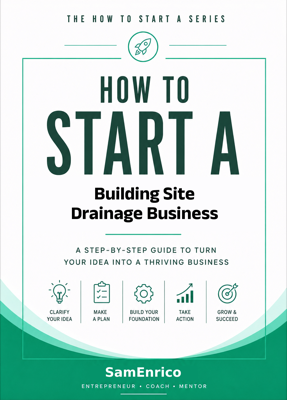 How to Start a Building Site Drainage Business (Beginners Guide)Rowell Coreen$11.99
You may also like
 Trance for Creativity BoostEngel Colene$11.99
 Self Hypnosis for Creativity HabitsGerman Bernetta$11.99
 Mindfulness Meditation for Creativity BlockPage Duane$11.99
 Joyful Creativity Through GratitudeJacob Antoine$11.99
 Ideation Techniques For SolutionsKim Vincent$11.99
 Fear Of Failure In CreativityCrean Fairy$11.99
 EQ For Creative Professionals GuideGilley Elanor$11.99
 Creative Legacy GuideHooker Georgiana$11.99
 Alcoholism Recovery for Creative Souls WorkbookCompton Leota$11.99
 Creativity Trance MethodLy Morgan$11.99
 Creative Morning Routine GuideBetancourt Jacquelynn$11.99
 Walking Meditation For Creative BlockStevens Irvin$11.99