
Non-FictionHealth & WellnessRespiratory
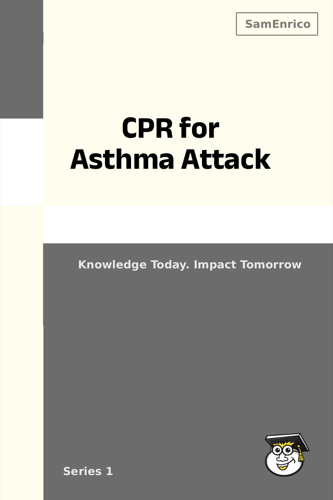
CPR for Asthma Attack eBook
Distinguishing respiratory arrest from cardiac arr
Distinguishing respiratory arrest from cardiac arrest.
Formats
Free sample
Chapter 1: The Ten-Second Mistake--–- The paramedic’s voice was calm, almost bored, as she leaned over the teenager’s limp body. “No pulse. Start CPR. Thirty compressions, two breaths.” The mother, kneeling on the living room carpet, had already done exactly what her certification class taught her. She pushed hard and fast on her son’s chest, counting aloud.
She was doing everything right. And yet, ten minutes later, when the ambulance arrived with lights but no siren because they already knew it was too late, the paramedic found something that would haunt her for years. The boy had a pulse the entire time. His heart never stopped. His mother had been performing chest compressions on a beating heart while his lungs—filled with thick mucus and squeezed by bronchospasm—slowly suffocated him.
The cause of death was listed as asthma. The actual cause was a ten-second mistake. She never checked for a pulse before she started compressions.The Core Problem with Standard CPR Training Every year, more than ten million people in the United States alone complete a CPR certification course. They learn the alphabet of emergency response: C-A-B. Compressions first.
Airway second. Breathing third. This protocol was designed for a specific scenario—sudden cardiac arrest, where the heart stops pumping blood, usually because of an electrical malfunction in the heart muscle. In that scenario, the blood already contains oxygen. The problem is circulation, not oxygenation.
So chest compressions come first, pushing that already-oxygenated blood to the brain while you wait for an automated external defibrillator to shock the heart back into rhythm.But asthma is not a heart problem. Asthma is a lung problem. The distinction seems obvious, yet it is the single most misunderstood concept in first aid training. When a person suffers a severe asthma attack, their heart typically continues to beat for five to fifteen minutes after they stop breathing. That heartbeat is desperate.
It is pumping blood that has been stripped of oxygen. The blood is circulating, but it is carrying nothing useful to the brain. The heart itself is being starved of oxygen with every passing minute until, exhausted and hypoxic, it finally stops. That final moment—when a respiratory arrest becomes a cardiac arrest—is the point at which standard CPR protocols finally become appropriate. But by then, the clock has been running for minutes.
Brain cells have been dying. The window for a good outcome has narrowed dramatically.This book exists because that window can be kept open. It can be kept open by a bystander who knows one simple thing that most CPR classes never teach: check the pulse before you touch the chest. That is it. A ten-second pulse check.
If there is a pulse and the person is not breathing normally, you do not start chest compressions. You start rescue breaths. Slow, gentle rescue breaths that deliver oxygen directly to the lungs while the still-beating heart moves that oxygen to the brain.The mistake described in the opening scene happens thousands of times each year. It happens in homes, in schools, in workplaces, and in public spaces. It happens because well-intentioned, recently trained people follow the letter of their certification while missing the spirit of emergency medicine.
They see someone collapse. They hear that CPR saves lives. They begin compressions. And sometimes, when the cause of collapse is respiratory rather than cardiac, they make things worse. Not because they are careless.
Because they were never taught the difference.The Epidemiology of Asthma Deaths Asthma affects approximately 262 million people worldwide. It is responsible for nearly half a million deaths annually. The vast majority of those deaths are preventable. This is not a controversial statement among pulmonologists or emergency physicians. It is a statement of fact supported by decades of autopsy studies and prehospital outcome data.
When researchers examine the circumstances of fatal asthma attacks, they find a consistent pattern: prolonged time between symptom onset and effective intervention, failure to recognize the severity of respiratory distress, and confusion about whether the patient is in respiratory or cardiac arrest.The statistics are sobering. According to a 2021 analysis published in the Annals of the American Thoracic Society, over 80 percent of out-of-hospital asthma deaths occur in patients who were alive and had a palpable pulse at the time bystanders began resuscitation attempts. That means four out of five people who die from asthma in a community setting die while their heart is still beating. They die of oxygen deprivation, not of pump failure. And in the majority of those cases, bystanders initiated chest compressions before checking for a pulse or after misinterpreting agonal breathing as a sign of cardiac arrest.Agonal breathing deserves special attention here.
When the brain is starved of oxygen, the brainstem may continue to send out primitive signals to the respiratory muscles. These signals produce gasps—slow, irregular, often noisy efforts that look nothing like normal breathing. A person experiencing agonal breathing may take a gasp every ten, twenty, or thirty seconds. Their mouth may open and close. Their chest may heave once and then fall still.
To an untrained observer, this can look like breathing. It is not. It is a sign of imminent death. Yet many bystanders see agonal gasps and assume the patient is breathing spontaneously. They delay action.
Or worse, they mistake the gasps for a sign of life and do nothing at all.The other common scenario is the opposite: a patient in severe respiratory distress who is still conscious and struggling to breathe, but whose wheezing suddenly stops. This is the silent chest. It is not an improvement. It is a pre-arrest warning. When the airways become so constricted and so plugged with mucus that no air can move, the wheezing stops because wheezing requires airflow.
A silent chest in a person who was previously wheezing loudly is not a sign that the attack is resolving. It is a sign that the patient is about to stop breathing entirely. Bystanders who do not know this may relax, thinking the worst has passed. It has not. It is just beginning.Primary vs.
Secondary Arrest – A Distinction That Saves Lives Let us define two terms clearly, because the rest of this book depends on them. Primary respiratory arrest means the patient has stopped breathing but still has a pulse. The heart is beating. The blood is circulating. But the blood is deoxygenated.
The patient is not dead. They will become dead in approximately five to fifteen minutes unless someone gives them oxygen through rescue breaths. Secondary cardiac arrest means the heart has stopped beating because the body has run out of oxygen. This is what happens after five to fifteen minutes of untreated primary respiratory arrest. The heart, starved of oxygen, goes into a non-perfusing rhythm—usually asystole or pulseless electrical activity.
At this point, the patient needs chest compressions to circulate blood while rescue breaths continue to deliver oxygen.The critical insight is that in asthma, cardiac arrest is almost always secondary to respiratory arrest. The heart does not fail first. The lungs fail first. The heart fails because the lungs failed and no one fixed them. This means that for the first several…
This is the end of the free sample. Get the eBook to keep going. Buy now
About this book
Details
- Author
- Thomson Lucina
- Publisher
- SamEnrico
- Language
- English
- Genre
- Non-Fiction, Health & Wellness, Respiratory
- Released
- 2026-06-06
- Pages (approx.)
- 146
- Available as
- eBook, Audiobook

Read better in the ZLOADR app
Your eBooks on your phone or tablet. Sign in with your SamEnrico account and start reading.
More by Thomson Lucina
 Chunking Study MaterialThomson Lucina$11.99
 ESL Teacher Abroad Stress GuideThomson Lucina$11.99
 Anger Management Apps GuideThomson Lucina$11.99
 Martial Artist HypnosisThomson Lucina$11.99
 Action Planning for LawyersThomson Lucina$11.99
 The Grandfather's War CrimesThomson Lucina$11.99
 Senior Self ForgivenessThomson Lucina$11.99
 The Tide of Empire: How Elizabeth I Charted the British SeasThomson Lucina$11.99
 Gwythaint: The Shadow That Feeds on KingsThomson Lucina$11.99
 How to Produce Educational Flash CardsThomson Lucina$11.99
 How to Produce Pre-wash and Stain RemoverThomson Lucina$11.99
 Freemium Upgrade Personalization EngineThomson Lucina$12.99
You may also like
 Hong Kong Handover 1997Dunn Johnnie$11.99
 Zumba For Postnatal Recovery CourseNeal Christian$11.99
 Zumba for BeginnersLadner Nikia$11.99
 YouTube Comment Mining GuideHumes Pandora$12.99
 Worry Box MeditationCarlin Rudy$11.99
 Workplace Stress MeditationNguyen Lynn$11.99
 Workplace Stress and Sleep RepairHawley Ivory$11.99
 Workplace Perfectionism CureDelaney Jeffry$11.99
 Workplace Injustice Anger GuideWallen Isabelle$11.99
 Work Addiction and Burnout LinkGreenwood Ester$11.99
 Women in Yoga and WellnessBeattie Galina$11.99
 Women in Stand Up ComedyChun Evangeline$11.99