
COVAX Facility Explained eBook
Distribute COVID vaccines equitably across all nat
by Sides Nilsa
Distribute COVID vaccines equitably across all nations.
Formats
Free sample
Chapter 1: The Nurse's Last Mask...--The mask hit the puddle with a sound that Ana Cecilia Gonzales would remember for the rest of her life. Not a splash, exactly. More of a wet slap, like a dead fish dropped on concrete. She stood frozen in the loading dock of Hospital Nacional Dos de Mayo in Lima, Peru, watching the last N95 mask in her inventory float face-down in a murky puddle of disinfectant runoff, old coffee, and something she tried not to identify. Behind her, the COVID-19 ward hummed with the rhythm of mechanical ventilators and the low moan of patients who had stopped calling out for help because they no longer had the breath to spare.It was March 15, 2020.
The world had been aware of the novel coronavirus for roughly eleven weeks. Peru had confirmed its first case nine days earlier. Ana Cecilia had been a nurse for twenty-three years. She had survived the H1N1 pandemic in 2009, the cholera outbreak of 2011, and the dengue fever epidemic of 2017. She had held the hands of AIDS patients in the 1990s when there were no antiretrovirals, watched children die of rotavirus before the vaccine arrived, and comforted mothers whose babies had been taken by pneumococcus before Gavi, the Vaccine Alliance, began subsidizing immunizations in Peru.
She thought she had seen everything the world of infectious disease could throw at her. She was wrong.She bent down, picked the mask out of the puddle, and carried it to the staff bathroom. She dried it with a hair dryer that the janitor, a man named Carlos who had worked at Dos de Mayo for thirty-one years, kept in the supply closet for reasons no one had ever thought to ask about. The heat would compromise the mask's electrostatic charge, she knew. The moisture had already breached the filter layer.
But the alternative was nothing. She put the mask back on and wore it for the next seventy-two hours straight. She would wear it for thirty-six hours after that, then remove it only to sleep for four hours, then put it back on for another forty-eight. By the end of that week, three of her colleagues would be intubated. Two would die.
Ana Cecilia would survive, though she would not understand until much later that her survival had less to do with her dried-out mask and everything to do with a facility being built six thousand miles away, in a converted conference room at the World Health Organization in Geneva, by twelve people who had never seen a Peruvian loading dock and would never know her name.The Great Panic To understand what happened next, you must first understand the nature of the disaster that began in March 2020. It was not, as many believe, primarily a medical crisis. Yes, the virus was novel and deadly and spread with terrifying efficiency. But humanity had faced novel viruses before. HIV had emerged in the 1980s and killed thirty-six million people.
Ebola had erupted repeatedly in Central and West Africa, each time with mortality rates exceeding fifty percent. H1N1 had circled the globe in 2009, infecting nearly a quarter of the world's population. What made COVID-19 different was not the pathogen alone. What made it different was the collapse of the global supply chain.Let me be precise. On January 30, 2020, the World Health Organization declared a Public Health Emergency of International Concern.
This is the WHO's highest alert level, reserved for events that pose a risk to multiple countries and require a coordinated international response. At that moment, there were approximately ninety-eight confirmed cases of COVID-19 outside China. The world had time. The world had warning. The world did nothing.Instead, country after country responded the same way: by closing borders, banning exports, and hoarding supplies.
Germany banned the export of N95 masks. France nationalized all mask production. India banned the export of hydroxychloroquine. The United States invoked the Defense Production Act to divert manufacturing capacity toward domestic needs. The European Union, which theoretically maintained a single market with free movement of goods, quietly allowed member states to impose export restrictions on personal protective equipment.
The global supply chain—that fragile web of just-in-time manufacturing, cross-border logistics, and multinational contracts that had kept the world fed, clothed, and medicated for three decades—shattered in a matter of days.The consequences were immediate and catastrophic. Peru, like most low- and middle-income countries, manufactured almost none of its own medical supplies. It relied on imports from China, which had shut down its factories in February, and from Europe, which had closed its borders in March. By the second week of March, Hospital Nacional Dos de Mayo had exactly forty-seven N95 masks for a staff of 1,200. By the third week, they had twelve.
By the fourth week, they had Ana Cecilia's hair-dried relic and nothing else.This was not a failure of medicine. It was a failure of coordination. And it foreshadowed, with grim precision, what would happen when vaccines became available.The Mantra"Nobody is safe until everyone is safe."Dr. Tedros Adhanom Ghebreyesus, the Director-General of the World Health Organization, repeated this phrase so often during the first months of 2020 that it became something of a meme. Journalists rolled their eyes.
Twitter mocked him. Critics called it naive idealism, a slogan for a world that did not exist. But Tedros was not being idealistic. He was being epidemiological.Here is the truth that rich nations refused to understand for most of 2020 and much of 2021: a pandemic does not respect borders. The virus does not check passports.
It does not require a visa. It mutates in the bodies of the unvaccinated, and those mutations travel on airplanes, ships, and land borders, and eventually they arrive in the rich nations that thought they had bought their way to safety. The history of pandemics is the history of this mistake. The 1918 influenza pandemic spread from army camps in Kansas to the battlefields of France to the entire world because no one thought to contain it early. HIV emerged in the Democratic Republic of Congo and reached every continent within two decades because the world treated it as an African problem until it was everyone's problem.
Ebola traveled from a child in Guinea to a nurse in Dallas because the world assumed the fire would stay in the forest.Tedros understood this. The epidemiologists at WHO understood this. The leaders of Gavi, the Vaccine Alliance, and CEPI, the Coalition for Epidemic Preparedness Innovations, understood this. But the heads of state of the G7 nations either did not understand or did not care. In April 2020, as Tedros pleaded for a coordinated global response, the United States announced that it would suspend funding to the WHO.
The United Kingdom hoarded more vaccine doses than its entire population could use. Canada ordered enough doses to vaccinate its population five times over. The European Union negotiated bilateral deals with pharmaceutical companies, bypassing any multilateral framework. The mantra became a joke. "Nobody is safe until everyone is safe" sounded lovely in a press release.
In the loading docks of Lima, it sounded like a lie.The Pre-Order The first COVID-19 vaccine was authorized for emergency use on December…
This is the end of the free sample. Get the eBook to keep going. Buy now
About this book
Details
- Author
- Sides Nilsa
- Publisher
- SamEnrico
- Language
- English
- Genre
- Non-Fiction, Health & Wellness, Pandemic
- Released
- 2026-06-08
- Pages (approx.)
- 125
- Available as
- eBook, Audiobook

Read better in the ZLOADR app
Your eBooks on your phone or tablet. Sign in with your SamEnrico account and start reading.
More by Sides Nilsa
 Cat Purr RelaxationSides Nilsa$11.99
 TM Teacher Training Overview GuideSides Nilsa$11.99
 Self Esteem for Insecure Partners GuideSides Nilsa$11.99
 Phone Affirmation App GuideSides Nilsa$11.99
 The Radiant Minds: Black Nobel Laureates Who Lit the Path of ScienceSides Nilsa$11.99
 A Beginners Guide to Cowboy Action Shooting (Volume 1)Sides Nilsa$11.99
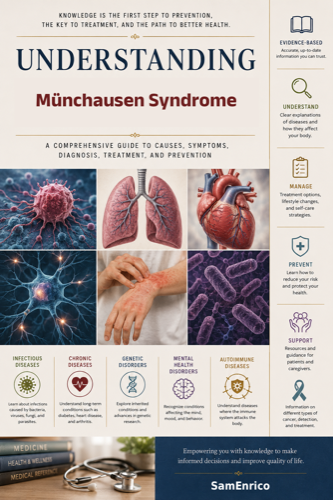 Understanding Münchausen SyndromeSides Nilsa$17.99
 Nvidia SWOT Analysis GuideSides Nilsa$12.99
 AI Financial Data Security GuideSides Nilsa$12.99
 Transportation and Excise Tax ConsultantSides Nilsa$11.99