
Non-FictionInformativeEducational
Courier Deliveroo eBook
A Coursebook on Courier Deliveroo
A Coursebook on Courier Deliveroo
Formats
Free sample
Chapter 1: The Silent Algorithm--–- The first time you hear it, you might mistake it for a text message. A soft chime, a vibration against your thigh, or a ping from the handlebar-mounted phone that has become your third eye. That sound is not a notification. It is a command. It arrives without context, without negotiation, and without any concern for whether you are eating, peeing, or sitting in traffic with a dying battery.
The algorithm does not care about your life. It only cares about one thing: moving a paper bag from Point A to Point B in less time than it promised the customer.This book is not about how to ride a bike or drive a scooter. It is not a motivational manual celebrating the gig economy as the future of work. And it is certainly not a cheerleader for Deliveroo, Uber Eats, or any other platform that has built a billion-dollar business on the backs of couriers who are legally classified as “self-employed” but practically operate as employees without benefits. This book is a survival guide.
A tactical field manual. A coursebook for anyone who has ever felt the cold dread of a flat tire three kilometers from a drop-off, the rage of a fifteen-minute wait at a restaurant that hadn’t even started the order, or the quiet humiliation of calculating your hourly wage and discovering you made less than minimum wage after expenses.Welcome to the invisible workforce. You are about to learn how the algorithm really works, why the “flexible hours” promise is a half-truth, and how to turn this grueling line of work into a sustainable income—or a launchpad for something better.The Myth of the Open Road When you signed up for Deliveroo, or any of its competitors, the recruitment video probably showed a smiling courier gliding through sun-drenched streets, handing a bag of Thai food to an equally smiling customer, then checking their phone to see a surprisingly large fee. The video did not show the courier standing in the rain at 10:47 PM, waiting for a customer who gave the wrong apartment number. It did not show the courier’s hands, cracked from wind and sanitizer gel.
And it certainly did not show the moment when the courier realizes that their “flexible schedule” has become a prison of their own making—because every hour they do not work, they do not earn.Let us name the lie immediately. The gig economy sold itself as liberation from the nine-to-five. No boss. No commute. No time clock.
Just you, your bicycle, and the open road. But what actually arrived was something closer to a hyper-efficient piece-rate system, enforced by software that tracks your every turn, every pause, and every rejection. You are not free. You are a node in a logistics network, and the algorithm is your silent manager. It does not shout.
It does not write passive-aggressive emails. It simply stops sending you orders when you reject too many, or when your acceptance rate drops below an invisible threshold, or when another courier is five meters closer to the restaurant.This chapter is about decoding that silent algorithm. It is about understanding the historical forces that created this industry, the legal fiction of self-employment, and the psychological traps that keep couriers grinding long after the work has stopped being profitable. Because you cannot win a game if you do not know the rules. And right now, most couriers do not even know the game exists.A Brief History of Hot Food on Wheels Before smartphones, before apps, before “click and collect,” food delivery was a simple, local affair.
You called a pizza shop. A teenager who worked for the shop drove a beat-up Honda to your house. You paid cash. The teenager got an hourly wage plus tips. The pizza shop owner paid payroll taxes, worker’s compensation insurance, and vehicle maintenance.
It was expensive, inefficient, and limited to a few cuisine types—mostly pizza, Chinese food, and the occasional curry.Then came the aggregators. Just Eat launched in Denmark in 2001, allowing customers to order from multiple restaurants through a single website. But Just Eat was merely a phone book with a payment gateway. Restaurants still handled their own delivery. The real disruption arrived with Deliveroo (2013) and Uber Eats (2014).
These platforms did something radical: they provided the delivery workforce themselves. Suddenly, a sushi restaurant that had never owned a scooter could offer delivery. A gourmet burger joint could compete with Domino’s. The platforms took a commission of 25-35% from restaurants, paid couriers per delivery, and called it a day.The courier model was genius from the platform’s perspective. By classifying couriers as independent contractors, the platforms avoided minimum wage laws, sick pay, holiday pay, pension contributions, and the administrative nightmare of payroll taxes.
Couriers became micro-entrepreneurs, responsible for their own vehicles, insurance, and tax filings. The platform’s only obligation was to provide a technology that matched supply (hungry customers) with demand (available couriers).But here is the dirty secret that no platform will tell you: independent contractor status was never about freedom. It was about liability. If you crash your scooter while delivering a burger, you are responsible for your own hospital bills. If your bicycle is stolen, you replace it.
If you work eighty hours a week and earn less than minimum wage, that is your problem, not the platform’s. The “flexibility” argument is a shield, not a benefit. And it has been tested in courts across Europe, from the UK Supreme Court (which ruled that Uber drivers are workers, not independent contractors) to the Dutch courts (which fined Deliveroo for misclassifying couriers). The platforms lose these cases more often than they win. But they appeal, delay, and restructure, because the alternative—treating couriers as employees—would destroy their business model.Self-Employed vs.
Worker: The Legal Trap If you are reading this book, you are almost certainly classified as self-employed. But what does that actually mean? Legally, self-employment means you are running your own business. You set your own hours. You can subcontract the work (though most platform contracts forbid this).
You are responsible for your own taxes, insurance, and equipment. In exchange, you have no rights to sick pay, holiday pay, parental leave, or unfair dismissal protection.The alternative classification is “worker” (or in some jurisdictions, “dependent contractor”). Workers have many of the same obligations as the self-employed—they still pay their own taxes and provide their own equipment—but they receive basic employment protections: minimum wage, paid leave, and the right to join a union. In the UK, the Supreme Court’s 2021 ruling in Uber BV v. Aslam established that Uber drivers are workers from the moment they log into the app until they log out.
The court reasoned that Uber sets the fare, assigns the ride, and penalizes drivers who reject too many trips. That is control. And control is the hallmark of employment.Deliveroo has fought this classification more aggressively than Uber. Why? Because Deliveroo’s “substitution” clause allows couriers to send a substitute to complete a delivery.
In theory, this proves you are truly self-employed—a business owner who can hire others. In practice, almost no courier ever…
This is the end of the free sample. Get the eBook to keep going. Buy now
About this book
Details
- Author
- Sexton Clarissa
- Publisher
- SamEnrico
- Language
- English
- Genre
- Non-Fiction, Informative, Educational
- Released
- 2026-06-02
- Pages (approx.)
- 133
- Available as
- eBook, Audiobook

Read better in the ZLOADR app
Your eBooks on your phone or tablet. Sign in with your SamEnrico account and start reading.
More by Sexton Clarissa
 Beginner Mindfulness for EmpathsSexton Clarissa$11.99
 Billy Graham Evangelism LegacySexton Clarissa$11.99
 The First 30 Days GuideSexton Clarissa$11.99
 The Complicated Grief Writing GuideSexton Clarissa$11.99
 The Slack Communication MasterySexton Clarissa$11.99
 The Silk Road Gambit: The Merchant Prince Who Outwitted the MongolsSexton Clarissa$11.99
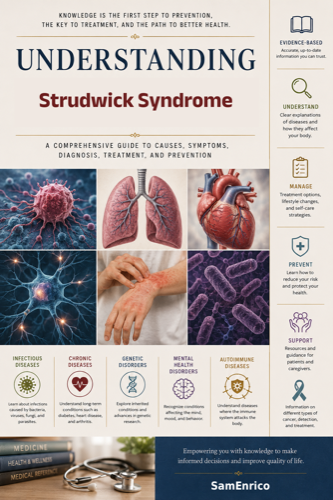 Understanding Strudwick SyndromeSexton Clarissa$17.99
 Social Media Generations ReportSexton Clarissa$12.99
 FSC Certification Export GuideSexton Clarissa$12.99
 How to Start a Call Centres Working on a Fee or Contract Basis Business (Beginners Guide)Sexton Clarissa$11.99
You may also like
 Hong Kong Handover 1997Dunn Johnnie$11.99
 Zumba For Postnatal Recovery CourseNeal Christian$11.99
 Zumba for BeginnersLadner Nikia$11.99
 YouTube Comment Mining GuideHumes Pandora$12.99
 Worry Box MeditationCarlin Rudy$11.99
 Workplace Stress MeditationNguyen Lynn$11.99
 Workplace Stress and Sleep RepairHawley Ivory$11.99
 Workplace Perfectionism CureDelaney Jeffry$11.99
 Workplace Injustice Anger GuideWallen Isabelle$11.99
 Work Addiction and Burnout LinkGreenwood Ester$11.99
 Women in Yoga and WellnessBeattie Galina$11.99
 Women in Stand Up ComedyChun Evangeline$11.99