
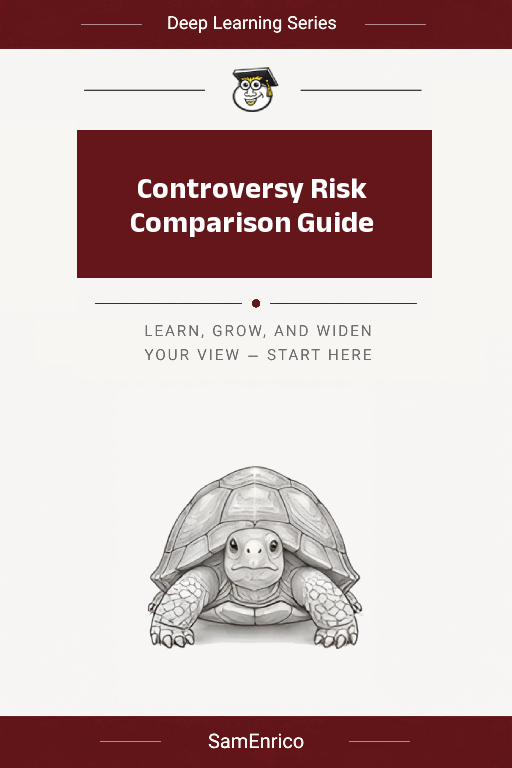
Non-FictionStrategic AtlasControversy Risk
Controversy Risk Comparison Guide
Compares public firms on ESG controversy frequency
Compares public firms on ESG controversy frequency, severity, and resolution time across oil spills, labor strikes, and compliance fines.
Formats
About this book
Free sample
Chapter 1: The Ratings Mirage--–- In the spring of 2018, a European asset manager overseeing €47 billion made a decision that looked prudent on paper. Following their firm's strict ESG integration policy, they increased their position in a German automaker that held an “AA” rating from MSCI for environmental performance. The automaker had impeccable disclosures, a dedicated sustainability committee, and years of glossy reports celebrating its green transition. Eighteen months later, the stock dropped 37 percent in a single month when news broke that the company had been using defeat devices on diesel engines not just in the United States—where the scandal first erupted—but across Europe as well. The ESG rating had not predicted the collapse.
In fact, the rating had barely budged during the entire episode, falling from AA to A, then recovering within six months as the company hired a new compliance officer and issued a revised sustainability report. The asset manager's clients wanted to know: what exactly had that AA rating been measuring?That question drives this book. It is not a rhetorical attack on ESG ratings, nor a dismissal of the entire sustainable investing movement. Rather, it is a surgical examination of a specific blind spot that has grown larger as ESG has become mainstream. The blind spot is controversy risk—the tangible, measurable, financially material events that actually harm companies, communities, and investors.
And the central problem is this: traditional ESG ratings are not designed to capture controversy risk in a way that allows comparison across firms, industries, or time.The Promise and the Peril of Aggregation ESG ratings emerged from a noble impulse. Investors wanted to know which companies were managing environmental, social, and governance issues responsibly. The ratings agencies—MSCI, S&P Global, Sustainalytics, Refinitiv, and others—aggregated hundreds of indicators into single scores or letter grades. An AA rating promised that a company was a leader in managing ESG risks. An AAA rating was even better.
The logic was intuitive: if you cannot measure everything, at least you can provide a summary.The problem is that aggregation necessarily involves trade-offs. A company can excel…
This is the end of the free sample. Get the eBook to keep going. Buy now
Contents
- Chapter 1
- Chapter 2
- Chapter 3
- Chapter 4
- Chapter 5
- Chapter 6
- Chapter 7
- Chapter 8
- Chapter 9
- Chapter 10
- Chapter 11
- Chapter 12
Details
- Author
- Parris Fatima
- Publisher
- SamEnrico
- Language
- English
- Genre
- Non-Fiction, Strategic Atlas, Controversy Risk
- Released
- 2026-05-30
- Pages (approx.)
- 157
- Available as
- eBook, Audiobook

Read better in the ZLOADR app
Your eBooks on your phone or tablet. Sign in with your SamEnrico account and start reading.
More by Parris Fatima
 PCOS Insulin Resistance Diet PlanParris Fatima$11.99
 Peg System for Historical DatesParris Fatima$11.99
 Smile Types Decoding GuideParris Fatima$11.99
 Scott Peterson Mistress Testimony BreakdownParris Fatima$11.99
 Medicare Enrollment and Coverage GuideParris Fatima$11.99
 Sumo in the Southern Cross: How a Japanese Tradition Found a New Home in Australia and New ZealandParris Fatima$11.99
 How to Start a Hobby in ZinesParris Fatima$11.99
 Understanding Partial LissencephalyParris Fatima$17.99
 American Domain Strategy GuideParris Fatima$12.99
 Installation Team ManagerParris Fatima$11.99
You may also like
 Hong Kong Handover 1997Dunn Johnnie$11.99
 Zumba For Postnatal Recovery CourseNeal Christian$11.99
 Zumba for BeginnersLadner Nikia$11.99
 YouTube Comment Mining GuideHumes Pandora$12.99
 Worry Box MeditationCarlin Rudy$11.99
 Workplace Stress MeditationNguyen Lynn$11.99
 Workplace Stress and Sleep RepairHawley Ivory$11.99
 Workplace Perfectionism CureDelaney Jeffry$11.99
 Workplace Injustice Anger GuideWallen Isabelle$11.99
 Work Addiction and Burnout LinkGreenwood Ester$11.99
 Women in Yoga and WellnessBeattie Galina$11.99
 Women in Stand Up ComedyChun Evangeline$11.99