
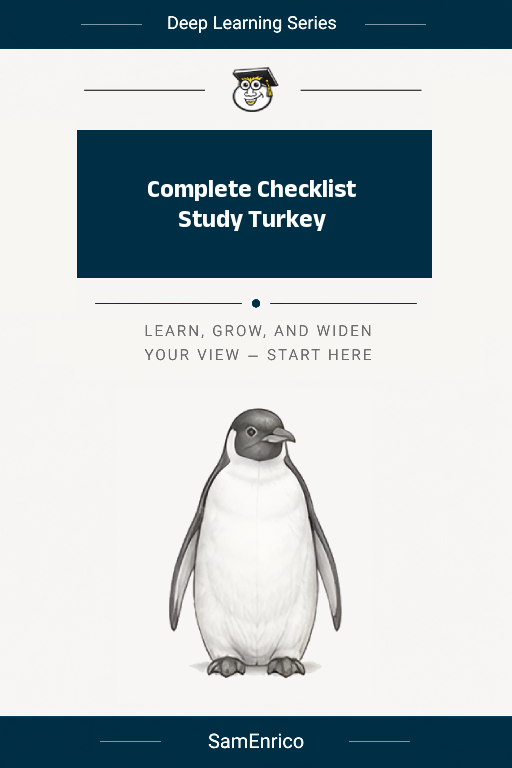
Non-FictionStudent's ShortcutMaster Checklist
Complete Checklist Study Turkey eBook
Lists everything needed before, during, and after
by Lima Bethel
Lists everything needed before, during, and after studying in Turkey including documents, applications, finances, and cultural preparation.
Formats
Free sample
Chapter 1: The Fourteen-Month Clock--The difference between a student who thrives in Turkey and one who drops out within the first semester is almost never about intelligence, language ability, or even money. It is about timing. Specifically, it is about understanding that the clock starts ticking not when you receive your acceptance letter, but roughly fourteen months before you ever set foot in a Turkish classroom.Most international students approach studying abroad like a checklist of obvious tasks: choose a university, fill out an application, get a visa, buy a plane ticket, go. That linear, optimistic path works for domestic students in their home countries. It fails spectacularly for international students in Turkey because the Turkish system has hidden dependencies that are not explained in glossy university brochures.
Your high school diploma is worthless until the Turkish government approves it, a process that takes six weeks. Your scholarship application may be due eight months before you even know you are accepted. Your student visa cannot be applied for more than sixty days before your program starts, but your residence permit must be started within thirty days of arrival. These are not arbitrary hurdles. They are a system.
And like any system, once you understand the rules, you can master them.This chapter gives you the framework for that mastery. It is called the Fourteen-Month Clock, and it is the single most important tool in this book. By the time you finish reading, you will know exactly what to do, in what order, and by when. You will also understand why most students fail before they even apply, and how you will not be one of them.The Three Mistakes That Kill Applications Before They Start Before we build your timeline, we need to understand why so many qualified students never make it to Turkey. The International Office at Istanbul's largest foundation university processes approximately eight thousand international applications each year.
Of those, nearly thirty percent are rejected for reasons entirely unrelated to academic qualifications. These are not students who failed the YÖS or had low GPAs. These are students who made preventable administrative errors. The three most common are worth examining in detail because they are the ghosts of Christmas future—the mistakes you will avoid by reading this chapter.Mistake One: The Diploma Assumption A student from Pakistan receives an acceptance letter from a university in Ankara. Elated, she books her flight and arrives two weeks before orientation, expecting to register for classes.
At registration, she is told she cannot enroll. Why? Her high school diploma has not been approved by the Turkish National Education Ministry (MEB). She assumed her diploma was valid everywhere. It is not.
The MEB approval process takes four to six weeks, cannot be expedited, and requires documents she left at home. She spends her first semester watching You Tube videos in her dorm room while waiting for paperwork. By the time her diploma is approved, she has missed the course registration deadline. She goes home.Mistake Two: The Scholarship Delay A student from the United States has excellent grades and strong test scores. He applies to a top Turkish university three months before the start of the fall semester, which is what he would do for any American college.
He is accepted but learns that all scholarships were awarded eight months earlier during the Early Bird round. His tuition is $15,000 per year—more than twice what he can afford. He declines the offer and attends a less prestigious university in Europe, telling friends that "Turkish scholarships are a myth." The scholarships were real. He just applied too late.Mistake Three: The Visa Window A student from Nigeria receives her acceptance letter seventy days before her program starts. She immediately submits her visa application, eager to be prepared.
The consulate rejects her application because she applied more than sixty days before her start date. She resubmits at fifty-nine days, but by then appointment slots are full. She misses her orientation, arrives three weeks late, and struggles to catch up for the entire semester. She finishes with mediocre grades, not because she is incapable, but because she started behind.These three mistakes share a common root: each student was working from an incomplete timeline. They did not know about the dependencies that Turkish bureaucracy creates.
They did not know that some steps must be started fourteen months in advance while others cannot be started until sixty days before. They were flying blind.You are not.The University Shortlisting Matrix: Choosing Where to Apply Before you can build a timeline, you need to know where you are applying. Most students approach university selection backward: they fall in love with a city (Istanbul! Cappadocia! The beach!) or a brand name (Boğaziçi!
Koç! Sabancı!) and then try to make the rest fit. This is emotional, not strategic. It leads to students enrolling in programs that are not taught in English, at universities that do not offer their major, in cities they cannot afford.The University Shortlisting Matrix solves this problem by forcing you to score universities objectively across five variables. You will create this matrix for yourself using a simple spreadsheet.
Here is how each variable works.Variable One: Tuition Cost (Weight: 25%)Turkish universities fall into two categories. Public universities (devlet üniversiteleri) charge approximately 500to500 to 500to2,000 USD per year for international students, depending on the program. Engineering and medicine cost more; humanities cost less. Foundation universities (vakıf üniversiteleri) are private and charge 8,000to8,000 to 8,000to25,000 USD per year, though most offer significant scholarships. Your budget will determine which category is realistic.
Do not apply to foundation universities without a scholarship unless you have at least $10,000 per year available for tuition alone.Variable Two: Language of Instruction (Weight: 20%)Most Turkish universities offer programs taught entirely in English, Turkish, or a mix. Do not trust a university's website when it claims a program is "English-taught." Instead, verify with the YÖK (Council of Higher Education) database at yok.gov.tr. Search for your program and look for the field "Dili" (Language). If it says "İngilizce," you are safe. If it says "Türkçe" or "Karma" (mixed), expect significant instruction in Turkish.
International students who enroll in Turkish-language programs without B2-level proficiency fail at alarming rates.Variable Three: Location (Weight: 15%)Turkey has eighty-one provinces, but international students overwhelmingly cluster in four cities: Istanbul, Ankara, Izmir, and Eskişehir. Each has tradeoffs.Istanbul is the most expensive city in Turkey. Monthly expenses for a student range from ₺15,000 to ₺20,000 (450−450-450−600 USD). Rent for a shared apartment near a university can exceed ₺10,000. However, Istanbul has the most English-speaking jobs, the best social life, and the most international student support.Ankara, the capital, is more affordable (₺10,000–₺15,000 per month) and quieter.
It has excellent public universities (Ankara University, METU, Bilkent) but fewer entertainment options. Winters are cold and snowy.Izmir, on the Aegean coast, offers a relaxed lifestyle and lower costs (₺10,000–₺15,000 per month). The university options are fewer but good (Ege University, Dokuz Eylül, İzmir University of Economics).Eskişehir is the budget option (₺8,000–₺10,000 per month). It is a legitimate student city with two universities and a lively atmosphere, but almost no…
This is the end of the free sample. Get the eBook to keep going. Buy now
About this book
Details
- Author
- Lima Bethel
- Publisher
- SamEnrico
- Language
- English
- Genre
- Non-Fiction, Student's Shortcut, Master Checklist
- Released
- 2026-05-30
- Pages (approx.)
- 149
- Available as
- eBook, Audiobook

Read better in the ZLOADR app
Your eBooks on your phone or tablet. Sign in with your SamEnrico account and start reading.
More by Lima Bethel
 Manual Chores Movement GuideLima Bethel$11.99Manual Chores Movement GuideLima Bethel$11.99
 EVO Ring Sleep GuideLima Bethel$11.99
 The Barefoot Walking MeditationLima Bethel$11.99
 The Black Dahlia Los Angeles GeographyLima Bethel$11.99
 Eisenhower Matrix For EntrepreneursLima Bethel$11.99
 The Bureau of Investigation’s War on the Black Hand: America’s First Organized Crime Task Force (1909-1920)Lima Bethel$11.99
 How to Become a Lens-blank GaugerLima Bethel$11.99
 Understanding Rheumatoid PurpuraLima Bethel$17.99
 Nigeria VAT Compliance GuideLima Bethel$12.99
 Marketing and Communications CoordinatorLima Bethel$11.99
You may also like
 Hong Kong Handover 1997Dunn Johnnie$11.99
 Zumba For Postnatal Recovery CourseNeal Christian$11.99
 Zumba for BeginnersLadner Nikia$11.99
 YouTube Comment Mining GuideHumes Pandora$12.99
 Worry Box MeditationCarlin Rudy$11.99
 Workplace Stress MeditationNguyen Lynn$11.99
 Workplace Stress and Sleep RepairHawley Ivory$11.99
 Workplace Perfectionism CureDelaney Jeffry$11.99
 Workplace Injustice Anger GuideWallen Isabelle$11.99
 Work Addiction and Burnout LinkGreenwood Ester$11.99
 Women in Yoga and WellnessBeattie Galina$11.99
 Women in Stand Up ComedyChun Evangeline$11.99