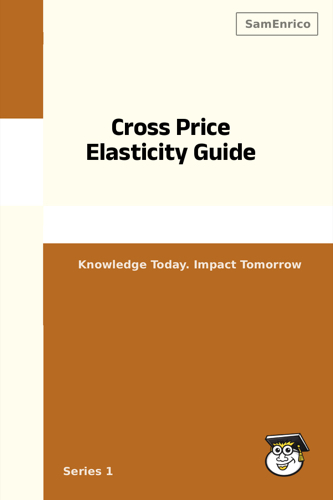
Competitive Landscape GCC Guide
Map local and international competitors across Sau
Map local and international competitors across Saudi, UAE, and Qatari B2B sectors with positioning strategies.
Formats
About this book
Free sample
Chapter 1: Three Gulf Worlds--–- In the winter of 2019, two logistics companies received identical contracts to deliver medical supplies to government hospitals across the Arabian Peninsula. One company, based in Dubai's Jebel Ali Free Zone, had spent five years perfecting its just-in-time delivery system, winning awards for efficiency and earning glowing testimonials from private sector clients across the UAE. The other company, based in Riyadh, operated older trucks, employed fewer data analysts, and charged significantly higher rates. By any objective measure, the Dubai firm was superior.Yet within eighteen months, the Dubai firm had closed its regional office and retreated to Europe. The Riyadh firm had doubled its market share.What happened?
The Dubai firm assumed that the skills which made it successful in the UAE would translate seamlessly to Saudi Arabia and Qatar. It bid aggressively on government tenders using the same pricing models and service guarantees that had won private sector clients in Dubai. It offered 24-hour delivery, real-time tracking, and a price point twenty percent below the Riyadh incumbent. The firm's regional director, a seasoned executive with twelve years of Gulf experience, was baffled when the bids were rejected.The Riyadh firm won not because it was faster, cheaper, or more innovative. It won because it employed a retired Saudi brigadier general as its government relations director, because it sourced its truck tires from a local manufacturer certified under the IKTVA program, and because its owner attended the same majlis as the procurement director's cousin.
In the language of this book, the Riyadh firm understood the Trifecta Divergence. The Dubai firm did not.This chapter dismantles the single most destructive fallacy in Gulf market entry: the assumption that the Gulf Cooperation Council functions as a unified economic space. It demonstrates that Saudi Arabia, the United Arab Emirates, and Qatar operate on fundamentally different economic logics, each with its own decision-making cadence, competitive dynamics, and localization requirements. It introduces the distinction between legal and operational localization—a distinction that resolves apparent contradictions in how different Gulf states enforce local content rules. And it provides the Trifecta Alignment Matrix, a practical…
This is the end of the free sample. Get the eBook to keep going. Buy now
Contents
- Chapter 1
- Chapter 2
- Chapter 3
- Chapter 4
- Chapter 5
- Chapter 6
- Chapter 7
- Chapter 8
- Chapter 9
- Chapter 10
- Chapter 11
- Chapter 12
Details
- Author
- Jacobson Linsey
- Publisher
- SamEnrico
- Language
- English
- Genre
- Non-Fiction, Business Brief, Competitive Analysis
- Released
- 2026-06-01
- Pages (approx.)
- 144
- Available as
- eBook, Audiobook

Read better in the ZLOADR app
Your eBooks on your phone or tablet. Sign in with your SamEnrico account and start reading.
More by Jacobson Linsey
 HIIT Progress Tracking GuideJacobson Linsey$11.99
 Teleophthalmology Senior GuideJacobson Linsey$11.99
 Online Shopping Addiction WorkbookJacobson Linsey$11.99
 Father's Meth Lab HomeJacobson Linsey$11.99
 Smoking Cessation for SeniorsJacobson Linsey$11.99
 Whispers of the Forbidden: The Enigma of Cleopatra’s Lost LettersJacobson Linsey$11.99
 Understanding Carnevale–canun–Mendoza SyndromeJacobson Linsey$17.99
 How to Start a Pots Made of Plastic (not Flower Pots) Business (Beginners Guide)Jacobson Linsey$11.99
 Open Book Online Exam GuideJacobson Linsey$12.99
 Sales Funnel Systems with GoHighLevelJacobson Linsey$11.99