
Non-FictionInformativeEducational
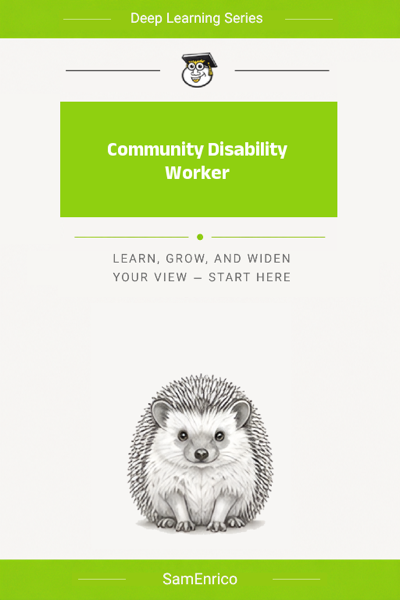
Community Disability Worker eBook
A Coursebook on Community Disability Worker
A Coursebook on Community Disability Worker
Formats
Free sample
Chapter 1: The Shoes We Wear--– Before you learn a single skill, you need to know what we are running from. Not because history is neat or motivational, but because without this knowledge, you will unknowingly repeat the very patterns that created the disability industrial complex in the first place. You will walk into someone's home—your client's home—armed with good intentions and a schedule, and you will do harm while believing you are helping. This is not a warning about bad people. This is a warning about good people who never learned where their practices came from.This chapter begins with a pair of shoes.
Not metaphorically. Literally.A man named Gerald spent forty-two years inside a large state institution in the Midwestern United States. He had an intellectual disability that, in a different world with different supports, might have meant he lived in an apartment, held a job, and visited family on holidays. Instead, Gerald lived in a building that housed over two thousand people in conditions that would have been condemned for livestock. He slept on a metal bed with a mattress so thin you could feel the springs.
He wore clothes that did not belong to him because the institution's laundry system had lost every label years ago. When Gerald died, the staff found his body wearing another man's shoes. Not because he had stolen them. Because no one knew his name, so no one could match his belongings.Gerald's shoes are not an outlier. They are not the worst-case exception meant to shock you into attention.
They are the ordinary, everyday reality of disability care for most of human history. And unless you understand how we got from Gerald's institution to your client's group home or apartment, you will not see the ways those same patterns persist in disguised forms.This chapter tells three stories. First, the story of the institutions: how they were built, why they seemed like a good idea at the time, and what actually happened inside them. Second, the story of the slow, brutal fight to close those institutions and move people into communities. Third, the story of what came next—not the triumphant ending most textbooks write, but the unfinished, compromised present where "community living" too often means a smaller institution with a nicer name.By the end of this chapter, you will never look at a routine, a schedule, or a "program" the same way again.
You will see the ghosts of Gerald's institution hiding in plain sight. And you will have the moral anger—because that is what this work requires, an informed, sustainable moral anger—to name them.The Architecture of Abandonment: Why Institutions Were Built To understand why institutions existed, you have to understand what people believed about disability before the mid-twentieth century. And what they believed was, by modern standards, horrifying.For most of Western history, people with intellectual disabilities were considered "idiots"—a clinical term, not merely an insult, derived from the Greek idiotes, meaning a private person who could not participate in public life. They were considered ineducable, incapable of moral reasoning, and potentially dangerous. Philosophers wrote treatises about whether a person with an intellectual disability could even have a soul.
(The consensus for several centuries was: probably not.) People with physical disabilities fared slightly better, but only if their bodies could be put to work. A blind person could weave baskets. An amputee could beg. But a person who could not work and could not reason? That person was a problem to be solved.The solution, from the early nineteenth century onward, was the institution.The first wave of institutions in Europe and North America were called asylums—from the Greek asylon, meaning sanctuary.
The idea, in its original reformist formulation, was almost progressive. Reformers argued that people with disabilities and mental illnesses should not be chained in jails or left to starve in almshouses. They should be gathered into specialized facilities where they would receive moral treatment: routine, fresh air, meaningful work, and religious instruction. The early asylums had farms and workshops. They had high ceilings and large windows.
They were, by the standards of their time, an improvement over the alternative.But the architecture of the institution contained the seeds of its own corruption. Large buildings designed for hundreds of people required hierarchies of staff. Hierarchies required rules. Rules required enforcement. And enforcement, when you are dealing with people who cannot leave, slides inexorably toward coercion.By the late nineteenth century, the asylums had become warehouses.
The farms were gone. The workshops were gone. The high ceilings remained, but they were now covered in peeling lead paint. The large windows were barred. Patients—for that is what they were now called, not residents—spent their days sitting on wooden benches in dayrooms that smelled of urine and bleach.
The "moral treatment" had been replaced by custodial care: feeding, clothing, and containing bodies until they died.The numbers tell a story that words cannot fully capture. In 1900, approximately 150,000 people lived in institutions for people with disabilities in the United States. By 1950, that number had grown to over 600,000. In the United Kingdom, the peak came later, with over 150,000 people in mental handicap hospitals by the 1970s. These were not small facilities.
The average institution housed over a thousand people. Some held five thousand or more.These were cities of the rejected, built on the outskirts of real cities, hidden from view. And inside them, almost anything could happen because almost no one was watching.Life Inside: What the Brochures Did Not Show The institutions produced brochures, of course. They always do. The brochures showed smiling residents in crisp uniforms, sitting in orderly rows, engaged in "vocational training" (sorting bolts or weaving baskets that would never be sold).
They showed cheerful nurses and kindly doctors. They showed clean dormitories with beds made at military angles.The reality was different.Here is what investigative journalists found when they finally gained access to institutions in the 1960s and 1970s. (And note: they found these conditions after decades of the institutions knowing they would be inspected. Imagine what they hid.)Overcrowding was universal. Institutions operated at 150 to 200 percent of designed capacity.
Beds were placed so close together that staff could not walk between them. Residents slept in hallways, in converted closets, in basements with no windows. Clothing was shared because there was no way to track individual belongings. Toothbrushes were shared. Combs were shared.
Diseases spread constantly: hepatitis, tuberculosis, scabies, influenza.Abuse was not a bug. It was a feature. Staff-to-resident ratios were so low that controlling the population required systematic coercion. Residents who "acted out"—which could mean anything from physical aggression to simply walking away from an assigned seat—were subjected to restraints. Leather straps.
Posey vests. Metal handcuffs. Straightjackets. "Quiet rooms" that were actually locked closets with no furniture. Ice baths.
Electric shock. Medications so strong they rendered the recipient unconscious for twelve hours or more.The abuse was not always physical. The most damaging abuse was often the quiet, everyday kind. Residents were called names: retard, moron, idiot, imbecile (all clinical terms at various historical moments, all eventually repurposed as slurs). They were…
This is the end of the free sample. Get the eBook to keep going. Buy now
About this book
Details
- Author
- Smart Karolyn
- Publisher
- SamEnrico
- Language
- English
- Genre
- Non-Fiction, Informative, Educational
- Released
- 2026-05-04
- Pages (approx.)
- 154
- Available as
- eBook, Audiobook

Read better in the ZLOADR app
Your eBooks on your phone or tablet. Sign in with your SamEnrico account and start reading.
More by Smart Karolyn
 Mindful Breathing for PanicSmart Karolyn$11.99
 The Nellie Bly Investigative ReporterSmart Karolyn$11.99
 Losing A Dog GuideSmart Karolyn$11.99
 The Rumination in Grief GuideSmart Karolyn$11.99
 Quality Engineer CreativitySmart Karolyn$11.99
 The Blood of the Euphrates: Hammurabi's War of UnificationSmart Karolyn$11.99
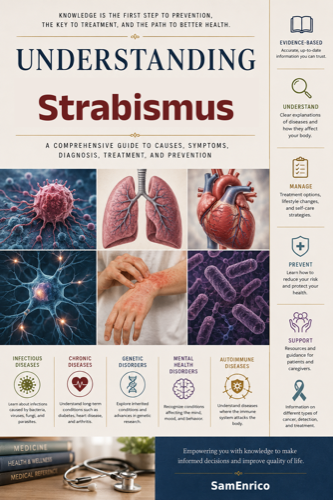 Understanding StrabismusSmart Karolyn$17.99
 AI Accounting Mistakes GuideSmart Karolyn$12.99
 Vendor Master Data CleanupSmart Karolyn$12.99
 How to Start a Calorifier Business (Beginners Guide)Smart Karolyn$11.99
You may also like
 Hong Kong Handover 1997Dunn Johnnie$11.99
 Zumba For Postnatal Recovery CourseNeal Christian$11.99
 Zumba for BeginnersLadner Nikia$11.99
 YouTube Comment Mining GuideHumes Pandora$12.99
 Worry Box MeditationCarlin Rudy$11.99
 Workplace Stress MeditationNguyen Lynn$11.99
 Workplace Stress and Sleep RepairHawley Ivory$11.99
 Workplace Perfectionism CureDelaney Jeffry$11.99
 Workplace Injustice Anger GuideWallen Isabelle$11.99
 Work Addiction and Burnout LinkGreenwood Ester$11.99
 Women in Yoga and WellnessBeattie Galina$11.99
 Women in Stand Up ComedyChun Evangeline$11.99