
researchStudent's ShortcutCommunity Research
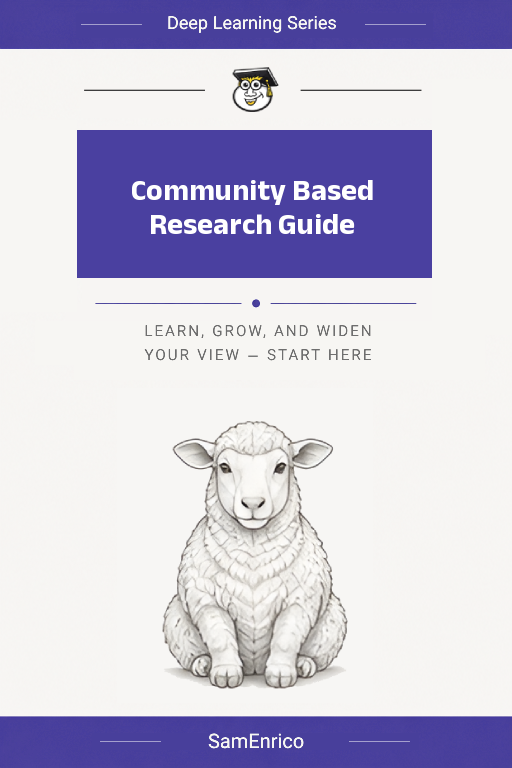
Community Based Research Guide
Propose participatory research with community part
Propose participatory research with community partners for grad school. Describe advisory boards, shared governance, and mutual benefit agreements.
Formats
About this book
Free sample
Chapter 1: The Extraction Epidemic--–- You are about to do something that community members have dreaded for generations. You will walk into a neighborhood, a tribal council, a church basement, or a community center. You will carry a clipboard, a voice recorder, or a laptop. You will introduce yourself as a researcher from the university. And then you will ask people to give you their stories, their time, their pain, and their trust.
Most of them will say yes, not because they want to, but because they have learned that saying no to someone with a clipboard means being left out of decisions that affect their lives. What happens next determines whether you become a partner or become another name on a long list of people who took and never gave back.This is not an exaggeration. It is the lived reality of communities that have been researched to death.Before we define Community-Based Research, before we compare it to CBPR or Action Research, before we talk about advisory boards or mutual benefit agreements, we need to sit with an uncomfortable truth. The standard model of academic research—the one you were probably taught in your methods courses, the one that prizes objectivity and distance and the dispassionate collection of data—has caused real harm to real communities. That harm has a name.
It is called extraction.Extraction is what happens when researchers enter a community, collect data, publish findings that may or may not be accurate, and then leave without ever returning. The community is poorer for having participated. Not poorer in money necessarily, though that often happens too. Poorer in trust. Poorer in hope.
Poorer in the belief that anyone from the outside actually cares about their wellbeing. Extraction is the default setting of traditional research. And most graduate students never learn that there is another way until they have already caused damage they cannot undo.This chapter exists to stop that damage before it starts.You will learn what extraction looks like in practice, why well-intentioned researchers cause it anyway, and how a different orientation—Community-Based Research—offers a path out…
This is the end of the free sample. Get the eBook to keep going. Buy now
Contents
- Chapter 1
- Chapter 2
- Chapter 3
- Chapter 4
- Chapter 5
- Chapter 6
- Chapter 7
- Chapter 8
- Chapter 9
- Chapter 10
- Chapter 11
- Chapter 12
Details
- Author
- Boynton Belia
- Publisher
- SamEnrico
- Language
- English
- Genre
- research, Student's Shortcut, Community Research
- Released
- 2026-06-01
- Pages (approx.)
- 141
- Available as
- eBook, Audiobook

Read better in the ZLOADR app
Your eBooks on your phone or tablet. Sign in with your SamEnrico account and start reading.
More by Boynton Belia
 Harvard Extension School vs CourseraBoynton Belia$11.99
 The Suburban Pollution GuideBoynton Belia$11.99
 The Ambassador's Negotiation ArtBoynton Belia$11.99
 Empathic Listening NVC WorkbookBoynton Belia$11.99
 Through the Lens of Gold: The Photographers Who Captured the Olympic SpiritBoynton Belia$11.99
 Sales Administrative AssistantBoynton Belia$11.99
 How to Produce Bicycle Headset SpacersBoynton Belia$11.99
 How to Become a Stenotype OperatorBoynton Belia$11.99
You may also like
 Scientific Research On TM GuideMartens Nathanial$11.99
 Research Proposal Methodology Section MasteryPauley Debroah$11.99
 Research Proposal Appendix CompilationRaines Tyisha$11.99
 Academic Researcher Distraction GuideFord Virgil$11.99
 TM Research and ScienceCovert Nicki$11.99
 Social Anxiety Research ReviewRoberge Cole$11.99
 Research Proposal Significance Section GuideBock Tory$12.99
 Research Proposal Reviewer PsychologyLugo Tawanda$11.99
 Research Proposal Research Questions DesignLara Robbi$11.99
 Research Proposal References and CitationsPatten Shanice$11.99
 Research Proposal Mixed Methods DesignCameron Omega$11.99
 Research Proposal Data Management PlanAnderson Roberto$12.99