
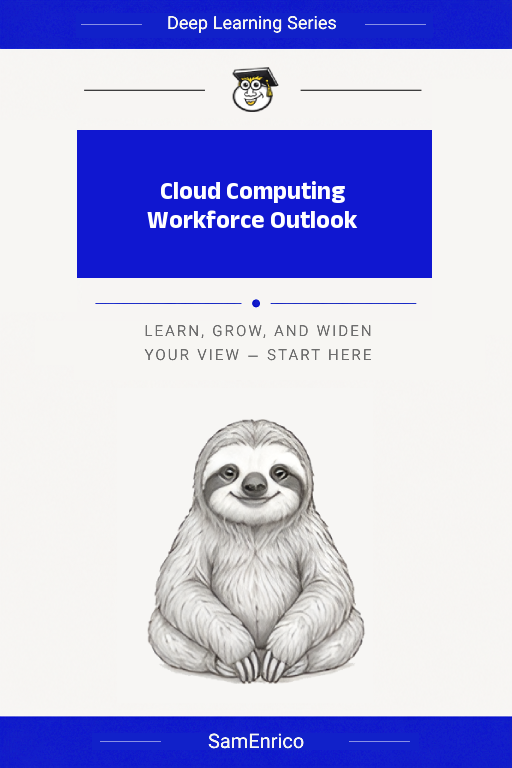
Cloud Computing Workforce Outlook eBook
Project cloud architect, DevOps, and SRE demand, c
Project cloud architect, DevOps, and SRE demand, certification trends, and skills gap evolution through the end of the decade.
Formats
Free sample
Chapter 1: The Half-Life Horizon--The cloud certification you earned eighteen months ago is already losing relevance. Not because you forgot the material, and not because the vendor changed the exam—but because the underlying assumptions of that certification have shifted beneath your feet. The skill of manually provisioning an EC2 instance with a specific set of CLI flags, something that commanded a premium in 2023, is now partially automated by AI assistants and infrastructure-as-code generators. The specific YAML syntax for a Kubernetes deployment that you memorized for a Dev Ops interview is now something your junior developer generates with a prompt. This is not a failure of memory.
It is a structural feature of the cloud computing workforce in 2025, and it will accelerate through 2030.The half-life of cloud technical skills has collapsed from roughly ten years in 2015 to under two and a half years today. But that single statistic, while dramatic, is dangerously misleading if applied uniformly. The truth is more nuanced and more urgent: vendor-specific syntax and tool workflows depreciate in twelve to eighteen months, while architectural principles—distributed systems design, reliability patterns, security fundamentals—retain value for four to five years. Organizations that treat workforce planning as a one-time project, or that assume a certification lasts as long as a degree, will fail catastrophically before the end of this decade. This chapter establishes the macro forces driving that collapse, distinguishes between durable and perishable skills, and provides the foundational framework for every subsequent chapter in this book.The Myth of the "Set and Forget" IT Career For most of the history of enterprise IT, a professional could reasonably expect that skills acquired in their twenties would carry them through to their forties with only incremental updates.
A network engineer who learned Cisco IOS in 2005 could still configure a router in 2015. A systems administrator who mastered Windows Server 2008 could migrate to 2012 with a few weeks of study. A database administrator who knew SQL Server 2000 could adapt to 2008, then 2012, then 2016, with each transition requiring perhaps a month of focused learning.Cloud computing shattered that model. The shift from on-premise infrastructure to cloud-native architectures did not just change the tools—it changed the fundamental unit of work. Instead of provisioning a physical server once every three years, cloud engineers deploy ephemeral containers that live for minutes.
Instead of writing configuration files that persist for the life of a data center, cloud architects write infrastructure-as-code that is destroyed and recreated daily. Instead of troubleshooting a single known stack, SREs debug distributed systems spanning three cloud providers and a legacy on-prem component.The result is that the rate of change in cloud tools and practices now exceeds the rate at which humans can passively absorb updates. A 2019 study by the Linux Foundation found that the average half-life of a cloud certification was approximately four years. By 2023, that figure had dropped to under three years. By 2025, the most aggressive estimates place it at twenty-two months for foundational certifications and approximately three to four years for professional-level certifications—but only when paired with continuous hands-on practice.Consider the specific example of AWS Lambda.
Launched in 2014, it created an entirely new category of serverless computing. By 2017, Lambda skills were a differentiator. By 2019, they were expected for any cloud architect. By 2022, the basic mechanics of Lambda (trigger configuration, IAM roles, timeout settings) had become table stakes. By 2025, AI-assisted Lambda development tools can generate most simple functions from natural language prompts.
The professional who mastered Lambda in 2018 and did not continue learning saw their skill's market value drop by over sixty percent by 2025. The professional who learned Lambda in 2018 and continued to learn Lambda Layers, Lambda Power Tuning, and Lambda Snap Start maintained their premium.This is the half-life horizon. It is not that skills become useless. It is that they become undifferentiated. A skill that was rare and valuable in 2023 is common and commoditized in 2026.
The only way to stay ahead is to constantly move the horizon.The Great Convergence: Cloud, AI, and Cybersecurity If the collapse of skill half-life were the only force at work, the cloud workforce would simply need to learn faster. But a second, equally powerful force is reshaping the landscape: the convergence of cloud, artificial intelligence, and cybersecurity into a single, inseparable skillset. This book refers to this as the C-AI-S stack (Cloud, AI, Security), and it is the single most important structural change in IT workforce planning since the rise of the internet.Until approximately 2022, cloud architects could reasonably ignore AI. They provisioned compute and storage; data scientists built models in separate environments. Dev Ops engineers could delegate security to a separate team.
SREs could focus on uptime while security teams worried about breaches. Those silos are collapsing.A cloud architect in 2030 cannot design a system without answering three questions: Where will AI inference run? How will the data pipeline comply with sovereignty laws? What is the security posture of the LLM APIs we are calling? These are not separate concerns.
They are interleaved. The same infrastructure that runs a transaction processing system also runs the anomaly detection model that flags fraud. The same CI/CD pipeline that deploys application code also deploys model weights and security policies. The same observability stack that monitors latency also monitors drift in model outputs.This convergence is not theoretical. In 2024, AWS launched Bedrock, its generative AI platform, and within six months, cloud architects who could not reason about LLM integration were being filtered out of interviews.
In 2025, Azure added AI governance tools that require architects to understand both role-based access control and model safety classifiers. GCP, already built around AI/ML from its inception, now expects every cloud engineer to have basic fluency in Vertex AI.The cybersecurity dimension is even more urgent. The same cloud misconfiguration that exposes a database in 2025 also exposes the prompts and responses from your AI agents. The same supply chain attack that compromised a CI/CD pipeline in 2024 can now inject malicious model weights into an LLM-powered customer service bot. The security certification market, already growing at twelve to fourteen percent annually, is being supercharged by AI-specific security concerns.
By 2030, the authors project that over eighty percent of senior cloud roles will require both a cloud certification and a security certification as a baseline, with AI literacy as a third pillar.For the individual professional, this means that learning cloud in isolation is no longer sufficient. A cloud architect who cannot explain the security implications of a misconfigured S3 bucket is dangerous. A Dev Ops engineer who cannot secure their CI/CD pipeline against AI-assisted attacks is a liability. An SRE who cannot detect anomalous model behavior is blind to a growing class of incidents. The T-shaped professional—deep in one domain, broad in others—is no longer a nice-to-have.
It is the only viable career path through the end of the decade.The Ethical Lag: Why Institutions Cannot Keep Up If the half-life horizon and the C-AI-S convergence are natural outcomes of technological acceleration, the third force driving the cloud workforce is a structural failure of institutions. This book calls it ethical lag: the widening gap between the speed of corporate cloud innovation and the speed of educational and governmental…
This is the end of the free sample. Get the eBook to keep going. Buy now
About this book
Details
- Author
- Cleveland Karl
- Publisher
- SamEnrico
- Language
- English
- Genre
- Non-Fiction, Forecast & Outlook, Cloud Careers
- Released
- 2026-06-01
- Pages (approx.)
- 158
- Available as
- eBook, Audiobook

Read better in the ZLOADR app
Your eBooks on your phone or tablet. Sign in with your SamEnrico account and start reading.
More by Cleveland Karl
 The Military Parent Stress GuideCleveland Karl$11.99
 Trauma Dream Characters GuideCleveland Karl$11.99
 Task Energy Matching GuideCleveland Karl$11.99
 Behavioral Addiction in Law SchoolCleveland Karl$11.99
 The Skywalkers of the Altai: Prehistoric Pioneers of the HeavensCleveland Karl$11.99
 The Hollow Crown: Merlin’s Last ProphecyCleveland Karl$11.99
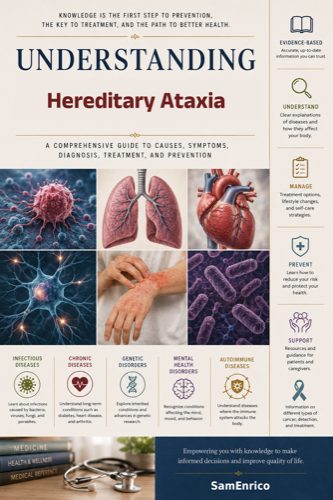 Understanding Hereditary AtaxiaCleveland Karl$17.99
 Closing Deal Script HandbookCleveland Karl$12.99
 Angel FundingCleveland Karl$11.99
 How to Start a Press for Chipboard Business (Beginners Guide)Cleveland Karl$11.99