
Non-FictionInformativeEducational
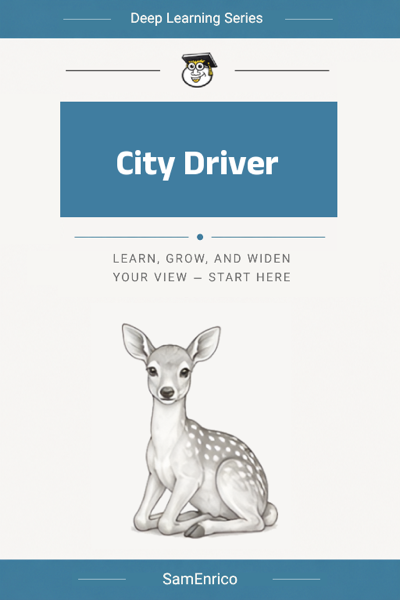
City Driver eBook
A Coursebook on City Driver
by Keane Creola
A Coursebook on City Driver
Formats
Free sample
Chapter 1: The Wreck-Less Pivot...--–- The morning rush had not yet begun, but Jamal already felt the weight of the next ten hours pressing against his chest. Behind the wheel of his delivery van, stopped at a red light on Grand Avenue, he watched the numbers on the dashboard clock flicker from 5:47 to 5:48. Six hundred and twelve minutes to go. He had done this route for three years—four hundred deliveries a week, fifty thousand stops, and not a single collision. Not one.
His boss called him reliable. His wife called him exhausted. The city called him invisible, just another gray van sliding through the cracks of the urban grid. But today, something would change. Today, a delivery driver in a brown truck would cut him off at the 14th Street intersection, and Jamal would feel his face go hot, his hands tighten on the wheel, his foot press the accelerator just a little harder than necessary.
Today, for the first time in three years, he would almost hit a pedestrian. And later, sitting on a curb with a police officer taking notes, he would replay the moment and realize: he had not been unlucky. He had been reckless. And he had never been taught the difference.This is a book about that difference.Every year, 1.35 million people die on the world’s roads. The World Health Organization, which has tracked this number for more than a decade, calls traffic collisions a “hidden pandemic.” Unlike malaria or tuberculosis, which kill in villages and rural clinics, traffic deaths happen in plain sight—on boulevards named after presidents, in intersections guarded by traffic cameras, outside schools with flashing yellow lights.
And disproportionately, they happen in cities. Not on highways where speed limits reach seventy miles per hour. Not on rural roads where ambulances take forty-five minutes to arrive. But in cities, on streets where speeds rarely exceed thirty miles per hour, where the density of human beings is highest, where the margin between a near miss and a funeral is measured in inches and milliseconds.The paradox is maddening: city driving is slow driving, but city driving is also dangerous driving. A driver on an empty highway at seventy miles per hour is statistically safer than a driver on a crowded city street at twenty-five miles per hour.
Why? Because the highway presents predictable problems—merging, lane changes, brake lights ahead. The city presents unpredictable chaos: a child chasing a ball between parked cars, a cyclist salmoning against traffic, a delivery driver jumping out of a truck without checking his mirror, a pedestrian looking at a phone while stepping off a curb. The city does not forgive mistakes. It accumulates them, compounds them, and then, without warning, converts them into collisions.The top ten best-selling books on urban driving share a single, unspoken premise: most collisions are not caused by lack of skill.
They are caused by a reckless mental state. Reckless defined not as criminal negligence—though that exists—but as the everyday, ordinary, almost invisible habit of rushing, distraction, and emotional decision-making that infects every driver who spends more than twenty hours a week in city traffic. The driver who races a yellow light to save ninety seconds. The driver who tailgates because the car ahead is going too slow. The driver who honks at a pedestrian taking too long to cross.
The driver who, like Jamal, feels his face go hot and presses the accelerator a little harder. These are not bad people. They are not drunk or drugged or deliberately malevolent. They are simply operating in a cognitive state that guarantees, over enough miles, a collision.This chapter is about shifting that state. Not through fear—fear is a poor teacher that degrades performance—but through a fundamental reorientation of what it means to be a professional driver.
The shift is from speed to safety, from reaction to anticipation, from the emotional satisfaction of “winning” a traffic interaction to the professional satisfaction of arriving with nothing broken. It is a pivot. And it is called, with intentional wordplay that will become a mantra throughout this book, the wreck-less pivot.The Birth of a Dangerous Myth Before we can fix the problem, we must understand how drivers learn to be reckless in the first place. Most professional drivers—taxi drivers, rideshare drivers, delivery drivers, bus drivers—come to the job with a decade or more of personal driving experience. They learned to drive as teenagers, in suburban or rural environments, on roads with low density and high visibility.
They passed a written test and a road test, both of which emphasized vehicle control—parallel parking, three-point turns, lane changes—and gave only cursory attention to the psychology of risk. They were taught to operate a machine, not to manage a complex dynamic system of humans, machines, and unpredictable variables.Then they moved to the city. Or they started a city driving job. And suddenly, all the rules they learned no longer applied. The two-second following distance became impossible in stop-and-go traffic.
The habit of looking twelve seconds ahead became useless when the view was blocked by a double-parked truck. The assumption that other drivers would follow traffic laws was shattered by the daily reality of rolling stops, illegal U-turns, and turn signals that never flashed. The new driver adapted by speeding up, by squeezing through gaps that weren’t really there, by honking and swerving and muttering curses behind the windshield. In other words, they became reckless. Not because they wanted to be dangerous, but because they never learned the alternative.The alternative is the subject of this entire book.
But it begins with a single idea: the distinction between reckless driving and wreck-less driving.Reckless vs. Wreck-less: A Semantic Anchor The English language offers a fortunate coincidence. The word “reckless” contains within it the word “wreck.” Reckless driving is driving that leads, eventually and inevitably, to a wreck. But what if we could drive in a way that is “wreck-less”—not perfectly safe, because perfect safety does not exist in a city of eight million people, but less likely to produce a wreck? The spelling change is small.
The mindset change is enormous.Reckless driving is emotional. It is the driver who accelerates toward a yellow light because he is late. It is the driver who refuses to let someone merge because she was cut off ten minutes ago and is still angry. It is the driver who tailgates to send a message, who honks to express frustration, who speeds to feel in control. Reckless driving feels good in the moment.
It releases dopamine and adrenaline. It provides the illusion of agency. But it is mathematically irrational. Studies of urban taxi fleets have shown that aggressive driving—hard acceleration, hard braking, frequent lane changes—saves an average of ninety seconds per hour of driving. Ninety seconds.
In exchange for that trivial gain, the driver increases their risk of a collision by four hundred percent. Four hundred percent. The trade-off is so absurd that it would be comical if the consequences were not fatal.Wreck-less driving, by contrast, is calculated. It is the driver who approaches a yellow light…
This is the end of the free sample. Get the eBook to keep going. Buy now
About this book
Details
- Author
- Keane Creola
- Publisher
- SamEnrico
- Language
- English
- Genre
- Non-Fiction, Informative, Educational
- Released
- 2026-06-02
- Pages (approx.)
- 137
- Available as
- eBook, Audiobook

Read better in the ZLOADR app
Your eBooks on your phone or tablet. Sign in with your SamEnrico account and start reading.
More by Keane Creola
 Emotional Regulation in SobrietyKeane Creola$11.99
 Work Home Spillover Anger PlanKeane Creola$11.99
 The Mexico Job Interview GuideKeane Creola$11.99
 SCAMPER For Business TeamsKeane Creola$11.99
 Letting Go of Midlife RegretKeane Creola$11.99
 The Siege of the San José: A 19th-Century Hostage Crisis in the AndesKeane Creola$11.99
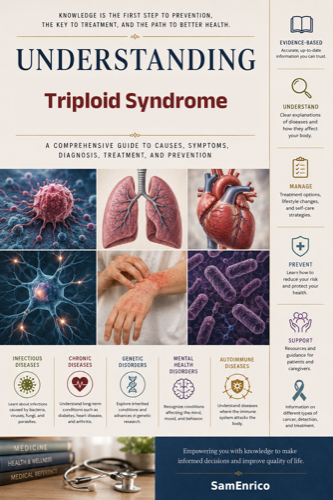 Understanding Triploid SyndromeKeane Creola$17.99
 How to Start a Cine Camera Business (Beginners Guide)Keane Creola$11.99
 Currency Risk for FranchisorsKeane Creola$12.99
 YC Network Africa GuideKeane Creola$12.99
You may also like
 Hong Kong Handover 1997Dunn Johnnie$11.99
 Zumba For Postnatal Recovery CourseNeal Christian$11.99
 Zumba for BeginnersLadner Nikia$11.99
 YouTube Comment Mining GuideHumes Pandora$12.99
 Worry Box MeditationCarlin Rudy$11.99
 Workplace Stress MeditationNguyen Lynn$11.99
 Workplace Stress and Sleep RepairHawley Ivory$11.99
 Workplace Perfectionism CureDelaney Jeffry$11.99
 Workplace Injustice Anger GuideWallen Isabelle$11.99
 Work Addiction and Burnout LinkGreenwood Ester$11.99
 Women in Yoga and WellnessBeattie Galina$11.99
 Women in Stand Up ComedyChun Evangeline$11.99