
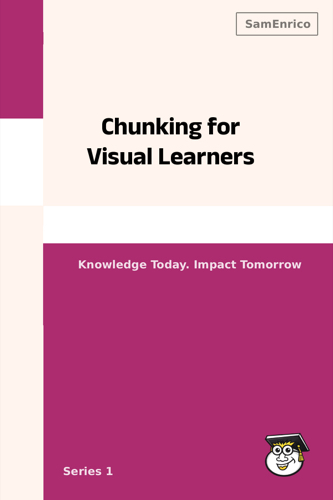
Free sample
Chapter 1: The Pattern-Seeking Brain--–- Every morning, without fail, you perform a miracle of pattern recognition that would humble the world’s most advanced supercomputers. You wake up, open your eyes, and within milliseconds—faster than conscious thought—your brain has identified the ceiling, distinguished it from the wall, recognized the texture of your bedsheets, located the window, assessed the quality of light, and determined whether that shadow in the corner is a jacket draped over a chair or an intruder. You never pause to think, “Let me carefully analyze these visual inputs one by one.” You simply see. You see a room, not 10,000 individual pixels. You see a bed, not cotton fibers and springs.
You see a morning, not a cascade of raw sensory data.This effortless compression of visual information into meaningful wholes is not just a neat party trick of human neurology. It is the single most powerful cognitive tool you possess—and it is the very tool that traditional education, textbooks, and workplace training have systematically ignored. While your brain evolved to process the world in parallel, in patterns, and in wholes, the modern world insists on feeding you information sequentially, linearly, and in fragmented pieces. The result is a constant, low-grade cognitive crisis: information overload, forgetting what you just read, re-reading paragraphs three times, staring at spreadsheets until your eyes blur, and walking away from study sessions feeling exhausted yet empty-handed.This book is built on a deceptively simple proposition: what if you stopped fighting your brain’s natural wiring and started using it? What if the problem is not that you are a “bad learner” or that the material is “too hard,” but that you have been presenting information to yourself in the wrong format?
What if the secret to mastering complex topics, remembering what you learn, and reducing study time by half was not more hours at the desk, but a different way of seeing?This chapter answers the first and most important question: why does chunking work so powerfully for visual learners? We will journey into the cognitive science of working memory, explore the evolutionary origins of visual processing, and uncover the hidden architecture of expert memory. By the end of this chapter, you will understand not just that chunking works, but why your brain was built for it—and why most learning materials are designed against your biology.The Magical Number That Changed Psychology…
This is the end of the free sample. Get the Audiobook to keep going. Buy now
About this book
Details
- Author
- Shore Jeanie
- Publisher
- SamEnrico
- Language
- English
- Genre
- Non-Fiction, Self-Help / Visual
- Released
- 2026-06-07
- Pages (approx.)
- 141
- Available as
- eBook, Audiobook

Listen in the VoxFlicks app
Audiobooks and audio dramas wherever you go. Sign in with your SamEnrico account and press play.
More by Shore Jeanie
 TM For Immune FunctionShore Jeanie$11.99
 Delegation in Law FirmsShore Jeanie$11.99
 Social Anxiety Group Therapy Low CostShore Jeanie$11.99
 Caffeine Road Rage Link GuideShore Jeanie$11.99
 FCPA Money Laundering TiesShore Jeanie$11.99
 Success Attribution Rewiring GuideShore Jeanie$11.99
 Nicotine Free Within 90 DaysShore Jeanie$11.99
 Mussolini DuceShore Jeanie$11.99
 The Bronze Sculptors of Ife: Masters of the Divine FormShore Jeanie$11.99
 Whispers of the Silk Road: The Unseen Caravans That Shaped the WorldShore Jeanie$11.99
 Frozen in Time: The Last Days of the Franklin ExpeditionShore Jeanie$11.99
 The Dancer's Guide to Hootchy-kootchyShore Jeanie$11.99
You may also like
 Hong Kong Handover 1997Dunn Johnnie$11.99
 Zumba For Postnatal Recovery CourseNeal Christian$11.99
 Zumba for BeginnersLadner Nikia$11.99
 YouTube Comment Mining GuideHumes Pandora$12.99
 Worry Box MeditationCarlin Rudy$11.99
 Workplace Stress MeditationNguyen Lynn$11.99
 Workplace Stress and Sleep RepairHawley Ivory$11.99
 Workplace Perfectionism CureDelaney Jeffry$11.99
 Workplace Injustice Anger GuideWallen Isabelle$11.99
 Work Addiction and Burnout LinkGreenwood Ester$11.99
 Women in Yoga and WellnessBeattie Galina$11.99
 Women in Stand Up ComedyChun Evangeline$11.99