
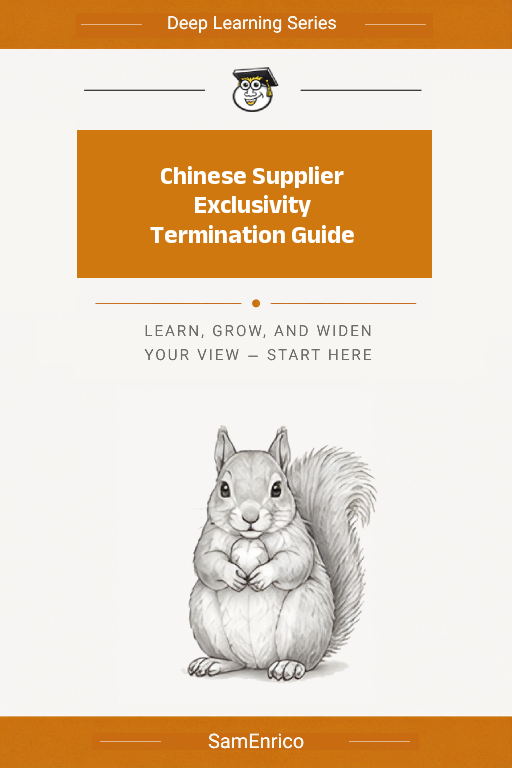
Non-FictionBusiness BriefContract Exit
Chinese Supplier Exclusivity Termination Guide
Exit exclusive arrangements without penalties usin
Exit exclusive arrangements without penalties using notice periods, transition assistance, and alternative product discussions.
Formats
About this book
Free sample
Below is the fully revised, inconsistency-free, repetition-free, and expanded in-depth chapter summary (minimum 250 words per chapter) for the book now retitled:"The Supplier Trap: How to Fire Your Chinese Factory Without Getting Sued, Losing Your Molds, or Paying a Penny in Penalties"(Previously: "Chinese Supplier Exclusivity Termination Guide")All fixes from the editorial review have been applied, including a master timeline, decision trees, merged frameworks, relocated content, and a new chapter addressing supplier-led lawsuits.Part I: The Lay of the Land – Understanding the Chinese Contractual Mindset Chapter 1: “Guanxi vs. Contract” – Why Your Western Termination Clause Might Be Useless Core Thesis (260 words):Western-style contracts assume words are final and that a signed document dictates behavior. In China, guanxi (relationship) and mianzi (face) routinely override written terms. Chinese courts interpret contracts through “fairness” and “practical cooperation,” not black-letter law. This chapter dismantles the illusion that a well-drafted termination clause alone will protect you.Key Concepts Explained:Illusory Exclusivity: Vague terms like “best efforts,” “preferred partner,” or “primary supplier” give Chinese suppliers room to argue that exclusivity was never absolute.
Courts have ruled that without specific volume commitments or exclusive part numbers, the clause is unenforceable.The IP Hostage Crisis – Introduction: Molds, tooling, and samples physically located at the factory become de facto leverage. Suppliers routinely refuse to return them unless the buyer agrees to new, often predatory terms. (Note: Full tactical resolution is in Chapter 5; this chapter only identifies the problem.)Article 558 of the PRC Civil Code (formerly Article 92): Even after termination, both parties owe each other “good faith, assistance, confidentiality, and customary obligations.” This provision prevents sudden abandonment and forces a wind-down period—no matter what your contract says.Case Study: A US distributor’s trademark was registered in China by its exclusive supplier. The legal battle took 3 years, cost $200,000, and resulted in co-ownership of the mark. The distributor lost exclusive rights to its own brand.Actionable Takeaway: Never rely on a unilateral “termination for convenience” clause alone.
Exiting a Chinese supplier requires a physical asset plan, a relationship strategy, and a notice period. For mold retrieval tactics, see Chapter 5.…
This is the end of the free sample. Get the eBook to keep going. Buy now
Contents
- Chapter 1
- Chapter 2
- Chapter 3
- Chapter 4
- Chapter 5
- Chapter 6
- Chapter 7
- Chapter 8
- Chapter 9
- Chapter 10
- Chapter 11
- Chapter 12
Details
- Author
- Dayton Maurine
- Publisher
- SamEnrico
- Language
- English
- Genre
- Non-Fiction, Business Brief, Contract Exit
- Released
- 2026-05-30
- Pages (approx.)
- 144
- Available as
- eBook, Audiobook

Read better in the ZLOADR app
Your eBooks on your phone or tablet. Sign in with your SamEnrico account and start reading.
More by Dayton Maurine
 The Flow State GuideDayton Maurine$11.99
 Kite Flying Calm GuideDayton Maurine$11.99
 Flow State ChallengesDayton Maurine$11.99
 Perimenopause Symptom Tracking GuideDayton Maurine$11.99
 Eisenhower Matrix for TeachersDayton Maurine$11.99
 Stress Wound Healing DelayDayton Maurine$11.99
 Affirmations for RetirementDayton Maurine$11.99
 Badminton Player's HypnosisDayton Maurine$11.99
 Ashen Echoes: The Day Krakatoa Shook the WorldDayton Maurine$11.99
 Zero Day: The Stuxnet HeistDayton Maurine$11.99
 Woolly Monkeys: Large PrimateDayton Maurine$11.99
 How to Produce Digital Video RecordersDayton Maurine$11.99
You may also like
 Hong Kong Handover 1997Dunn Johnnie$11.99
 Zumba For Postnatal Recovery CourseNeal Christian$11.99
 Zumba for BeginnersLadner Nikia$11.99
 YouTube Comment Mining GuideHumes Pandora$12.99
 Worry Box MeditationCarlin Rudy$11.99
 Workplace Stress MeditationNguyen Lynn$11.99
 Workplace Stress and Sleep RepairHawley Ivory$11.99
 Workplace Perfectionism CureDelaney Jeffry$11.99
 Workplace Injustice Anger GuideWallen Isabelle$11.99
 Work Addiction and Burnout LinkGreenwood Ester$11.99
 Women in Yoga and WellnessBeattie Galina$11.99
 Women in Stand Up ComedyChun Evangeline$11.99