
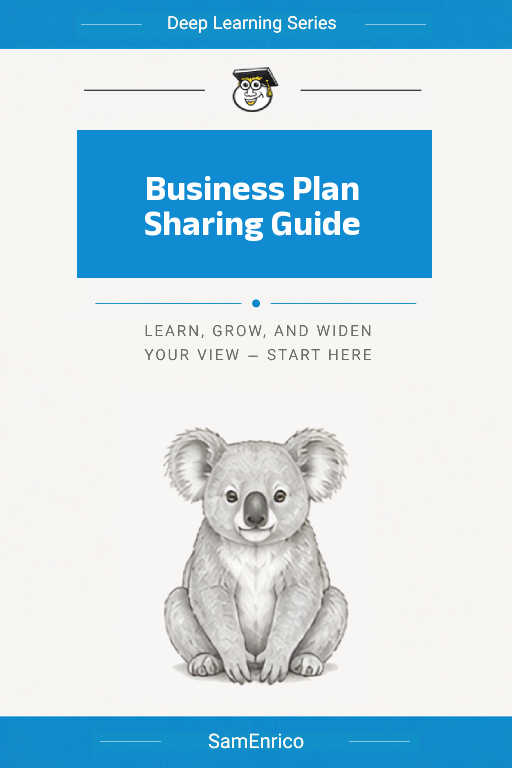
Non-FictionStartup GuideSecure SharingCloud Storage
Business Plan Sharing Guide eBook
Securely share business plan with investors using
Securely share business plan with investors using free cloud storage and permission controlled links.
Formats
Free sample
Chapter 1: The $10 Million Screenshot--–- The email arrived at 2:43 PM on a Tuesday. David, founder of a promising fintech startup, had been waiting weeks for this moment. A well-known angel investor had agreed to review his full business plan. David attached the 47-page document—including detailed financial projections, unit economics, and customer acquisition costs—directly to the email. He typed “Confidential - please do not share,” clicked send, and exhaled.
The fundraising process had begun.Seventeen days later, a competitor launched an identical pricing model. Same tier structure. Same discount triggers. Same seasonal promotions. David’s lawyer sent a cease-and-desist letter.
The competitor responded with a screenshot of the email David had sent—the “Confidential” note still visible at the top—and wrote: “We received this from a mutual contact. No NDA was signed. Good luck in court.”David’s startup folded eight months later. He never raised a dollar.This is not an outlier. It is a pattern.The Paradox at the Heart of Fundraising Every founder faces the same impossible choice.
To raise money, you must share your secrets. Investors need to see your financial model, your proprietary data, your customer lists, your unit economics, your intellectual property. Without access, they cannot write a check. But the moment you share those secrets, you lose control over them. A single forward, a single screenshot, a single careless click can send your business plan to a competitor, a supplier, or the public internet.This chapter begins with an uncomfortable truth: most founders share their business plans the same way they share restaurant reservations—through email attachments and unsecured links.
They assume that a line saying “Confidential” at the top of a document creates a legal force field. They assume that investors will behave honorably. They assume that leaks only happen to other people.All of these assumptions are wrong.The first chapter of this book exists to shatter those illusions. You cannot protect what you do not understand. Before we discuss NDAs, cloud permissions, watermarks, or any of the technical solutions that fill the coming chapters, we must first confront the real problem: the way you are probably sharing your business plan right now is dangerous, and you do not even know it.Three Stories You Will Never Forget Story One: The Gmail Forward That Killed a Company The fintech founder from the opening—let us call him David—made three mistakes.
First, he attached the business plan directly to an email instead of hosting it on a secure platform. Email attachments live forever. They sit in sent folders, download to local hard drives, sync to mobile devices, and get backed up to cloud services. David had no way to revoke access after sending.Second, he did not require a signed NDA or clickwrap agreement before sharing the full document. His “Confidential” label had no legal teeth.
In most jurisdictions, writing “Confidential” on an email without a signed agreement is legally meaningless. It signals intent but creates no enforceable obligations.Third, he assumed the angel investor would protect the document. The angel did not leak the plan directly. The angel forwarded it to his analyst for review. The analyst forwarded it to a friend who worked at a competitor.
The friend forwarded it to the head of strategy. Within 72 hours, the competitor had David’s complete financial model.David’s mistake was not trusting the wrong person. His mistake was building a system that assumed trust would never be violated.Story Two: The Reddit Post That Exposed Profit Margins Maria founded a hardware startup. She had developed a proprietary manufacturing process that cut production costs by 40 percent—her single greatest competitive advantage. She shared her pitch deck with a potential strategic partner using a Google Drive link set to “Anyone with the link can view.”She assumed “view only” meant secure.A week later, a friend texted her: “Is this your deck?” The friend had found a screenshot of Maria’s profit margin page on Reddit.
Someone had taken a photo of their computer screen—a smartphone photo, not a digital screenshot—and posted it in a startup forum with the caption “Can someone explain these margins? Seems fake.”The post had been up for six days. It had 847 upvotes.Maria traced the leak back to the strategic partner’s intern, who had shared the link with a study group. The intern did not intend harm. He simply did not understand that a “view only” link was still a shareable object.
Maria spent the next three months explaining to prospective investors that her margins were real, even though an anonymous Reddit user had called them fake. The damage was not legal—it was reputational. And reputational damage in fundraising is often fatal.Story Three: The Cloud Graveyard Ahmed raised a seed round for his AI startup. He used a virtual data room—expensive, but secure. After the round closed, he stopped paying for the service.
The data room deleted all files. Ahmed assumed his business plan was gone from the world.Two years later, while preparing for a Series A, Ahmed Googled his company name. Page three of the search results showed a link to a Chinese file-sharing site. He clicked. His complete business plan—every document from the seed round—was available for free download.
Someone had saved the files and reposted them.Ahmed had never revoked access. He had never required investors to delete copies. He had never followed up after the round closed. His business plan had been floating around the internet for twenty-three months without his knowledge.When he confronted the seed investors, most had no idea the files were still accessible. One had left the original cloud link in a team Slack channel.
Another had saved the files to a shared drive that had been compromised. Ahmed had no legal recourse because his NDA had expired after eighteen months—and even if it had not, he could not prove which investor was responsible.What These Stories Reveal These three founders were not careless. They were not stupid. They were operating under the same assumptions that most founders hold today:Assumption One: Investors will protect your secrets because it is in their interest to do so.Assumption Two: “View only” means the document cannot be copied or shared.Assumption Three: A confidentiality label creates legal protection.Assumption Four: After fundraising ends, the documents disappear.All four assumptions are false. Let us examine why.Why Investors Do Not Always Protect Your Secrets Investors are not malicious.
But they are busy. A typical venture capital firm sees five thousand deals per year. They have interns, analysts, associates, and partners—all of whom need access to documents. Each person who touches your business plan represents a potential leak point. Most leaks are not espionage.
Most leaks are accidents: a forwarded email, a saved attachment, a link posted in a Slack channel, a screenshot sent to a friend for advice.The investor who leaks your plan rarely benefits from the leak. They simply do not have strong enough incentives to protect your secrets with the rigor you would expect. Your business plan is one of thousands they have seen. To you…
This is the end of the free sample. Get the eBook to keep going. Buy now
About this book
Details
- Author
- Goodwin Bernadette
- Publisher
- SamEnrico
- Language
- English
- Genre
- Non-Fiction, Startup Guide, Secure Sharing, Cloud Storage
- Released
- 2026-05-28
- Pages (approx.)
- 133
- Available as
- eBook, Audiobook

Read better in the ZLOADR app
Your eBooks on your phone or tablet. Sign in with your SamEnrico account and start reading.
More by Goodwin Bernadette
 Transcending Thought ProcessGoodwin Bernadette$11.99
 City of Yes and NoGoodwin Bernadette$11.99
 Larry Mize Masters Miracle GuideGoodwin Bernadette$11.99
 The Funnel for Startups GuideGoodwin Bernadette$11.99
 Conversation Starters for DoctorsGoodwin Bernadette$11.99
 The Wolf of Wall Street's Shadow: The Untold Story of Steven Cohen's SAC CapitalGoodwin Bernadette$11.99
 The Last Heist: The Untold Story of the 1987 Great Train RobberyGoodwin Bernadette$11.99
 Understanding Cleft Lip and Palate Malrotation CardiopathyGoodwin Bernadette$17.99
 Pectolite MiningGoodwin Bernadette$11.99
 Production Sequencing HandbookGoodwin Bernadette$12.99
 Ultimate Handbook Guide to Sheffield : (United Kingdom) Travel GuideGoodwin Bernadette$11.99
You may also like
 Hong Kong Handover 1997Dunn Johnnie$11.99
 Zumba For Postnatal Recovery CourseNeal Christian$11.99
 Zumba for BeginnersLadner Nikia$11.99
 YouTube Comment Mining GuideHumes Pandora$12.99
 Worry Box MeditationCarlin Rudy$11.99
 Workplace Stress MeditationNguyen Lynn$11.99
 Workplace Stress and Sleep RepairHawley Ivory$11.99
 Workplace Perfectionism CureDelaney Jeffry$11.99
 Workplace Injustice Anger GuideWallen Isabelle$11.99
 Work Addiction and Burnout LinkGreenwood Ester$11.99
 Women in Yoga and WellnessBeattie Galina$11.99
 Women in Stand Up ComedyChun Evangeline$11.99