
Non-FictionSelf-HelpJournal Therapy
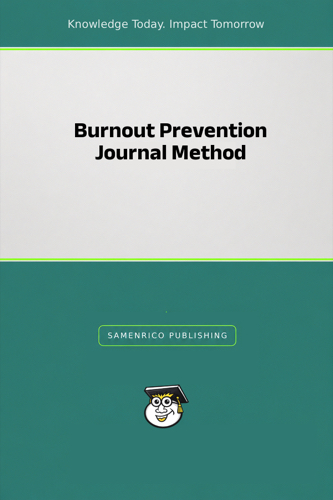
Burnout Prevention Journal Method
Structured writing to process stress and track ene
Structured writing to process stress and track energy patterns.
Formats
About this book
Free sample
Chapter 1: The Autopilot Lie--–- You have been told that journaling is supposed to help. That putting pen to paper—any pen, any paper, any thought that floats through your exhausted mind—will somehow untangle the knot in your chest. That venting is healing. That getting it all out is the first step toward feeling better.It is not working.You have probably tried. Maybe you bought a beautiful leather journal with thick, cream-colored pages.
Maybe you downloaded an app with a soothing interface and a little flame that appears when you hit your three-day streak. Maybe you sat down after a particularly brutal Tuesday, poured your heart onto the page about the impossible deadline, the passive-aggressive email from a colleague, the way your chest felt tight during the entire evening routine with your kids. And when you finished writing, you felt... worse. Or maybe you felt nothing at all.
Just tired. Just numb.You are not broken. The method is.This chapter exposes a truth that the multi-billion-dollar journaling industry does not want you to know: unstructured expressive writing, when used without a framework, can actually reinforce the very patterns of burnout you are trying to escape. It can deepen rumination. It can strengthen negative neural pathways.
It can trick your brain into believing that your stressed, exhausted state is a permanent identity rather than a temporary data point.There is a better way. It is called structured data entry, not emotional dumping. And by the end of this chapter, you will understand exactly why your past attempts at journaling failed—and how a simple shift in method can transform a practice that hurts into a tool that heals.The Expressive Writing Myth In the 1980s, psychologist James Pennebaker published a series of studies suggesting that expressive writing—writing about traumatic or stressful events for fifteen to twenty minutes over several consecutive days—produced measurable health benefits. Immune function improved. Doctor visits decreased.
Participants reported feeling better.These studies were real. They were important. And they have been misapplied at a staggering scale.Here is what most people miss: Pennebaker's protocol…
This is the end of the free sample. Get the eBook to keep going. Buy now
Contents
- Chapter 1
- Chapter 2
- Chapter 3
- Chapter 4
- Chapter 5
- Chapter 6
- Chapter 7
- Chapter 8
- Chapter 9
- Chapter 10
- Chapter 11
- Chapter 12
Details
- Author
- Hannah Cassondra
- Publisher
- SamEnrico
- Language
- English
- Genre
- Non-Fiction, Self-Help, Journal Therapy
- Released
- 2026-06-09
- Pages (approx.)
- 149
- Available as
- eBook, Audiobook

Read better in the ZLOADR app
Your eBooks on your phone or tablet. Sign in with your SamEnrico account and start reading.
More by Hannah Cassondra
 The Wise Borderless Account GuideHannah Cassondra$11.99
 Sovereign Military Order JewelryHannah Cassondra$11.99
 Pattern Recognition in TranslationHannah Cassondra$11.99
 Reba McEntire Red HeadHannah Cassondra$11.99
 The Red Baron: Aerial Duelist and the Birth of Modern WarfareHannah Cassondra$11.99
 Safety Glasses SelectionHannah Cassondra$11.99
 Understanding Serum SicknessHannah Cassondra$17.99
 Japanese Language School ScholarshipsHannah Cassondra$12.99
 Shea Processing StandardsHannah Cassondra$12.99
 How to Become a Dyer HelperHannah Cassondra$11.99
You may also like
 Hong Kong Handover 1997Dunn Johnnie$11.99
 Zumba For Postnatal Recovery CourseNeal Christian$11.99
 Zumba for BeginnersLadner Nikia$11.99
 YouTube Comment Mining GuideHumes Pandora$12.99
 Worry Box MeditationCarlin Rudy$11.99
 Workplace Stress MeditationNguyen Lynn$11.99
 Workplace Stress and Sleep RepairHawley Ivory$11.99
 Workplace Perfectionism CureDelaney Jeffry$11.99
 Workplace Injustice Anger GuideWallen Isabelle$11.99
 Work Addiction and Burnout LinkGreenwood Ester$11.99
 Women in Yoga and WellnessBeattie Galina$11.99
 Women in Stand Up ComedyChun Evangeline$11.99