

Non-FictionInformativeEducational
Border Patrol Agent eBook
A Coursebook on Border Patrol Agent
by Falls Anika
A Coursebook on Border Patrol Agent
Formats
Free sample
The Border Patrol Agent's Coursebook: Mastering the Law, Terrain, and Tactics of the U.S. Border Revised Edition – All Inconsistencies Resolved Chapter 1: The Horse You Ride In On...--The first thing my field training officer said to me wasn't "welcome" or "be careful." It was: "See those mountains? Two nights ago, a guide left a pregnant woman up there. She drank her own urine for three days. We found her crawling on her elbows.
She was seven months along. The baby didn't make it. She did. That's why we go out at midnight when the sensors trip. Not for politics.
For her."That was my introduction to the United States Border Patrol. Not the romanticized horseback version from 1904. Not the shouting on cable news. Just a woman, a mountain, and a choice that every agent makes when the radio crackles at 2:00 AM. I wrote this chapter—and this book—for two people: the young man or woman who wants to wear the green uniform, and the citizen who wants to know what we actually do out there.
Neither of you is getting the sanitized version.This is the story of the line. Not the political line, not the news cycle line. The physical line—roughly 1,954 miles of border between the United States and Mexico, plus another 4,000 miles of northern border, plus the coastal borders that most Americans forget exist. And somewhere on that vast, unforgiving geography, you will find yourself at 3:00 AM in the freezing desert, flashlight in one hand, radio in the other, wondering if the tracks you're following belong to a family or a cartel scout.This chapter grounds you in the legacy and operational reality of the U.S. Border Patrol (USBP).
It serves as both a recruitment tool and a reality check—because the two are not the same thing. Recruitment posters show heroic silhouettes at sunset. Reality check shows you the calluses, the missed birthdays, the mandatory overtime that turns a 40-hour week into a 60-hour death march, and the quiet pride of knowing you pulled someone out of the desert who would otherwise have died by sunrise.Let us begin at the beginning.The Watchmen on Horseback: 1904 to 1924Before there was a Border Patrol, there were the Mounted Watchmen. The year was 1904. The United States had just finished mopping up the Philippine-American War, and the country's attention was not on its southern border—except for one specific problem: Chinese laborers were entering the United States through Mexico, evading the Chinese Exclusion Act of 1882, which had banned most Chinese immigration.The response was not a federal agency.
The response was a handful of mounted inspectors, fewer than fifty in total, employed by the Immigration Service (then part of the Department of Commerce and Labor). They rode horses along the Mexican border from Texas to California, looking for anyone who appeared to be Chinese and asking for papers. That was it. No pursuit vehicles, no night vision, no radios. Just a man, a horse, a six-shooter, and a lot of empty desert.These men were not professional law enforcement officers by modern standards.
They were former cowboys, railroad workers, and retired cavalrymen who knew the terrain because they had lived on it. They were paid poorly—about 1,200peryear,orroughly1,200 per year, or roughly 1,200peryear,orroughly40,000 in today's dollars—and they worked alone or in pairs across hundreds of miles of border that had no fencing, no lighting, and no backup.The formal establishment of the U.S. Border Patrol came in 1924, as part of the Immigration Act of that year. The same law that created the national origins quota system also authorized the creation of a dedicated, uniformed border patrol force. The original force was authorized for 450 officers, though it took years to reach that number.
Their jurisdiction: "to prevent the unlawful entry of aliens into the United States" and to "detect and prevent the smuggling of aliens into the United States."That 1924 mandate remains the core mission today, almost one hundred years later. The language has changed—"aliens" is now "undocumented noncitizens" in official communications—but the core duty has not: detect, prevent, apprehend.The Triple Mission: More Than Just "Catching People"Ask a civilian what the Border Patrol does, and they will almost certainly say "catch people crossing the border illegally." That is true, but it is incomplete. The USBP's official mission statement has evolved over the decades, but the most useful formulation is what agents call the "Triple Mission":1. Detect and prevent the unlawful entry of undocumented noncitizens.This is the front door. Sensors buried in the ground, cameras on poles, agents in vehicles and on foot, and—increasingly—drones in the air.
Detection is not apprehension. Detection means knowing someone is there. Prevention means stopping them before they get far enough to disappear into the interior. Most apprehensions happen within 25 miles of the border. After that, the probability of interdiction drops dramatically.2.
Apprehend those who have entered unlawfully.Apprehension is the physical act of taking someone into custody. It sounds straightforward. It is not. Apprehension can mean a compliant man sitting down in the sand with his hands up. It can mean a foot pursuit through a mesquite thicket at midnight.
It can mean a vehicle pursuit at 90 miles per hour on a dirt road. It can mean a fight. The average agent will make hundreds of apprehensions over a career. They will remember every single fight.3. Detect, prevent, and apprehend human smugglers (coyotes or guides) and drug smugglers.This is the part that civilians often miss.
The vast majority of undocumented noncitizens crossing the border are not smugglers. They are migrants—people fleeing poverty, violence, or both. But a significant minority are smugglers: individuals who guide groups across for profit, who stash people in safe houses, who drive vehicles loaded with undocumented passengers, or who transport narcotics. Distinguishing between a migrant and a smuggler is one of the most legally consequential decisions an agent makes. (For the full legal distinction, see Chapter 5.)The triple mission is not three separate things.
It is a nested set of responsibilities. You cannot apprehend someone you have not detected. You cannot charge a smuggler without apprehending the migrants he was guiding. And every decision you make—every sensor you check, every track you follow, every vehicle you stop—serves all three missions simultaneously.The Green Machine: Understanding the DHS and CBP Bureaucracy The Border Patrol is not an independent agency. It has not been since 2003.
Before the Department of Homeland Security (DHS) was created in response to the September 11 attacks, the Border Patrol was part of the Immigration and Naturalization Service (INS), which was itself part of the Department of Justice. That old structure had obvious problems: immigration enforcement was housed in the same department that prosecuted federal crimes, but there was no connection to border security as a national security function.After 9/11, Congress created DHS, and the INS was broken apart. Its enforcement functions—including the Border Patrol—were moved to a new agency within DHS called U.S. Customs and Border Protection (CBP). Its service functions (visas, naturalization, asylum processing) were moved to U.S.
Citizenship and Immigration Services (USCIS). Its enforcement functions inside the interior (arresting undocumented noncitizens already living in the U.S.) were…
This is the end of the free sample. Get the eBook to keep going. Buy now
About this book
Details
- Author
- Falls Anika
- Publisher
- SamEnrico
- Language
- English
- Genre
- Non-Fiction, Informative, Educational
- Released
- 2026-05-11
- Pages (approx.)
- 149
- Available as
- eBook, Audiobook

Read better in the ZLOADR app
Your eBooks on your phone or tablet. Sign in with your SamEnrico account and start reading.
More by Falls Anika
 IT Frustration Anger GuideFalls Anika$11.99
 Thirty Day Calm ChallengeFalls Anika$11.99
 Sleep Regression 2 YearsFalls Anika$11.99
 Skill Building for ConfidenceFalls Anika$11.99
 Houseparty Video Chat CompulsionFalls Anika$11.99
 Death on the Mediterranean: The Murder of Rebecca CoriamFalls Anika$11.99
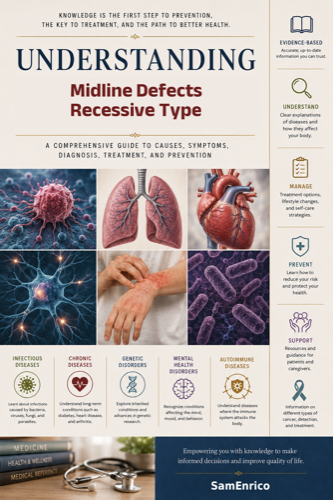 Understanding Midline Defects Recessive TypeFalls Anika$17.99
 Consumer Subscription Capital GuideFalls Anika$12.99
 Intellectual Property Review GuideFalls Anika$12.99
 How to Start a Hobby in RC carsFalls Anika$11.99
You may also like
 Hong Kong Handover 1997Dunn Johnnie$11.99
 Zumba For Postnatal Recovery CourseNeal Christian$11.99
 Zumba for BeginnersLadner Nikia$11.99
 YouTube Comment Mining GuideHumes Pandora$12.99
 Worry Box MeditationCarlin Rudy$11.99
 Workplace Stress MeditationNguyen Lynn$11.99
 Workplace Stress and Sleep RepairHawley Ivory$11.99
 Workplace Perfectionism CureDelaney Jeffry$11.99
 Workplace Injustice Anger GuideWallen Isabelle$11.99
 Work Addiction and Burnout LinkGreenwood Ester$11.99
 Women in Yoga and WellnessBeattie Galina$11.99
 Women in Stand Up ComedyChun Evangeline$11.99