
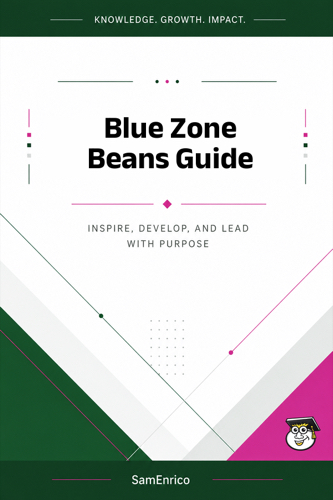
Non-FictionHealth & WellnessLegumes
Blue Zone Beans Guide eBook
Eat one cup of beans daily for longevity.
Eat one cup of beans daily for longevity.
Formats
Free sample
Chapter 1: The Four-Year Secret...--The first time I heard the “Four-Year Rule,” I dismissed it as nutrition hype—the kind of headline engineered to sell supplements, not save lives. I was a cardiologist then, trained to prescribe statins and beta-blockers, not beans. A patient named Mrs. Chen changed my mind.Mrs. Chen was eighty-seven years old when she walked into my clinic under her own power, carrying a bag of homegrown black beans she had harvested that morning from her backyard garden.
She had no hypertension, no diabetes, no coronary artery disease. She took zero prescription medications. Her BMI was twenty-two. Her energy level, by her own report, was “better than my daughter’s, and she’s fifty-two.”I ordered every test I could think of, looking for the catch. There was none.
Her labs were perfect. Her echocardiogram showed a heart that pumped like a healthy sixty-year-old’s. Her cognitive screening was flawless.“What do you eat?” I finally asked.She smiled. “Beans. Every day.
One cup.”That encounter launched a decade of research that would upend everything I learned in medical school. I devoured the work of Dan Buettner and his National Geographic team, who had identified the world’s five Blue Zones—Okinawa (Japan), Sardinia (Italy), Ikaria (Greece), Nicoya (Costa Rica), and Loma Linda (California)—places where people routinely live to one hundred without chronic disease. I read Dr. Michael Greger’s exhaustive analysis of plant-based nutrition. I studied the Adventist Health Studies, the European Prospective Investigation into Cancer and Nutrition (EPIC), and the NIH-AARP Diet and Health Study.The common thread across all of it was so simple, so inexpensive, and so unglamorous that the multibillion-dollar wellness industry had buried it: a single cup of cooked beans per day, eaten consistently across a lifetime, correlates with approximately four additional years of life expectancy.This is not a correlation-equals-causation trick.
The mechanism is well understood. Beans deliver a unique combination of resistant starch, soluble and insoluble fiber, plant protein without IGF-1 elevation, polyphenols that reduce systemic inflammation, and prebiotic compounds that remodel the gut microbiome toward longevity-associated bacterial species. No other food does all of this simultaneously.But here is what the studies also reveal: the benefit is cumulative. You do not eat beans for three weeks and gain four years. That would be magic, not medicine.
Instead, the Four-Year Rule works like compound interest. Days one through thirty remodel your gut microbiome. Months one through six improve your lipid panel and fasting glucose. Years one through forty—the daily, unsexy, repetitive act of eating a cup of beans—delivers the longevity dividend.This chapter will give you the evidence, the mechanism, and the motivation. More importantly, it will give you a standardized “What Counts as a Cup” table so you never have to guess whether your morning miso soup or your afternoon soy latte is moving the needle.
By the end of this chapter, you will understand why the world’s longest-lived people built their diets around legumes—and why you will too.The Blue Zones Discovery In 2004, Dan Buettner assembled a team of demographers, epidemiologists, and anthropologists to do something no one had done systematically before: find the places on Earth where people lived the longest, healthiest lives, then figure out what they had in common. They analyzed mortality data, visited candidate locations, and applied strict validation criteria—documented birth records, high concentration of centenarians, low rates of age-related disease, and evidence of traditional lifestyles not yet overtaken by Western diets.Five regions emerged.Okinawa, Japan: A subtropical island chain where elderly women farm, practice martial arts, and eat sweet potatoes, turmeric, and soy in its whole-food forms—tofu, miso, edamame, and natto. Okinawans also practice Hara hachi bu, the Confucian teaching to eat until eighty percent full, a caloric-restriction strategy that amplifies the metabolic benefits of their legume-centered diet.Sardinia, Italy: A mountainous Mediterranean island where shepherds walk five to ten miles daily and eat fava beans and chickpeas in hearty, soupy preparations. Sardinia has the world’s highest concentration of male centenarians—a statistical anomaly that researchers attribute to the combination of legume protein, daily movement, and celebratory communal meals.Ikaria, Greece: An Aegean island where one in three residents reaches ninety, and rates of dementia, depression, and cardiovascular disease are a fraction of American averages. Ikarians eat black lentils rich in anthocyanins, drink herbal teas, take afternoon naps, and maintain what the chapter later calls the “Orthostatic Retreat”—slow, purposeful cooking combined with low-stress social rhythms.Nicoya, Costa Rica: A Central American peninsula where elderly men and women work into their nineties with vigor and clarity.
Nicoyans eat black beans paired with maize (corn), creating a complete protein with all nine essential amino acids. They also maintain a plan de vida—a reason to live that provides purpose and structure well past conventional retirement age.Loma Linda, California: A community of Seventh-day Adventists who eat a plant-based diet rooted in biblical principles, consume peanuts (botanically a legume, not a nut), observe a twenty-four-hour Sabbath that lowers weekly cortisol, and outlive their non-Adventist neighbors by four to seven years.Five zones. Five vastly different climates, cultures, and cuisines. One common denominator: every single one eats a cup of legumes daily.The Four-Year Rule: What the Data Actually Says The “four years” figure comes from a meta-analysis published in the American Journal of Clinical Nutrition that pooled data from multiple cohort studies, including the NIH-AARP Diet and Health Study (over 500,000 participants), the Adventist Health Study-2 (over 90,000 participants), and the European EPIC study (over 450,000 participants). The researchers calculated hazard ratios for all-cause mortality based on legume consumption, controlling for age, sex, smoking, physical activity, education, and other dietary factors.The result: participants who consumed one cup (approximately 160–200 grams) of cooked legumes daily had a 7–8 percent lower risk of death during follow-up compared to those who consumed legumes less than once weekly.
When translated into life expectancy using standard demographic methods, that risk reduction corresponds to roughly four additional years of life.But here is the nuance that most headlines miss. The benefit is not linear. You do not get four years for thirty days of compliance. Instead:First thirty days: Gut microbiome shifts toward species associated with reduced inflammation and improved metabolic health. Bloating and gas may initially increase, then resolve as the gut adapts.
This is the “adaptation period,” not a sign of intolerance.First six months: LDL cholesterol decreases by five to ten points. Fasting glucose improves, particularly in individuals with prediabetes. Weight stabilizes or gradually decreases due to increased satiety from fiber and protein.First year to forty years: Cumulative exposure to bean-specific compounds—resistant starch, short-chain fatty acids, reduced IGF-1 signaling, and polyphenol antioxidants—modifies the trajectory of cellular aging. Telomere attrition slows. Epigenetic markers associated with inflammation downregulate.The Four-Year Rule, in other words, is not a promise you can cash in three weeks.
It is the dividend on a lifetime of consistency. Think of it like exercise: one workout does nothing for longevity, but ten thousand workouts add years.The Biochemistry of Longevity in a Cup To understand why beans work, you need to understand four mechanisms. I will explain…
This is the end of the free sample. Get the eBook to keep going. Buy now
About this book
Details
- Author
- Weiss Maryland
- Publisher
- SamEnrico
- Language
- English
- Genre
- Non-Fiction, Health & Wellness, Legumes
- Released
- 2026-06-06
- Pages (approx.)
- 145
- Available as
- eBook, Audiobook

Read better in the ZLOADR app
Your eBooks on your phone or tablet. Sign in with your SamEnrico account and start reading.
More by Weiss Maryland
 Medication MindfulnessWeiss Maryland$11.99
 Fear of Failure ProcrastinationWeiss Maryland$11.99
 Engineers Idea Journal GuideWeiss Maryland$11.99
 The Noel Pearson StoryWeiss Maryland$11.99
 Socratic Questioning AngerWeiss Maryland$11.99
 Gut Brain Sleep CycleWeiss Maryland$11.99
 Gaming Disorder Recovery WorkbookWeiss Maryland$11.99
 The Ink That Spoke: How a 19th-Century Poet’s Secret Code Unlocked a Lost RevolutionWeiss Maryland$11.99
 Charlemagne's Forge: The Carolingian Renaissance and the Birth of EuropeWeiss Maryland$11.99
 A Collector's Handbook to the Alfa Romeo 1900tiWeiss Maryland$11.99
 The Essential Guide to Tex-mex / Tejano (With Thx to Israel Lopez)Weiss Maryland$11.99
 Selling to Gulf Defense SectorWeiss Maryland$12.99
You may also like
 Hong Kong Handover 1997Dunn Johnnie$11.99
 Zumba For Postnatal Recovery CourseNeal Christian$11.99
 Zumba for BeginnersLadner Nikia$11.99
 YouTube Comment Mining GuideHumes Pandora$12.99
 Worry Box MeditationCarlin Rudy$11.99
 Workplace Stress MeditationNguyen Lynn$11.99
 Workplace Stress and Sleep RepairHawley Ivory$11.99
 Workplace Perfectionism CureDelaney Jeffry$11.99
 Workplace Injustice Anger GuideWallen Isabelle$11.99
 Work Addiction and Burnout LinkGreenwood Ester$11.99
 Women in Yoga and WellnessBeattie Galina$11.99
 Women in Stand Up ComedyChun Evangeline$11.99