
Non-FictionSelf-HelpBody Awareness
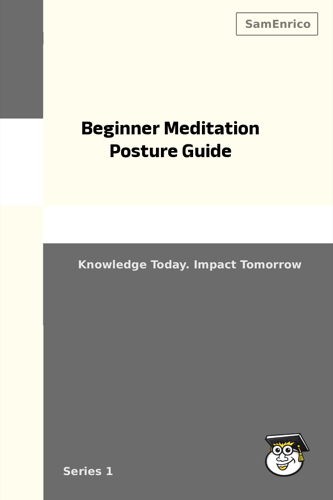
Beginner Meditation Posture Guide eBook
Master comfortable sitting positions, back support
by Field Otha
Master comfortable sitting positions, back support, and alignment for sustained practice.
Formats
Free sample
Chapter 1: The Eight-Minute Wall--–- The first time Maria tried to meditate, she lasted eight minutes. Not because her mind was too busy—she expected that. Not because she couldn't "let go"—she didn't even know what that meant. She stopped because her lower back felt like it was being slowly stabbed by a hot poker, and her right foot had turned into a numb, lifeless lump that she was certain would never work again. She unfolded herself from the floor, limped to the kitchen, and decided meditation was for people with different bodies.
Better bodies. Younger bodies. Bodies that hadn't spent fifteen years hunched over a desk, carrying toddlers on one hip, and sleeping on a sagging mattress.Maria is not real. But her story is. It plays out thousands of times every single day, in living rooms and yoga studios and corporate wellness rooms across the world.
Someone hears about the benefits of meditation—less stress, better focus, emotional regulation, maybe even enlightenment—and they sincerely want to try. They sit down on a cushion, or a folded blanket, or directly on the floor because no one told them otherwise. They try to copy the posture they saw in a photo: spine straight, legs crossed, hands resting on knees, face serene. And within minutes, they are miserable. Not subtly uncomfortable.
Genuinely, distractingly, why-would-anyone-do-this-on-purpose miserable.They conclude that meditation is not for them. They never try again.This chapter is for every Maria who ever quit. And for everyone still sitting on the fence, wondering if their body is simply "not built for meditation." I am going to tell you something that might sound like heresy in the meditation world: your pain is not a sign of weakness or lack of discipline. It is a sign of bad instruction.The meditation industry has sold us a beautiful lie. The lie is that meditation is "just mental"—that the body is merely a vehicle for the mind, and that any physical discomfort should be ignored, breathed through, or transcended.
This lie has created a silent epidemic of dropout. Studies on meditation adherence show that between 70 and 92 percent of people who try meditation quit within the first year. And the number one reason, consistently, across every demographic? Physical pain. Not a noisy mind.
Not lack of time. Pain.This book exists because that statistic is a shameful failure of teaching. Meditation should be accessible to every body—stiff, flexible, young, old, injured, healthy, average, and extraordinary. But accessibility requires knowledge. It requires understanding the profound, scientifically-documented connection between how you sit and how you feel.
It requires permission to adapt, to move, to use props, to sit in a chair, to lie down, to do whatever is necessary to make the practice sustainable.So before we talk about cushions or positions or the perfect angle of your pelvis, we need to talk about why this matters so much. We need to understand the physiology of posture, the neuroscience of comfort, and the single most important mindset shift that will separate your meditation journey from the millions who quit in the first ten minutes.The Physiology of Posture: Your Spine is a Conversation Let us start with a simple question: what happens inside your body when you slouch?Most people think slouching is just a bad habit—something their mothers told them to correct for cosmetic reasons. But the reality is far more interesting and far more urgent. Your spine is not just a stack of bones. It is the central communication superhighway of your entire nervous system.
Inside your spinal column runs the spinal cord, a thick bundle of nerves that connects your brain to every organ, muscle, and gland in your body. The position of your spine directly influences the quality of that communication.When you slump forward—rounding your shoulders, collapsing your chest, letting your head drift forward of your shoulders—you physically compress the front of your spinal column. This compression does two things. First, it reduces the space available for your spinal nerves to exit between the vertebrae, potentially pinching or irritating them. Second, and more importantly for meditation, it changes the shape of your thoracic cavity (the space containing your heart and lungs) and compresses your diaphragm, the primary muscle of breathing.But the most fascinating piece of this puzzle involves a nerve you have probably never heard of: the vagus nerve.
The vagus nerve is the longest nerve in the autonomic nervous system. It originates in your brainstem, travels down through your neck, passes between your lungs, and connects to your heart, esophagus, and digestive tract. It is the main carrier of the parasympathetic nervous system—the "rest and digest" branch that calms your body down after stress. When the vagus nerve is activated, your heart rate slows, your blood pressure drops, your digestion improves, and your mind feels safe and settled.Here is the critical insight: the vagus nerve is mechanically influenced by posture. Specifically, the nerve passes through a narrow passage in the upper neck and chest.
When your head juts forward (a position called "forward head posture," common in people who spend hours looking at phones or computers), you create tension in the muscles surrounding the vagus nerve. When your chest collapses in a slouch, you compress the nerve's path. These mechanical stresses reduce vagal tone—a measure of how effectively your parasympathetic nervous system can activate.In plain English: a bad posture actually makes it harder for your body to relax.This is not philosophy. This is anatomy. And it explains why so many beginners feel anxious, restless, or "on edge" during meditation even when their mind seems calm.
Their body is sending stress signals that their mind cannot override. You cannot think your way out of a compressed nerve any more than you can think your way out of a broken leg.Conversely, an aligned, open posture—spine elongated, chest open, head balanced over the shoulders—creates a clear pathway for the vagus nerve. It allows your diaphragm to move freely, which means fuller, deeper breaths. It signals to your brainstem that you are safe, which lowers your baseline heart rate and blood pressure. In other words, physical alignment creates the biological conditions for mental calm.This is the secret that most meditation teachers never tell you.
They tell you to "just observe your thoughts" or "return to your breath." But if your body is screaming in pain or sending stress signals through a compressed nervous system, no amount of observing will make you comfortable. You are fighting physiology with psychology, and physiology always wins.The Myth of Stillness: Why "Don't Move" is Dangerous Advice Now we must address one of the most harmful myths in all of meditation instruction: the myth of stillness. Many traditions, particularly in the West, have elevated the idea of sitting completely motionless to an almost spiritual status. They speak of "riding out the pain," "not reacting to sensation," and "transcending the body." There are stories of monks who sat so still that birds nested in their hair. These stories are meant to inspire.
But for a beginner with tight hips and a weak back, they are devastating.Here is what those stories do not…
This is the end of the free sample. Get the eBook to keep going. Buy now
About this book
Details
- Author
- Field Otha
- Publisher
- SamEnrico
- Language
- English
- Genre
- Non-Fiction, Self-Help, Body Awareness
- Released
- 2026-06-06
- Pages (approx.)
- 154
- Available as
- eBook, Audiobook

Read better in the ZLOADR app
Your eBooks on your phone or tablet. Sign in with your SamEnrico account and start reading.
More by Field Otha
 Testimonial Collection GuideField Otha$12.99
 Marketing Campaign PrioritizationField Otha$11.99
 Parental Anger From ComparisonField Otha$11.99
 Self Hypnosis for Forgiveness HabitsField Otha$11.99
 Anxious Partner Support GuideField Otha$11.99
 The Silk Road to Modern Medicine: How a Soviet Scientist Revolutionized Medical Imaging in Central AsiaField Otha$11.99
 Echoes of the Digital Frontier: How the First AI Art Scandal Rocked the WorldField Otha$11.99
 How to Start a Hobby in MassageField Otha$11.99
 Understanding Deafness Goiter Stippled EpiphysesField Otha$17.99
 Form 1099 Filing For NonprofitsField Otha$12.99Testimonial Collection GuideField Otha$12.99
 Food ExpeditorField Otha$11.99
You may also like
 Hong Kong Handover 1997Dunn Johnnie$11.99
 Zumba For Postnatal Recovery CourseNeal Christian$11.99
 Zumba for BeginnersLadner Nikia$11.99
 YouTube Comment Mining GuideHumes Pandora$12.99
 Worry Box MeditationCarlin Rudy$11.99
 Workplace Stress MeditationNguyen Lynn$11.99
 Workplace Stress and Sleep RepairHawley Ivory$11.99
 Workplace Perfectionism CureDelaney Jeffry$11.99
 Workplace Injustice Anger GuideWallen Isabelle$11.99
 Work Addiction and Burnout LinkGreenwood Ester$11.99
 Women in Yoga and WellnessBeattie Galina$11.99
 Women in Stand Up ComedyChun Evangeline$11.99