
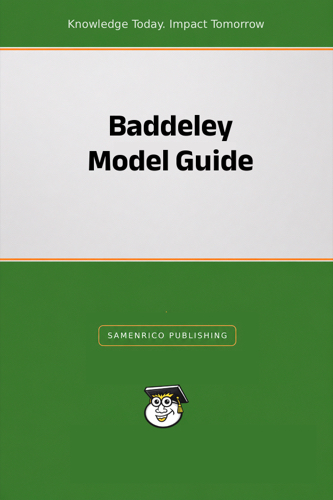
Free sample
Chapter 1: The Broken Box...--–- You have been lied to about your memory. Not by a person, not by a conspiracy, but by a metaphor so seductive, so intuitively perfect, that it has quietly shaped how you understand your own mind for your entire life. The lie is this: that your memory works like a storage container. A box. A filing cabinet.
A hard drive. You put things in, you keep them there, and when you need them, you pull them back out. This image feels right because it matches our everyday experience. You learn someone's name at a party. You store it.
Later, you retrieve it. Simple. Elegant. And completely, catastrophically wrong.The problem with the storage container metaphor is not that it fails entirely. It works beautifully for certain kinds of memory.
Your memory for your mother's face, for the capital of France, for how to ride a bicycle—these are stored. They last for decades. They feel solid, permanent, like files in a cabinet you can open at will. But there is another kind of memory that does not work this way at all. It is the memory you are using right now, in this very moment, to hold the beginning of this sentence in your mind while you read the end of it.
It is the memory that lets you follow a conversation, solve a math problem in your head, or remember a phone number long enough to dial it. This memory is not a box. It is not a storage container. It is a workbench. And unlike your long-term memories, which can hold a lifetime of information, this workbench is tiny, fragile, and constantly under siege.The story of how psychologists came to understand this workbench—and the revolutionary model that finally explained how it works—begins not with a flash of insight but with a crisis.
By the late 1960s, the dominant theory of memory had reached a dead end. That theory, known as the Multi-Store Model, divided memory into three neat compartments: sensory memory (which holds raw sensory input for a fraction of a second), short-term memory (which holds a small amount of information for about fifteen to thirty seconds), and long-term memory (which holds vast amounts of information indefinitely). The model was clean, teachable, and wrong. Its fatal flaw was the assumption that short-term memory was simply a weaker, smaller version…
This is the end of the free sample. Get the Audiobook to keep going. Buy now
About this book
Details
- Author
- Troy Helene
- Publisher
- SamEnrico
- Language
- English
- Genre
- Non-Fiction, Self-Help
- Released
- 2026-06-06
- Pages (approx.)
- 155
- Available as
- eBook, Audiobook

Listen in the VoxFlicks app
Audiobooks and audio dramas wherever you go. Sign in with your SamEnrico account and press play.
More by Troy Helene
 Opioid PAWS Recovery GuideTroy Helene$11.99
 Immigrant Home Health Agency GuideTroy Helene$11.99
 Traumatic Loss Grief WorkbookTroy Helene$11.99
 Metta for a Partner with PTSDTroy Helene$11.99
 Iron Supplementation GuideTroy Helene$11.99
 Forest Bathing VisualizationTroy Helene$11.99
 NVC For Restorative JusticeTroy Helene$11.99
 Decision Block MethodTroy Helene$11.99
 The Forgotten Cartographer: Pankhurst’s Pacific Quest for the Nile’s SecretsTroy Helene$11.99
 The Alchemists of Timbuktu: Gold, Science, and the Rise of African ChemistryTroy Helene$11.99
 The Complete Guide to Going RAWTroy Helene$11.99
 Understanding Alcoholic Liver CirrhosisTroy Helene$17.99
You may also like
 Hong Kong Handover 1997Dunn Johnnie$11.99
 Zumba For Postnatal Recovery CourseNeal Christian$11.99
 Zumba for BeginnersLadner Nikia$11.99
 YouTube Comment Mining GuideHumes Pandora$12.99
 Worry Box MeditationCarlin Rudy$11.99
 Workplace Stress MeditationNguyen Lynn$11.99
 Workplace Stress and Sleep RepairHawley Ivory$11.99
 Workplace Perfectionism CureDelaney Jeffry$11.99
 Workplace Injustice Anger GuideWallen Isabelle$11.99
 Work Addiction and Burnout LinkGreenwood Ester$11.99
 Women in Yoga and WellnessBeattie Galina$11.99
 Women in Stand Up ComedyChun Evangeline$11.99