
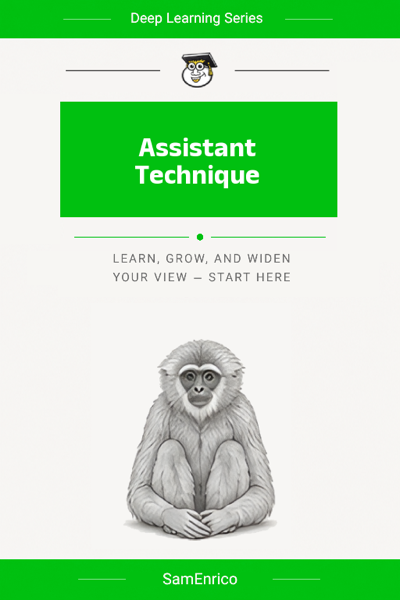
Non-FictionInformativeEducational
Assistant Technique eBook
A Coursebook on Assistant Technique
by Watts Kirk
A Coursebook on Assistant Technique
Formats
Free sample
Chapter 1: The Typewriter Lie...–- Most assistants believe they were hired for their ability to get things done. They are wrong. They were hired for their ability to make their executive forget that things need to get done at all. The difference between these two statements is the difference between a career of exhausting task-chasing and a career of strategic indispensability. This book exists to bridge that gap.Every day, across millions of offices and home workspaces, administrative professionals wake up to an impossible contradiction.
They are told they are "strategic partners" to their executives. They are given titles like Executive Business Partner, Chief of Staff, or Technical Assistant. Their job descriptions speak of "proactive problem-solving," "workflow optimization," and "executive leverage." But then the reality arrives in their inbox at 7:14 AM: fourteen meeting requests, three travel itineraries that conflict with each other, a board deck with corrupted slides, and an expense report rejected for the second time because someone entered "12/3/24" instead of "2024-12-03."The contradiction is not accidental. It is structural. It has been engineered over seventy years of slow, creeping role erosion, and it is upheld by a single, pervasive lie that the administrative profession has told itself for decades: that being a great assistant means being a great task-doer.The Lie You Were Sold The Typewriter Lie, as this book will call it, goes something like this.
The story begins in the 1950s, when the "secretary" was a role defined almost entirely by the machine on her desk. Speed on the typewriter was currency. Accuracy in shorthand was status. The measure of a great secretary was words per minute and carbon copies without smudges. This made sense in its era.
The technology of the time demanded physical proximity to the machine, and the machine demanded specialized skill. The secretary was a technician of the written word, and her value was directly proportional to her technical fluency with the tools of her trade.Then came the personal computer in the 1980s. Then email in the 1990s. Then the smartphone, the cloud, the video call, the chatbot, the automation platform. Each technological wave should have liberated the assistant from low-value tasks.
Each wave should have elevated the role toward judgment, strategy, and systems thinking. Instead, each wave added new tools to the assistant's plate without removing any old expectations. The typewriter is gone, but the expectation of speed remains. The filing cabinet is gone, but the expectation of perfect recall remains. The switchboard is gone, but the expectation of availability remains.The result is that today's assistant operates with 2020s technology against 1950s expectations.
You are expected to be faster than email, more organized than a database, more discreet than a lawyer, more available than a chatbot, and more intuitive than any algorithm—all while being told that you are a "strategic partner" but measured as a "task executor."This book is going to end that contradiction.A Different Definition: The Technical Assistant Let us propose a new definition. A Technical Assistant is not someone who does tasks. A Technical Assistant is someone who designs, implements, and maintains the systems through which tasks happen. The distinction is not semantic. It is the difference between being a passenger and being a pilot.When you are a task-doer, you wake up each day to an inbox that tells you what to do.
Your work is reactive, interrupt-driven, and measured by completion counts. You are always behind because there is always another email. Your value is tied to your availability, which means your value is tied to your exhaustion.When you are a systems-designer, you wake up each day to a set of processes that run without you. Your work is proactive, architecture-driven, and measured by the absence of failure. You are not behind because you have built filters, rules, automations, and templates that handle the predictable work.
Your value is tied to your judgment, which means your value grows as your experience grows.The Technical Assistant title, as used in this book, has three specific meanings:First, technical as in technology. You will master the tools of your trade: operating systems, word processors, spreadsheets, presentation software, databases, communication platforms, automation tools, and project management systems. You will not simply "know" these tools. You will engineer them. You will build templates that enforce brand standards, dashboards that update themselves, automations that run while you sleep, and systems that catch errors before they reach your executive.Second, technical as in technique.
You will develop repeatable, teachable, improvable methods for every common assistant task. You will not reinvent the wheel for every travel booking or board report. You will have a system. Your system will have documentation. Your documentation will be handoff-ready, which means you can take vacation, accept promotion, or survive a crisis without leaving chaos in your wake.Third, technical as in technician of the executive's reality.
You will understand that your executive does not experience "work" directly. They experience it through the systems you build. Every email they see has been filtered by your rules. Every meeting on their calendar has been vetted by your triage. Every document they sign has been formatted by your templates.
Every number they base a decision on has been verified by your spreadsheets. You are not supporting their work. You are constructing the information environment in which their work happens. That is not a support role. That is a production role.The Triangle of Efficiency Every decision you make about a tool, a process, or a delegation will be guided by a framework this book calls the Triangle of Efficiency.
Three vertices: Speed, Accuracy, Confidentiality. Every technique in this book will be evaluated against all three.Speed means reducing the time between a trigger (an email arrives, a meeting ends, a request is made) and a response (the calendar is updated, the notes are distributed, the approval is secured). Speed is not about rushing. Speed is about eliminating delay. Delay lives in handoffs, in waiting for approvals, in searching for files, in reformatting documents, in retyping data.
When you eliminate delay, you do not work faster. You work less.Accuracy means reducing the rate of errors to zero for certain classes of tasks (expense reports, travel bookings, document formatting) and to near-zero for judgment tasks (meeting summaries, prioritization decisions, communication routing). Accuracy is not about perfectionism. Accuracy is about trust. Every error erodes the executive's confidence in your systems.
When they have to double-check your work, you have lost the most valuable currency an assistant can hold: the assumption of competence.Confidentiality means protecting the data, decisions, and relationships that pass through your systems. Confidentiality is not just about passwords and encryption (though Chapter 9 covers those extensively). It is about architecture. Do your systems expose sensitive information to people who should not see it? Do your automations log data to unsecured locations?
Do your templates save files to shared drives by default? Confidentiality is the vertex that is most often sacrificed for speed or accuracy, and it is the vertex that can end a career when sacrificed carelessly.The Triangle of Efficiency is a decision tool. When you evaluate a new tool or technique, ask: Does…
This is the end of the free sample. Get the eBook to keep going. Buy now
About this book
Details
- Author
- Watts Kirk
- Publisher
- SamEnrico
- Language
- English
- Genre
- Non-Fiction, Informative, Educational
- Released
- 2026-06-02
- Pages (approx.)
- 155
- Available as
- eBook, Audiobook

Read better in the ZLOADR app
Your eBooks on your phone or tablet. Sign in with your SamEnrico account and start reading.
More by Watts Kirk
 Mediterranean Cancer PreventionWatts Kirk$11.99
 Values And Mission Alignment Public Relations CourseWatts Kirk$11.99
 The Commute Stress FixWatts Kirk$11.99
 Lowball Influence TechniqueWatts Kirk$11.99
 The SAD and Sleep GuideWatts Kirk$11.99
 The Siege of Chittorgarh: Blood and Honor in the Rajput ResistanceWatts Kirk$11.99
 Understanding Tricho–dento–osseous Syndrome Type 1Watts Kirk$17.99
 Digital One Page Business PlanWatts Kirk$12.99
 Digital Business Plan StorageWatts Kirk$12.99
 How to Start a Drafting Service BusinessWatts Kirk$11.99
You may also like
 Hong Kong Handover 1997Dunn Johnnie$11.99
 Zumba For Postnatal Recovery CourseNeal Christian$11.99
 Zumba for BeginnersLadner Nikia$11.99
 YouTube Comment Mining GuideHumes Pandora$12.99
 Worry Box MeditationCarlin Rudy$11.99
 Workplace Stress MeditationNguyen Lynn$11.99
 Workplace Stress and Sleep RepairHawley Ivory$11.99
 Workplace Perfectionism CureDelaney Jeffry$11.99
 Workplace Injustice Anger GuideWallen Isabelle$11.99
 Work Addiction and Burnout LinkGreenwood Ester$11.99
 Women in Yoga and WellnessBeattie Galina$11.99
 Women in Stand Up ComedyChun Evangeline$11.99