
Non-FictionSelf-HelpDisability
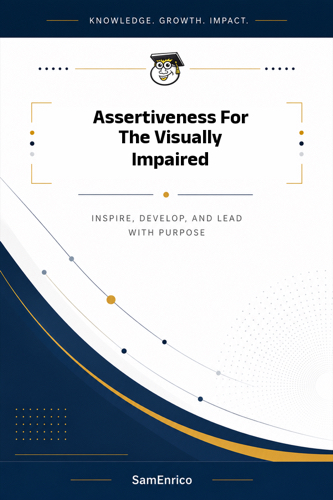
Assertiveness For The Visually Impaired
Ask for sighted assistance without shame or over-e
Ask for sighted assistance without shame or over-explanations.
Formats
About this book
Free sample
Chapter 1: The Shame Loop--–- The first time you over-explained, you probably didn’t even notice you were doing it. You were standing in a pharmacy, searching for a specific bottle of pain reliever. The labels all blurred together—white bottles, small print, bad lighting. You felt the familiar rise of frustration, then the slower, heavier rise of something else: dread. Because you knew what came next.
You would have to ask a stranger for help.So you looked for someone. A stock clerk. A fellow shopper. Anyone. And when you found them, the words that came out of your mouth were not the simple request you had rehearsed in your head.
Instead, you heard yourself say something like this:“I’m so sorry to bother you. I know you’re busy. I just—I can’t see very well. I have this condition, it’s called [insert name here], and I used to have better vision but it’s been getting worse, and I can’t read the small print on this bottle, and I feel terrible for asking, but could you please just tell me if this is the 200 milligram or the 500? I’m really sorry.”The stranger blinked.
They looked uncomfortable. They said, “Uh, it’s 200,” and then they walked away quickly, as if your shame was contagious. And you stood there, bottle in hand, feeling not relief but exhaustion. You had just given a complete stranger your medical history, your emotional state, and an apology for existing—all to get two words of information.That is the Shame Loop. And this chapter is about breaking it forever.The Anatomy of the Shame Loop The Shame Loop is a self-reinforcing psychological cycle that traps visually impaired people in a pattern of over-explanation, emotional exhaustion, and escalating avoidance.
It works like this:Step One: Need. You encounter a situation where you require visual information you cannot access on your own. A label. A street sign. A bus number.
A menu. The face of someone approaching you. This is a neutral event—a simple mismatch between your abilities and your…
This is the end of the free sample. Get the eBook to keep going. Buy now
Contents
- Chapter 1
- Chapter 2
- Chapter 3
- Chapter 4
- Chapter 5
- Chapter 6
- Chapter 7
- Chapter 8
- Chapter 9
- Chapter 10
- Chapter 11
- Chapter 12
Details
- Author
- Cullen Danyel
- Publisher
- SamEnrico
- Language
- English
- Genre
- Non-Fiction, Self-Help, Disability
- Released
- 2026-06-07
- Pages (approx.)
- 119
- Available as
- eBook, Audiobook

Read better in the ZLOADR app
Your eBooks on your phone or tablet. Sign in with your SamEnrico account and start reading.
More by Cullen Danyel
 Mind Mapping for RecallCullen Danyel$11.99
 The Nap for Daycare ProvidersCullen Danyel$11.99
 Parent Death and Chronic IllnessCullen Danyel$11.99
 CrossFit for Over 40Cullen Danyel$11.99
 The Insurance Call PrepCullen Danyel$11.99
 Siri Reminder GuideCullen Danyel$11.99
 The Quit Smoking Hypnosis AppCullen Danyel$11.99
 Child Murder LossCullen Danyel$11.99
 The Pink Panther Heist: The Curse of the Pink DiamondCullen Danyel$11.99
 The Last Circus: How a Forgotten Spectacle Defied TimeCullen Danyel$11.99
 Zeroes and Ones: The Silent War of the Ancient CodebreakersCullen Danyel$11.99
 Growing Hamamelis (Witch-hazel)Cullen Danyel$11.99
You may also like
 Hong Kong Handover 1997Dunn Johnnie$11.99
 Zumba For Postnatal Recovery CourseNeal Christian$11.99
 Zumba for BeginnersLadner Nikia$11.99
 YouTube Comment Mining GuideHumes Pandora$12.99
 Worry Box MeditationCarlin Rudy$11.99
 Workplace Stress MeditationNguyen Lynn$11.99
 Workplace Stress and Sleep RepairHawley Ivory$11.99
 Workplace Perfectionism CureDelaney Jeffry$11.99
 Workplace Injustice Anger GuideWallen Isabelle$11.99
 Work Addiction and Burnout LinkGreenwood Ester$11.99
 Women in Yoga and WellnessBeattie Galina$11.99
 Women in Stand Up ComedyChun Evangeline$11.99