
Assertiveness For Men eBook
Distinguish confidence from aggression and express
Distinguish confidence from aggression and express vulnerability healthily.
Formats
Free sample
Chapter 1: The Two Lies--–- You are reading this book for one of two reasons. Either you have been told that you are too nice—that you bend too easily, say yes too often, and wake up resentful of people you actually love. Or you have been told that you are too much—that your temper flares without warning, that people walk on eggshells around you, and that you have lost relationships, promotions, or respect because you cannot keep your cool when you feel cornered. Maybe you have experienced both sides of this coin: nice until you explode, then apologetic until you resent, then angry again. This cycle is not a personality flaw.
It is a script. And scripts can be rewritten.Every man reading this has been handed a map of masculinity that contains two fatal errors. The first error is the belief that vulnerability is weakness—that showing fear, hurt, uncertainty, or the need for help is a leak in your armor that enemies will exploit. The second error is the belief that aggression is strength—that the man who shouts loudest, dominates most, and never backs down wins the game. These two errors create a cage.
On one side of the cage is the Doormat: silent, agreeable, exhausted, and secretly furious. On the other side is the Hammer: loud, controlling, isolated, and secretly terrified. Between them is a narrow, invisible path called assertiveness. Most men never find it because they were told it does not exist.This chapter will dismantle the two lies that have trapped you. It will introduce a new map—not a line from passive to aggressive, but a matrix that shows you exactly where you stand and exactly where you need to go.
You will learn why your anger is not the enemy but a signal, why your niceness might be a weapon of covert control, and why the man you want to become is neither wolf nor sheep but something entirely different: integrated.The Day You Lost Your Temper Before we talk about solutions, we need to look at the wreckage. Take a moment to recall the last time you exploded. Maybe it was at your partner over something trivial—a dish left in the sink, a tone of voice, a request that felt like a demand. Maybe it was at your child for being slow, loud, or needy. Maybe it was at a coworker who asked a reasonable question that landed on you like an accusation.
In the moment, it felt justified. Afterward, you felt shame. And between the explosion and the shame, there was a split second—a flash of something you cannot name—when you knew you had lost control but could not stop.Now recall the last time you swallowed your voice. Maybe your boss assigned you yet another project while a coworker scrolled social media, and you said "no problem" with a smile. Maybe your partner made plans for the weekend without asking you, and you nodded while your jaw tightened.
Maybe a friend made a joke at your expense, and you laughed along while something inside you curled into a fist. That night, alone, you replayed the scene. You fantasized about what you should have said. You felt the hot coal of resentment burning in your chest. And you did nothing.These two scenes—the explosion and the swallow—are not opposites.
They are twins. They come from the same wound: the belief that you have only two choices. Fight or flight. Dominate or submit. Hammer or doormat.
This is the false binary that has been sold to you since childhood, and it is a lie.The False Binary: Where It Comes From Boys learn the false binary early. Watch a playground. When one boy cries, other boys—and sometimes adults—say "shake it off" or "don't be a baby." When one boy shoves another, the shover is sometimes punished but often quietly admired. The lesson is absorbed before language fully forms: tears are dangerous, anger is acceptable, and the space between them does not exist.In families, the lesson continues. A father who never says "I was wrong" teaches his son that admitting fault is humiliation.
A mother who asks "are you okay?" and accepts "fine" as an answer teaches her son that his inner world is invisible. By adolescence, most boys have learned to compress the full spectrum of human emotion into two valves: anger (which is allowed to escape) and numbness (which is the default state). Fear becomes irritation. Hurt becomes cold silence. Loneliness becomes fatigue.
Love becomes obligation.By adulthood, the compression is automatic. When a man feels disrespected by his partner, he does not say "I feel unseen and that hurts." He says nothing, or he yells. When a man feels overwhelmed at work, he does not say "I need help with my workload." He stays late, resents his boss, and snaps at his family. When a man feels afraid of failure, he does not admit uncertainty. He bullshits, overpromises, and then panics in private.This is not weakness.
This is training. And training can be unlearned.The Assertiveness Matrix: Replacing the Line with a Map Most books on assertiveness present a simple line: Passive at one end, Aggressive at the other, Assertive in the middle. This line is wrong. It fails to account for the crucial difference between how we express ourselves and who we are trying to protect or attack.Here is the correct model—the Assertiveness Matrix. It has two axes:Expression Axis: Overt (visible, direct, external) versus Covert (hidden, indirect, internal)Orientation Axis: Self-Sacrificing (placing others' needs above your own) versus Self-Respecting (balancing your needs with others')When you combine these axes, you get four distinct quadrants.
Every man operates primarily from one of these quadrants, though most men rotate between two depending on stress and context.Quadrant 1: The Doormat (Overt + Self-Sacrificing)The Doormat is visibly, obviously passive. He says "yes" when he means "no." He apologizes when he has done nothing wrong. He makes himself small in rooms. His body language is closed: hunched shoulders, averted eyes, a voice that rises at the end of statements as if asking permission to exist. The Doormat believes that if he is agreeable enough, helpful enough, and invisible enough, people will love him and conflict will magically avoid him.The Doormat's primary emotion is anxiety.
He is terrified of disapproval. He rehearses conversations in his head for hours. He checks his phone obsessively to see if his text was answered. He confuses being "nice" with being good. And because his compliance is never enough—no amount of yes-ing can fill the hole where his self-worth should be—he secretly resents everyone he serves.
That resentment does not disappear. It ferments.Quadrant 2: The Ghost (Covert + Self-Sacrificing)The Ghost appears passive on the surface but leaks hostility indirectly. He does not shout. He does not confront. Instead, he "forgets" to do things he promised.
He shows up late. He gives the silent treatment. He makes sarcastic comments that can be dismissed as "just a joke." He withholds affection, approval, or help without ever saying why.The Ghost's primary emotion is resentment. He…
This is the end of the free sample. Get the eBook to keep going. Buy now
About this book
Details
- Author
- Cain Beatrice
- Publisher
- SamEnrico
- Language
- English
- Genre
- Non-Fiction, Self-Help, Men
- Released
- 2026-06-07
- Pages (approx.)
- 139
- Available as
- eBook, Audiobook

Read better in the ZLOADR app
Your eBooks on your phone or tablet. Sign in with your SamEnrico account and start reading.
More by Cain Beatrice
 Rotator Cuff Injury PreventionCain Beatrice$11.99
 Immigrant Logistics Broker Success StoriesCain Beatrice$11.99
 Eisenhower For Teams GuideCain Beatrice$11.99
 Metta For Grandparents Raising KidsCain Beatrice$11.99
 Sepoy Pension GrievanceCain Beatrice$11.99
 Vitiligo Acceptance WorkbookCain Beatrice$11.99
 Mentorship for First Generation ProfessionalsCain Beatrice$11.99
 Venom in HoneyCain Beatrice$11.99
 The Moonlit Bond: Kaguya and the Bamboo PrinceCain Beatrice$11.99
 The Lion of the Steppe: Tamerlane's Blood and ConquestCain Beatrice$11.99
 Silent Spread: The Anthrax Letters That Shocked AmericaCain Beatrice$11.99
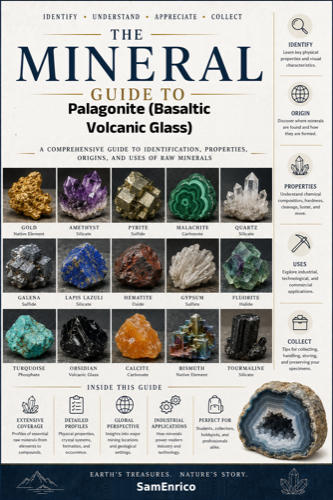 The Mineral Guide to Palagonite (Basaltic Volcanic Glass)Cain Beatrice$11.99
You may also like
 Divorce for MenLarsen Robby$11.99
 Cognitive Restructuring For Anger MenKeaton Darius$11.99
 Jealousy for MenHamrick Joshua$11.99
 Food Addiction in Men GuideSeal Juli$11.99
 Affirmation for MenHoule Katrice$11.99
 Suicide Loss for MenMichael Gillian$11.99
 Self Esteem For MenFoley Hilde$11.99
 Men's Anger Triggers GuideWinters Lupe$11.99
 Men And Rage In LoveFairchild Marti$11.99
 Men's Sexual Integrity WorkbookEspinosa Aline$11.99