
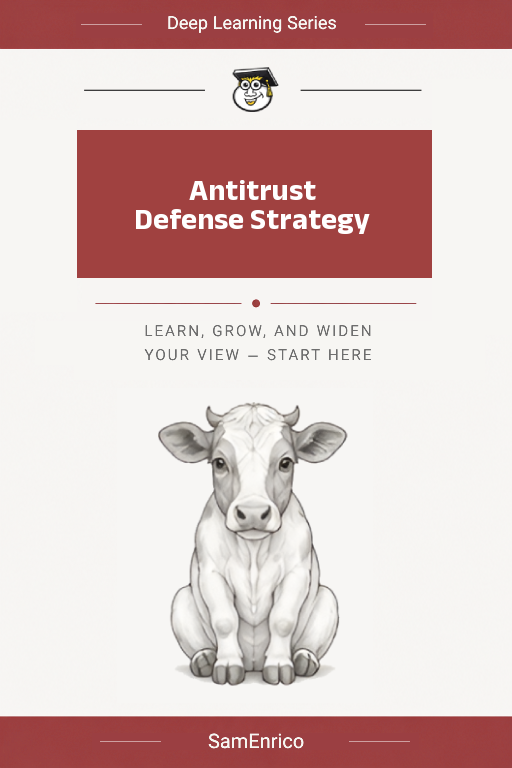
Non-FictionCrisis ManagementAntitrust
Antitrust Defense Strategy Audiobook
File antitrust complaints arguing the hostile take
File antitrust complaints arguing the hostile takeover would create a monopoly.
Formats
Free sample
Chapter 1: The Monopoly Panic--–- In the spring of 2021, a group of antitrust lawyers gathered in a windowless conference room on Pennsylvania Avenue, just blocks from the White House. They represented a Fortune 50 technology company facing a hostile takeover bid from an even larger rival. Their defense strategy, painstakingly developed over four months, rested on a single, seemingly unassailable argument: the proposed merger would lower consumer prices by an estimated 12 percent, generate $800 million in annual efficiencies, and accelerate innovation by combining complementary R&D teams. By every traditional measure of antitrust analysis, this was a pro-competitive transaction.The FTC sued to block it four days later.The agency’s press release never mentioned prices, efficiencies, or innovation. Instead, it argued that the merger would “entrench a dominant firm’s power over emerging markets” and “reduce the number of independent decision-makers” in the technology sector.
When the defense team protested that the government had offered no evidence of consumer harm, the FTC’s lead economist replied with a phrase that has since become infamous in antitrust defense circles: “Consumer welfare is not the only value we enforce.”That deal died. The target company was eventually acquired by a foreign firm. Three thousand American jobs moved overseas. And the lawyers who thought they had built an airtight defense learned a brutal lesson: the rules of the game had changed while they were still playing by the old ones.This book is for every lawyer, executive, and board member who does not want to be that team.The Old World: Consumer Welfare as the Sole Compass For nearly four decades, from the late 1970s through the mid-2010s, antitrust enforcement in the United States was governed by a single, elegant principle: the Consumer Welfare Standard. Articulated most forcefully by Judge Robert Bork in his influential book The Antitrust Paradox (1978) and championed by the Chicago School of economics, this standard held that the sole legitimate goal of antitrust law was to protect consumers from higher prices, reduced output, or lower quality.
Everything else—the size of a firm, the number of competitors in a market, the political power of corporations—was irrelevant unless it could be shown to harm consumers in measurable economic terms.Under this regime, the defense of a hostile takeover was a relatively straightforward, if technically demanding, exercise. Defense counsel needed to demonstrate three things: first, that the relevant market was broader than the…
This is the end of the free sample. Get the Audiobook to keep going. Buy now
About this book
Details
- Author
- Medina Lowell
- Publisher
- SamEnrico
- Language
- English
- Genre
- Non-Fiction, Crisis Management, Antitrust
- Released
- 2026-05-30
- Pages (approx.)
- 158
- Available as
- eBook, Audiobook

Listen in the VoxFlicks app
Audiobooks and audio dramas wherever you go. Sign in with your SamEnrico account and press play.
More by Medina Lowell
 Listening In Acoustics GuideMedina Lowell$11.99
 The Legal Stress Couple GuideMedina Lowell$11.99
 Panic Attack Breath ControlMedina Lowell$11.99
 The Forgiveness AskingMedina Lowell$11.99
 Nicoya Peninsula LifestyleMedina Lowell$11.99
 Women Who Sail AloneMedina Lowell$11.99
 Joyful Bedtime Gratitude RitualMedina Lowell$11.99
 Exposure Therapy DIYMedina Lowell$11.99
 The Silent Conquest: How a Forgotten Composer Shaped the Sounds of Ancient Latin AmericaMedina Lowell$11.99
 The Forgotten Voyages: Southeast Asia’s Medieval Mariners and the Silk Road of the SeasMedina Lowell$11.99
 The Silk Road Gambit: How a Secretary of State Outmaneuvered the Cold WarMedina Lowell$11.99
 Growing HymenosporumMedina Lowell$11.99
You may also like
 Hong Kong Handover 1997Dunn Johnnie$11.99
 Zumba For Postnatal Recovery CourseNeal Christian$11.99
 Zumba for BeginnersLadner Nikia$11.99
 YouTube Comment Mining GuideHumes Pandora$12.99
 Worry Box MeditationCarlin Rudy$11.99
 Workplace Stress MeditationNguyen Lynn$11.99
 Workplace Stress and Sleep RepairHawley Ivory$11.99
 Workplace Perfectionism CureDelaney Jeffry$11.99
 Workplace Injustice Anger GuideWallen Isabelle$11.99
 Work Addiction and Burnout LinkGreenwood Ester$11.99
 Women in Yoga and WellnessBeattie Galina$11.99
 Women in Stand Up ComedyChun Evangeline$11.99