
Non-FictionAI OperatorExecutive Support
AI Email Drafting Templates eBook
Generate professional email drafts for common scen
Generate professional email drafts for common scenarios using prompt engineering. Save hours of writing time.
Formats
Free sample
Chapter 1: The Drafting Trap--–- Melissa had just finished her third coffee of the morning. It was 10:47 AM. She had spent the last ninety-seven minutes writing exactly eleven emails. Not complex proposals. Not legal negotiations.
Simple emails. A follow-up to a prospect who had gone silent. An apology to a client for a delayed deliverable. A status update to her manager. A thank-you note to a colleague.
She scrolled back through her sent folder and felt a familiar ache in her chest. She had written versions of these same eleven emails at least two hundred times before. Different names, different dates, same skeleton. And yet, each one had required her full attention. Each one had drained a little more of the cognitive fuel she needed for the work that actually mattered.Melissa is not real.
But her morning is. According to a 2023 study by the email productivity platform Superhuman, the average knowledge worker spends 28 percent of their workweek on email. That is eleven hours. Per week. For the median office worker earning 35perhour,thatis35 per hour, that is 35perhour,thatis385 per week, $20,020 per year, spent on the act of typing words into a digital envelope.
And here is the cruelest part: the vast majority of those words are recycled. They are templates living inside the writer’s head, rewritten from scratch each time because copy-pasting a generic template feels lazy, impersonal, and obvious.This chapter is not about email. Not really. This chapter is about the gap between the emails you are writing and the work you were hired to do. It is about a subtle, invisible trap that has reset your baseline for what “busy” feels like.
And it is about the key that unlocks the cage: not automation, not outsourcing, but a fundamentally different relationship with the act of writing itself.The Traditional Template Lie You have seen them. The blue links at the top of your inbox: “Reply with a template.” The swipe files sold by productivity gurus. The “50 Email Scripts for Sales” PDF that has been sitting unopened in your downloads folder for fourteen months. These traditional templates share a common promise: copy, paste, replace the bracketed information, send. On paper, it makes sense.
In reality, it fails for three reasons.First, the guilt problem. When you paste a generic template, you know you have pasted a generic template. The recipient may not consciously notice, but something feels off. The language is too polished. The empathy is too symmetrical.
The closing line has been used by three other vendors this week. Your brain registers this as a minor ethical violation—not fraud, but something close to insincerity—and that low-grade guilt costs you more energy than writing the email from scratch would have.Second, the adaptation tax. Generic templates require editing. You change the name, the company, the date, the specific objection. But editing someone else’s words is harder than writing your own.
Cognitive psychology research on the “generation effect” (Slamecka & Graf, 1978) has consistently shown that humans remember and internalize information they generate themselves far more effectively than information they merely read. When you edit a template, you are fighting against the template’s voice, rhythm, and assumptions. You spend five minutes editing what you could have written in three.Third, the voice erosion. Every organization has a voice. Yours might be warm and conversational.
It might be crisp and data-driven. It might be formal and risk-averse. Generic templates are, by definition, generic. They pull you toward the mean. The more you rely on them, the more your unique professional voice atrophies.
You become indistinguishable from every other person who downloaded the same swipe file.The result is a paradox: traditional templates save zero time, create hidden guilt, and slowly erase your identity. And yet, you keep using them because the alternative—staring at a blinking cursor—is worse.Enter the Co-Writer, Not the Ghostwriter This book offers a different relationship with automation. Not a ghostwriter who replaces you. A co-writer who works beside you.A ghostwriter takes your ideas and produces final text that you approve, often with minimal changes. A co-writer, by contrast, produces a rough draft that you then shape, redirect, and complete.
The distinction matters more than you think.When you use AI as a ghostwriter (prompt: “Write an email to a client apologizing for a missed deadline”), you are outsourcing both the structure and the voice. The result feels like it was written by a stranger, because it was. When you use AI as a co-writer (prompt: “You are a senior account manager with a warm, direct tone. A client missed a deadline due to a family emergency. Draft a three-sentence email rescheduling the meeting, offering support, and leaving the door open for them to reschedule when ready”), you are outsourcing the mechanical act of sentence assembly while retaining strategic control over voice, structure, and emotional calibration.Here is the distinction in practice.
A ghostwritten apology sounds like this:“Dear Client, I am writing to apologize for the missed deadline. Please let us know how we can accommodate you. Sincerely, [Name].”A co-written apology, generated from a well-engineered prompt and then lightly edited, sounds like this:“Hi [Name], I heard about the family emergency—please don’t give the deadline another thought. Let’s circle back when you’re back on your feet; your project is safe right where it is. No need to reply until you’re ready.”Same facts.
Different relationship. The first one is correct. The second one is human.The 80/20 Split: A New Mental Model Throughout this book, you will encounter a foundational concept called The 80/20 Split. It is simple enough to remember and powerful enough to change your relationship with email entirely.Eighty percent of any professional email is formulaic. The greeting.
The acknowledgment of the situation. The logistical details (dates, times, attachments). The closing. This 80 percent requires little strategic thinking. It is the scaffolding of professional communication—necessary, predictable, and time-consuming.Twenty percent of any professional email is strategic.
The single sentence that demonstrates genuine empathy. The unexpected insight about the client’s business. The carefully worded ask that respects the recipient’s autonomy. The closing line that leaves the door open without begging for a reply. This 20 percent is why you were hired.
It is the part that requires your judgment, your relationships, your emotional intelligence.The 80/20 Split is not a rule about time. It is a rule about cognitive load. Your brain spends the same amount of energy per sentence regardless of whether that sentence is formulaic or strategic. But the return on that energy is vastly different. A well-crafted greeting (“Hope you had a good weekend”) generates almost zero value.
A well-crafted strategic sentence (“The reason I’m reaching out specifically to you is that your team’s work on the Johnson account suggests you might see a solution the other vendors missed”) can close a deal.The 80/20 Split invites you to delegate the 80 percent to your AI co-writer so you can reserve your cognitive energy for the 20 percent that only you can write.But—and this is critical—this is not a permission slip to become lazy. The 80/20 Split only works if…
This is the end of the free sample. Get the eBook to keep going. Buy now
About this book
Details
- Author
- Farrar Youlanda
- Publisher
- SamEnrico
- Language
- English
- Genre
- Non-Fiction, AI Operator, Executive Support
- Released
- 2026-06-01
- Pages (approx.)
- 127
- Available as
- eBook, Audiobook

Read better in the ZLOADR app
Your eBooks on your phone or tablet. Sign in with your SamEnrico account and start reading.
More by Farrar Youlanda
 Facebook Marketplace DangerFarrar Youlanda$11.99
 Stimulant Use With MATFarrar Youlanda$11.99
 The Woodrow Wilson World War IFarrar Youlanda$11.99
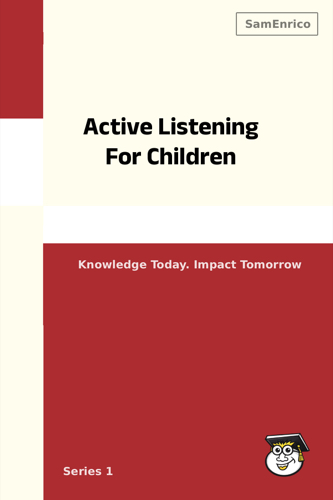 Active Listening For ChildrenFarrar Youlanda$11.99
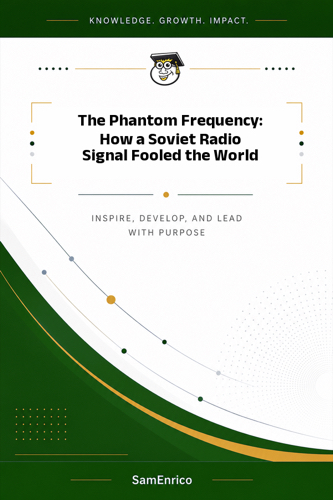 The Phantom Frequency: How a Soviet Radio Signal Fooled the WorldFarrar Youlanda$11.99
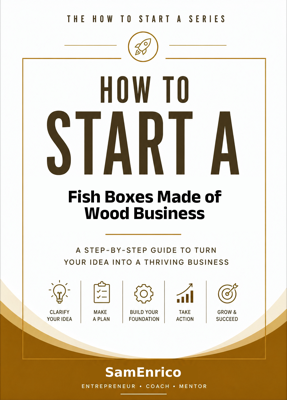 How to Start a Fish Boxes Made of Wood Business (Beginners Guide)Farrar Youlanda$11.99
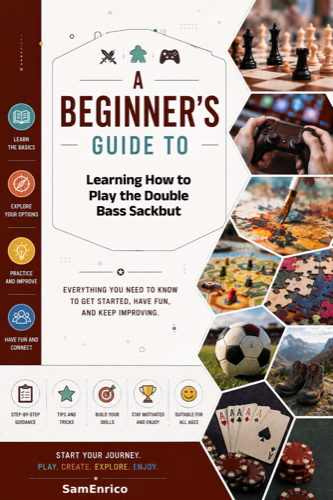 Learn to Play the Double Bass SackbutFarrar Youlanda$11.99
 Digital Marketing ManagerFarrar Youlanda$11.99
You may also like
 Hong Kong Handover 1997Dunn Johnnie$11.99
 Zumba For Postnatal Recovery CourseNeal Christian$11.99
 Zumba for BeginnersLadner Nikia$11.99
 YouTube Comment Mining GuideHumes Pandora$12.99
 Worry Box MeditationCarlin Rudy$11.99
 Workplace Stress MeditationNguyen Lynn$11.99
 Workplace Stress and Sleep RepairHawley Ivory$11.99
 Workplace Perfectionism CureDelaney Jeffry$11.99
 Workplace Injustice Anger GuideWallen Isabelle$11.99
 Work Addiction and Burnout LinkGreenwood Ester$11.99
 Women in Yoga and WellnessBeattie Galina$11.99
 Women in Stand Up ComedyChun Evangeline$11.99