
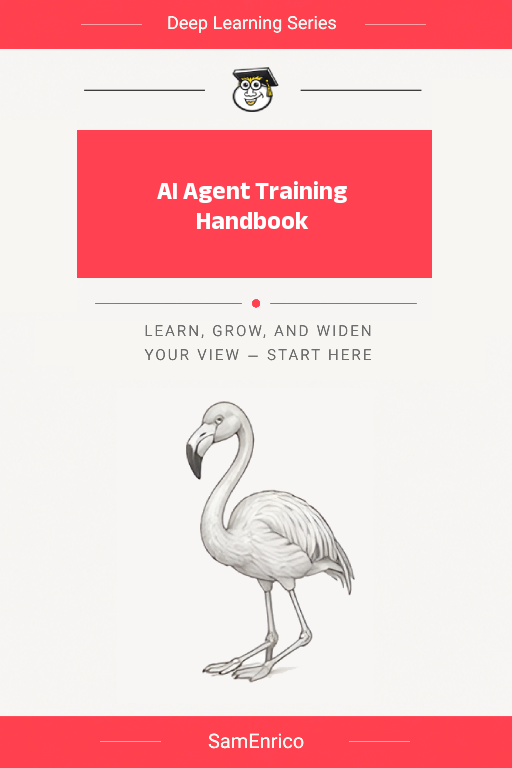
Non-FictionAI OperatorSupport OperationsSkills Guide
AI Agent Training Handbook
Build, train, and deploy AI customer service agent
Build, train, and deploy AI customer service agents using historical ticket data and knowledge bases. Includes intent mapping, response templates, and fallback escalation rules.
Formats
About this book
Free sample
Chapter 1: The Cognitive Blueprint--–- The year is 2024, and a mid-sized e-commerce company called "Swift Cart" has just lost 1.2millionincustomergoodwilloverasingleholidayweekend.Theirproblemwasn′tproductquality,shippingdelays,orevenadatabreach.Theirproblemwasachatbot.Awell−intentioned,expensivelybuilt,rules−basedchatbotthatansweredexactlyzerocomplexquestionscorrectly,frozewhenuserstypedslang,andtoldaplatinum−tiercustomerwithamissing1.2 million in customer goodwill over a single holiday weekend. Their problem wasn't product quality, shipping delays, or even a data breach. Their problem was a chatbot. A well-intentioned, expensively built, rules-based chatbot that answered exactly zero complex questions correctly, froze when users typed slang, and told a platinum-tier customer with a missing 1.2millionincustomergoodwilloverasingleholidayweekend.Theirproblemwasn′tproductquality,shippingdelays,orevenadatabreach.Theirproblemwasachatbot.Awell−intentioned,expensivelybuilt,rules−basedchatbotthatansweredexactlyzerocomplexquestionscorrectly,frozewhenuserstypedslang,andtoldaplatinum−tiercustomerwithamissing5,000 laptop order to "please visit our FAQ page." The customer cancelled their subscription, posted the conversation on X (formerly Twitter), and the screenshot got 2.3 million impressions. The chatbot wasn't malicious.
It wasn't even poorly coded by the standards of 2020. It simply suffered from a fatal architectural flaw: it was built on rigid decision trees that assumed customers would ask predictable questions in predictable ways. They never do.This chapter is not about that chatbot's failure. It is about the architectural blueprint that prevents it from ever happening again. We will build the cognitive skeleton of a modern AI customer service agent: a system of specialized sub-agents, a triage router that never gets confused, and an orchestration layer that enforces safety without sacrificing flexibility.
By the end of this chapter, you will understand exactly how an agent decides whether to answer from memory, search a knowledge base, call an API, or admit defeat and escalate to a human. More importantly, you will know the single most important design rule of agentic systems: design the orchestration layer before you train any model.The Anatomy of Agentic Architecture The first and most critical insight is counterintuitive to almost every newcomer: a modern AI customer service agent is not a single model. It is a system of models, rules, memory stores, and tools, coordinated by an orchestration layer that acts as the conductor of an orchestra. The LLM is the virtuoso violinist, but without the conductor, the timpanist (API tools), the cellist (memory), and the flutist…
This is the end of the free sample. Get the eBook to keep going. Buy now
Contents
- Chapter 1
- Chapter 2
- Chapter 3
- Chapter 4
- Chapter 5
- Chapter 6
- Chapter 7
- Chapter 8
- Chapter 9
- Chapter 10
- Chapter 11
- Chapter 12
Details
- Author
- Snipes Kortney
- Publisher
- SamEnrico
- Language
- English
- Genre
- Non-Fiction, AI Operator, Support Operations, Skills Guide
- Released
- 2026-05-26
- Pages (approx.)
- 156
- Available as
- eBook, Audiobook

Read better in the ZLOADR app
Your eBooks on your phone or tablet. Sign in with your SamEnrico account and start reading.
More by Snipes Kortney
 Mindful Driving MBSR PracticeSnipes Kortney$11.99
 Burnout Prevention for Moms HandbookSnipes Kortney$11.99
 Workplace Stress for Sales ProfessionalsSnipes Kortney$11.99
 Elijah the Prophet NarrativeSnipes Kortney$11.99
 The Male Body Image Insecurity GuideSnipes Kortney$11.99
 The Troll King's Last Stand: A Forgotten Saga of the Iron WoodSnipes Kortney$11.99
 How to Start a Omnibus Service Business (Beginners Guide)Snipes Kortney$11.99
 Understanding Klippel–trénaunay–Weber SyndromeSnipes Kortney$17.99
 SaaS Customer Success GuideSnipes Kortney$12.99
 Adviser Success ManagerSnipes Kortney$11.99
You may also like
 Hong Kong Handover 1997Dunn Johnnie$11.99
 Zumba For Postnatal Recovery CourseNeal Christian$11.99
 Zumba for BeginnersLadner Nikia$11.99
 YouTube Comment Mining GuideHumes Pandora$12.99
 Worry Box MeditationCarlin Rudy$11.99
 Workplace Stress MeditationNguyen Lynn$11.99
 Workplace Stress and Sleep RepairHawley Ivory$11.99
 Workplace Perfectionism CureDelaney Jeffry$11.99
 Workplace Injustice Anger GuideWallen Isabelle$11.99
 Work Addiction and Burnout LinkGreenwood Ester$11.99
 Women in Yoga and WellnessBeattie Galina$11.99
 Women in Stand Up ComedyChun Evangeline$11.99