
Agile Collaboration Guide
Apply scrum and kanban to creative teamwork.
by Farrar Lili
Apply scrum and kanban to creative teamwork.
Formats
About this book
Free sample
Chapter 1: The Multitasking Lie--You are a creative professional. You have three projects open on your computer right now. Your email inbox is glowing with unread messages. A stakeholder just messaged you with an “urgent” request. Your calendar shows back-to-back meetings for the next four hours.
And somewhere, in the remaining cracks of the day, you are supposed to produce your best work—the kind of creative output that requires deep focus, quiet reflection, and uninterrupted time.You are not alone. This is the standard operating procedure for most creative teams. And it is a lie.The lie is this: that multitasking makes you more productive. That starting more work helps you finish more work. That being busy is the same as being effective.
Every piece of this lie is demonstrably, measurably false. Yet creative professionals around the world perpetuate it daily, burning themselves out on the altar of false productivity while their actual output stagnates or declines.This chapter will dismantle the multitasking lie. You will learn why creative work is fundamentally different from other kinds of work, why context switching destroys your cognitive capacity, and why the most productive creative teams are the ones that do the least at any given moment. You will meet a design team that doubled its output by working on fewer things at once. And you will complete a self-assessment that will show you exactly where your own team’s bottleneck lies.
By the end, you will understand that the problem is not your talent, your effort, or your team. The problem is the way you are working.The Difference Between Complex and Complicated To understand why creative work resists traditional productivity methods, you must first understand a fundamental distinction: the difference between complex work and complicated work.Complicated work is like building a car. The process has many steps, and those steps are interdependent. But the steps are also repeatable. Once you know how to assemble a transmission, you can assemble another transmission exactly the same way.
The variables are known. The outcomes are predictable. With enough training and the right tools, anyone can do complicated work.This…
This is the end of the free sample. Get the eBook to keep going. Buy now
Contents
- Chapter 1
- Chapter 2
- Chapter 3
- Chapter 4
- Chapter 5
- Chapter 6
- Chapter 7
- Chapter 8
- Chapter 9
- Chapter 10
- Chapter 11
- Chapter 12
Details
- Author
- Farrar Lili
- Publisher
- SamEnrico
- Language
- English
- Genre
- Non-Fiction, Self-Help, Agile
- Released
- 2026-06-11
- Pages (approx.)
- 119
- Available as
- eBook, Audiobook

Read better in the ZLOADR app
Your eBooks on your phone or tablet. Sign in with your SamEnrico account and start reading.
More by Farrar Lili
 Virtual Coworking SessionsFarrar Lili$11.99
 Religious Minority Immigrant ChildhoodFarrar Lili$11.99
 Head Tilt MeaningFarrar Lili$11.99
 Anger at Childs Screen TimeFarrar Lili$11.99
 Problem Solving with EmpathyFarrar Lili$11.99
 Dream Aging JournalFarrar Lili$11.99
 Conversation Starters for Coffee ShopsFarrar Lili$11.99
 The Silent Protest: The 1968 Olympics and the Black Power SaluteFarrar Lili$11.99
 The Crimson Tide of Chaldiran: Shah Ismail's Last StandFarrar Lili$11.99
 How to Start a Exhibition Stand Business (Beginners Guide)Farrar Lili$11.99
 How to Produce an Oil HeaterFarrar Lili$11.99
 Citation for Dissertations and Theses GuideFarrar Lili$12.99
You may also like
 Eisenhower For Agile SprintsNorth Pamula$11.99
 Agile Creative Method GuideScherer Galen$11.99
 NVC for Scrum MastersLunsford Hyon$11.99
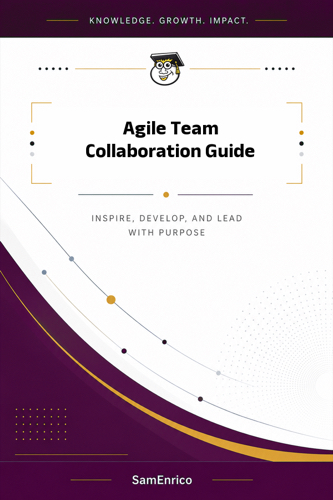 Agile Team Collaboration GuideHackett Krystin$11.99
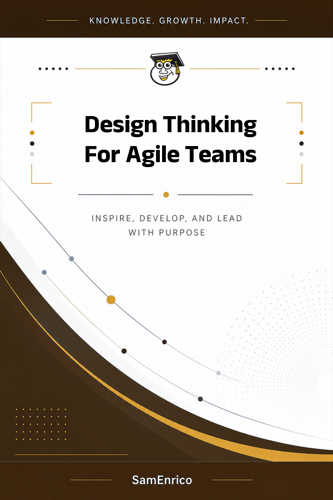 Design Thinking For Agile TeamsMcpherson Gisele$11.99
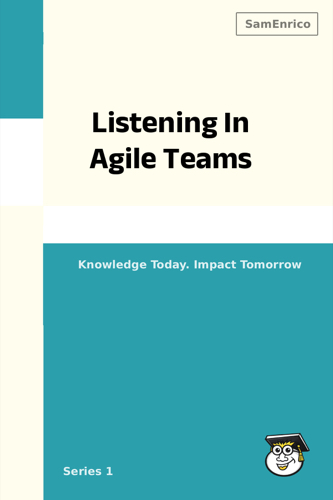 Listening In Agile TeamsBeckett Cristopher$11.99
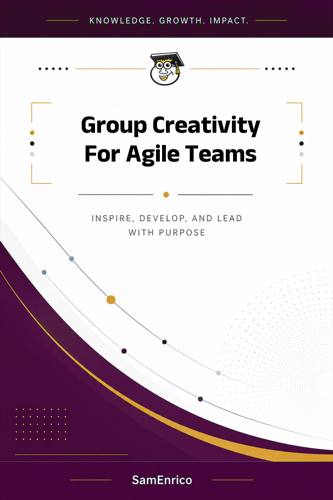 Group Creativity For Agile TeamsGaskin Easter$11.99
 Agile Sprint PrioritizationHadden Maren$11.99
 Agile Creativity GuideHauser Nikole$11.99
 Active Listening For Agile TeamsCordero Mafalda$11.99
 The Quarterly OKR SprintLawler Antonina$11.99
 Remote Team StandupsHutchison Cassidy$11.99