
Aggressive Driver Self Control eBook
Recognize your personal rage triggers and build im
by Hinkle Irwin
Recognize your personal rage triggers and build impulse control habits.
Formats
Free sample
Chapter 1: The Metal Cage--The first time I realized I had a problem, I was sitting in my driveway with my hands still gripping the steering wheel at ten and two, my knuckles white, my heart pounding like I had just run a sprint. My six-year-old daughter was crying in the back seat. I had no idea why. I had to rewind the last ten minutes of my life like a tape, frame by frame, to understand what had just happened. A driver had cut me off on the highway entrance ramp.
Not aggressively, not maliciously—just a standard, clumsy merge that happens a hundred times a day on American roads. But in my mind, it was an act of war. I had swerved. I had laid on the horn for a solid five seconds. I had pulled alongside the driver, a middle-aged woman who looked terrified, and I had screamed something I cannot bring myself to write here.
Then I had sped away, weaving through traffic, my daughter bouncing in her booster seat, until I reached my driveway. The other driver never followed me. She didn't need to. I was already in my own prison.I turned around and looked at my daughter. "Why are you crying?" I asked, genuinely confused.
She whispered, "Because you were scary, Daddy."That moment broke something in me. Not because I was a bad person—I didn't think I was. I volunteered at a food bank. I donated to charity. I loved my family.
But behind the wheel, I became someone else. Someone I didn't recognize. Someone who screamed at strangers, who took traffic personally, who treated a two-ton vehicle as a weapon instead of a tool. I had spent years convincing myself that my behavior was normal. Everyone gets angry in traffic, right?
Everyone honks. Everyone speeds up when someone tries to merge. It's just venting. It's just stress. It's not hurting anyone.But sitting in that driveway, listening to my daughter cry, I could no longer lie to myself.
My "harmless" aggression had a face. It was her face. And I was the one who put the fear there.This book is not written by a therapist who has never struggled with road rage. It is written by someone who has screamed at strangers, who has tailgated, who has made obscene gestures, who has driven home shaking with adrenaline and shame. I have done almost everything I will ask you to stop doing.
And I have spent the last several years studying the psychology of anger, interviewing experts, and testing every technique in this book on myself. Some of them worked immediately. Some of them took months to stick. Some of them felt ridiculous—sitting in my car, breathing like a meditating monk while traffic honked around me—until I realized they were saving my life.This chapter is not an overview. It is an intervention.
By the time you finish reading these pages, you will understand something that most aggressive drivers never grasp: your road rage is not a personality flaw. It is not a sign that you are a bad person. It is a learned habit loop, and like any habit, it can be unlearned. But first, you have to see it for what it really is. Not as venting.
Not as stress relief. Not as justified anger at bad drivers. But as a slow, quiet, daily act of self-destruction that is costing you your health, your relationships, and possibly your life.The Myth of the Safe Aggression Let me introduce you to a concept that will appear throughout this book: the Dr. Jekyll and Mr. Hyde phenomenon.
You know the story. A respectable doctor drinks a potion and transforms into a violent, uninhibited monster. Then he drinks another potion and turns back into a civilized man, horrified by what he has done. That is you behind the wheel. The calm, rational person you are at home, at work, at dinner with friends—that is Dr.
Jekyll. The person who screams at a stranger for merging too slowly, who tailgates a minivan because the driver is going the speed limit, who punches the steering wheel and feels a surge of satisfaction when you scare another driver—that is Mr. Hyde.Here is what most people get wrong about this transformation. They think it happens because traffic is uniquely frustrating. They think, "Anyone would get angry in this situation." They think their aggression is a normal, justified response to the idiocy of other drivers.
But research tells a different story. A landmark study published in the journal Transportation Research found that while nearly 80 percent of drivers report significant anger behind the wheel, only a small fraction of those drivers experience the same level of anger in other frustrating situations—waiting in line, dealing with a slow computer, navigating a bureaucratic phone tree. In other words, traffic does not make you angry. The driving environment lowers your inhibitions so that your existing frustrations explode outward.This is the first hard truth of this book: Your road rage is not about the other driver. It is about you.The driving environment is uniquely designed to trigger aggression.
You are enclosed in a metal cage, anonymous and invisible. The other driver cannot see your face, cannot hear your voice, cannot punch you back. This illusion of anonymity lowers your normal social inhibitions. You say things behind the wheel that you would never say to someone's face. You do things—tailgating, swerving, honking—that you would never do in any other context.
And because the interaction is fleeting, because you will probably never see that driver again, there is no accountability. No one will pull you aside afterward and say, "That was out of line." No one will remind you that the person you just screamed at might be a nurse coming off a 12-hour shift, a parent rushing to pick up a sick child, or a teenager driving for the first time. You never have to face the consequences of your anger. Except for one consequence. The one that lives inside your own body.The Physiological Price of Rage Here is what no one tells you about road rage: it is slowly killing you.When you get angry behind the wheel, your body releases a flood of stress hormones—cortisol and adrenaline.
These hormones are designed for short-term survival. If you are being chased by a predator, they sharpen your senses, increase your heart rate, and prepare your muscles for fight or flight. But in traffic, there is no predator. There is only a driver who merged without signaling. Your body does not know the difference.
It responds to the perceived threat exactly as it would to a physical attack. Your heart rate spikes. Your blood pressure rises. Your breathing becomes shallow. Your muscles tense.
Your blood sugar surges. And then, because there is no actual fight, because you sit in your seat and fume, those hormones do not get metabolized by physical activity. They linger in your system. They do damage.The research on this is startling. A study from the University of California, Irvine, followed 1,000 drivers over five years and measured their…
This is the end of the free sample. Get the eBook to keep going. Buy now
About this book
Details
- Author
- Hinkle Irwin
- Publisher
- SamEnrico
- Language
- English
- Genre
- Non-Fiction, Self-Help, Impulse Control
- Released
- 2026-06-10
- Pages (approx.)
- 138
- Available as
- eBook, Audiobook

Read better in the ZLOADR app
Your eBooks on your phone or tablet. Sign in with your SamEnrico account and start reading.
More by Hinkle Irwin
 Prana Life Force GuideHinkle Irwin$11.99
 Caregiver Retirement PlanningHinkle Irwin$11.99
 1031 Exchange Rules Made SimpleHinkle Irwin$11.99
 The Engineering Failure CreativityHinkle Irwin$11.99
 Loving Kindness for a Single ParentHinkle Irwin$11.99
 Pain Flotation Tank ImageryHinkle Irwin$11.99
 The Stress Chronic PainHinkle Irwin$11.99
 Spaced Repetition For TriviaHinkle Irwin$11.99
 The Secret in the Syringe: The Untold Story of the 1983 World Championships Doping Cover-UpHinkle Irwin$11.99
 The Last Flight of the Entebbe RaidersHinkle Irwin$11.99
 The Sun Forgers: How Ancient Civilizations Harnessed Solar PowerHinkle Irwin$11.99
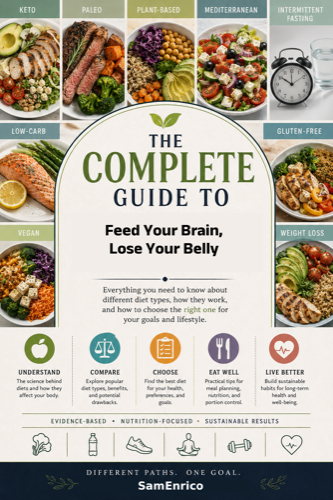 The Complete Guide to Feed Your Brain, Lose Your BellyHinkle Irwin$11.99
You may also like
 The Urge Delay TechniqueDunaway Buffy$11.99
 Road Rage And Impulse ControlKimmel Britta$11.99
 Cut Off Response PlanCrandall Branda$11.99
 Curbing Impulse Purchases GuideSimonson Saundra$11.99
 The 5 Second Affirmation RuleBush Margarita$11.99
 Curbing Impulse Buys At Checkout CourseBourgeois Kalyn$11.99
 The Three Second Rule InterventionBowie Marget$11.99
 The Self Regulation CourseConaway Kenton$11.99
 Listening Without Interrupting GuideFord Virgil$11.99
 The Three Second Binge InterruptionAlcala Ali$11.99
 The STOP DBT Crisis Skill GuideRatliff Hana$11.99
 The Anger Impulse Delay GuideVanburen Hilde$11.99