
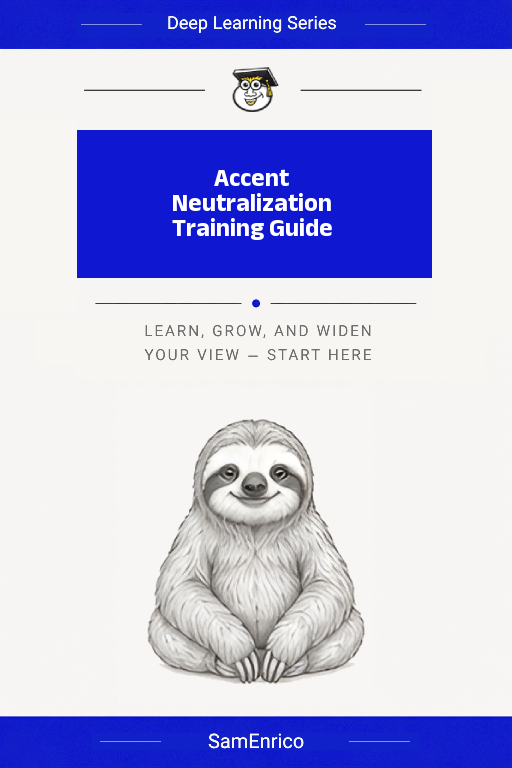
Accent Neutralization Training Guide eBook
Train Indian and Jamaican agents for US and UK aud
by Squires Elva
Train Indian and Jamaican agents for US and UK audiences, reducing friction and improving first-call resolution through pronunciation coaching.
Formats
Free sample
Chapter 1: The Hidden Truth...--The first time Priya was asked to "speak English" on a customer service call, she was already speaking English. She was born in Mumbai, educated in English-medium schools, and had passed her BPO's language assessment with 92 percent. But the customer from Texas heard her accent and decided she must be incompetent. "Can I talk to someone who actually speaks English?" he said. Priya smiled through the pain, transferred the call to a white-sounding colleague, and then sat in the bathroom for five minutes staring at the ceiling.This book is not for Priya's manager, who told her to "neutralize her accent." It is not for the quality assurance team that marked her down for "pronunciation" when she said "tree" instead of "three." And it is certainly not for the customer who assumed her intelligence based on the shape of her vowels.This book is for Priya.
And for Dwayne from Kingston, who was told his Jamaican English sounds "unprofessional" even though he holds a degree in linguistics. And for the millions of Indian and Jamaican call center agents who have been told, directly or silently, that their voice is the problem.Here is the hidden truth that the accent reduction industry does not want you to know: You do not need to sound American or British to be understood. The most successful non-native English speakers in the world—Sundar Pichai, Satya Nadella, Indra Nooyi—speak with clear, identifiable accents. What they do not do is mumble, swallow their consonants, or add extra vowels where none belong.The difference between "unclear" and "accented" is the difference between a locked door and a slightly unusual doorknob. One stops communication entirely.
The other simply requires a moment of adjustment.This chapter will dismantle the most damaging belief in customer service training: that agents must erase their native accent to succeed. You will learn why "accent neutralization" is a harmful myth, how to reframe your work as "pronunciation coaching" instead, and why First-Call Resolution—not sounding like a BBC anchor—is the only metric that matters.The Myth of the "Neutral" Accent What does a "neutral" accent sound like? If you ask ten different people, you will get ten different answers. An American from Ohio believes their accent is neutral. A British person from London believes their accent is neutral.
A Canadian believes their accent is the true neutral, because they say "about" in a way that is neither here nor there.The truth is that there is no such thing as a neutral accent. Every human being on earth speaks with an accent. The only people who believe they do not have an accent are those who have never left their hometown. The so-called "neutral" accent is simply the accent of whoever holds power in a given industry at a given time.In the global call center industry, that power has historically belonged to two groups: Americans and Brits. And so, for decades, Indian and Jamaican agents have been told to sound like them.
To flatten their vowels. To erase the music of their native speech. To become linguistic ghosts.This is not only culturally harmful—it is bad business.Research from the University of Essex found that customers do not actually prefer "native" accents when given a choice. What they prefer is intelligibility. A customer who understands an agent on the first try does not care whether that agent sounds like they grew up in Ohio or Bangalore.
They care that their problem is solved quickly and without friction.The accent reduction industry has sold a lie: that your accent is a liability. In reality, only unclear pronunciation is a liability. And the difference between the two is not as blurry as you might think.Intelligibility Over Identity: The Core Framework Let us establish the single most important distinction in this entire book. You will return to this framework in every chapter, every drill, every call.Intelligibility is the degree to which a listener can understand your words on the first attempt, without effort, guessing, or asking for repetition.Identity is the collection of phonetic features that mark you as a speaker of a particular region, community, or language group.The goal of this book is to increase your intelligibility while preserving your identity—wherever that preservation does not reduce intelligibility.Here is the rule that will guide you through all twelve chapters:If changing a speech feature makes you clearer, change it. If changing it only makes you sound "less Indian" or "less Jamaican" without improving clarity, keep it.This means that some features of your speech are mechanical errors.
They are not part of your cultural identity. They are simply incorrect articulations that confuse listeners. These must be fixed.Other features are genuine identity markers. They reflect your background, your community, and your history. These should be preserved, celebrated, and protected.How do you tell the difference?
The following table provides a starting framework. The rest of this book will fill in the details.Speech Feature Mechanical Error (Fix It)Identity Marker (Keep It)/θ/ pronounced as /t/ ("tree" for "three")✅ Fix it—this changes meaning❌/θ/ pronounced as /f/ ("free" for "three")✅ Fix it—this changes meaning❌Retroflex T/D (curled tongue)✅ Fix it—this is not identity, just mechanics❌Syllable-timed rhythm❌✅ Keep it—this is musical identity, rarely impedes understanding Rising intonation on polite questions❌✅ Keep it for questions Rising intonation on statements✅ Fix it—this confuses listeners❌Vocabulary differences ("prepone")✅ Fix it—this is not pronunciation but word choice❌Monophthongization of diphthongs✅ Fix it—this changes word meaning❌Notice that many features you might have thought were "accent" are actually mechanical errors. The retroflex T is not a sign of your Indian identity—it is simply your tongue curling to the wrong place in your mouth. The schwa parasite (adding an extra vowel to "school") is not cultural expression—it is a habit that can be unlearned in three days.Conversely, the rhythm of your speech—the way you space your syllables—is deeply tied to your linguistic identity. And interestingly, it rarely causes genuine misunderstanding.
A customer might notice that you sound different, but they will still understand every word you say.This framework liberates you from the impossible goal of sounding "neutral." You do not need to sound like anyone except a clearer version of yourself.The Sundar Pichai Test: Success Without Erasure Let us look at the most famous Indian English speaker in the world: Sundar Pichai, CEO of Google.When Pichai testifies before the United States Congress, he speaks with a clear Indian accent. His vowels are not American. His rhythm is not American. His T's are not American. And yet, he is understood.
He is respected. He runs one of the most valuable companies in human history.Why? Because Pichai does not make the mechanical errors that destroy intelligibility. He does not say "tree" for "three." He does not say "wery" for "very." He does not add schwa to consonant clusters. His pronunciation of individual sounds is precise, even though his accent is unmistakably Indian.The same is true of Satya Nadella, CEO of Microsoft.
Nadella has spoken openly about working with a pronunciation coach early in his career—not to erase his accent, but to…
This is the end of the free sample. Get the eBook to keep going. Buy now
About this book
Details
- Author
- Squires Elva
- Publisher
- SamEnrico
- Language
- English
- Genre
- Non-Fiction, Business Brief
- Released
- 2026-05-26
- Pages (approx.)
- 142
- Available as
- eBook, Audiobook

Read better in the ZLOADR app
Your eBooks on your phone or tablet. Sign in with your SamEnrico account and start reading.
More by Squires Elva
 Jumping Over PuddleSquires Elva$11.99
 Ghee vs Butter GuideSquires Elva$11.99
 Outbreak Cash Flow Survival GuideSquires Elva$11.99
 Six Homes Before TwelveSquires Elva$11.99
 Opposite Action Skill GuideSquires Elva$11.99
 Social Media Weekly ReviewSquires Elva$11.99
 Morning Procrastination BreakthroughSquires Elva$11.99
 Grief and Anger After SpouseSquires Elva$11.99
 The Velvet Noose: A Serial Killer’s Silent SymphonySquires Elva$11.99
 The Golden Age of Aksum: Africa's Forgotten SuperpowerSquires Elva$11.99
 Service Providers Guide to Tool Rental ServicesSquires Elva$11.99
 How to Produce Wheel CleanerSquires Elva$11.99
You may also like
 Franchising Your Local Brand Across Borders Child Labor LawsWilson Ida$11.99
 Franchising Your Local Brand Across Borders Beneficial OwnershipGordon Debbie$11.99
 Franchising Your Local Brand Across Borders Trade SecretsKeener Tatum$11.99
 Franchising Your Local Brand Across Borders Performance DashboardsCota Lisette$11.99
 Franchising Your Local Brand Across Borders Parallel ImportsBailey Wallace$11.99
 Franchising Your Local Brand Across Borders Packaging RegulationsRandle Adaline$11.99
 Franchising Your Local Brand Across Borders Know Your CustomerMyers Adam$11.99
 Franchising Your Local Brand Across Borders Human TraffickingFranklin Lee$11.99
 Franchising Your Local Brand Across Borders Government IncentivesLogsdon Beckie$11.99
 Franchising Your Local Brand Across Borders Carbon FootprintMcfarlane Margot$11.99
 Franchising Your Local Brand Across Borders Bribery LawsStarr Cortney$11.99
 Franchising Your Local Brand Across Borders Best Practice SharingBryson Vernia$11.99