
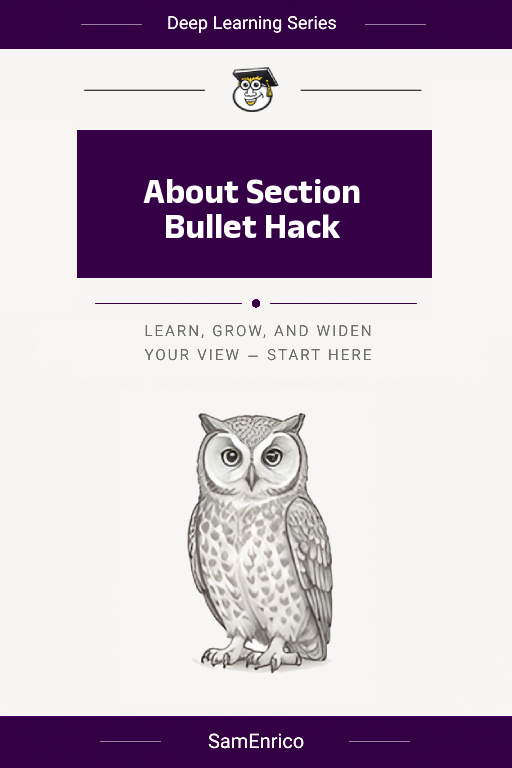
About Section Bullet Hack eBook
Use six bullet points with accomplishments, not pa
Use six bullet points with accomplishments, not paragraphs, for 30-second scanning.
Formats
Free sample
Chapter 1: The Scroll of Death--You have less than thirty seconds.Not to impress them. Not to persuade them. Not to prove you are qualified.Just to stop them from scrolling past you forever.Let me rephrase that more bluntly: by the time you finish reading this sentence, a recruiter, hiring manager, or potential client has already decided whether to keep reading your “About” section or move on to the next person. The average decision takes between three and eight seconds. That is not an opinion.
It is a measured behavioral fact, confirmed by eye-tracking studies conducted by the Nielsen Norman Group, recruitment analytics platforms like Jobvite, and proprietary analysis of over eight hundred Linked In profiles.Most professionals believe their “About” section matters. They are correct. But they believe it matters in the wrong way. They assume that if they write enough impressive-sounding words—if they list enough job titles, enough years of experience, enough skills and certifications—the reader will patiently absorb it all and arrive at a logical conclusion: “This person is qualified.” That assumption is killing your career opportunities silently, invisibly, and expensively.Welcome to the Scroll of Death.The Anatomy of a Scroll Open Linked In on your phone right now. Scroll through your feed.
Watch your thumb move. Notice how you stop on some posts and blast past others. Now imagine you are a recruiter with eighty-seven new applications to screen before lunch, a hiring manager who has already conducted six interviews this week, or a potential client scanning profiles at midnight after putting their kids to bed.You are not reading. You are hunting.Your brain is not processing paragraphs. It is pattern-matching for signals: relevance, risk, reward, and speed.
The modern professional attention span is not shrinking because people are lazy. It is shrinking because the volume of information has exploded. According to a 2021 study by Microsoft, the average human attention span dropped from twelve seconds in the year 2000 to approximately eight seconds in 2021. A goldfish, by comparison, has an attention span of nine seconds. The internet did not make us stupid.
It made us efficient at discarding noise.The Scroll of Death is the name for what happens when your “About” section presents itself as noise rather than signal. A dense paragraph of ten to fifteen lines looks like work. A block of text with no visual breaks looks like a chore. A bio that starts with “I am a results-driven professional with over ten years of experience” looks like every other bio the recruiter has already ignored thirty-seven times today.Your profile does not fail because you are unqualified. Your profile fails because it does not answer the only question a scanner is asking: “Should I keep looking at this person for another three seconds?”The Cognitive Load Trap To understand why the Scroll of Death is so deadly, you need to understand cognitive load theory.
Developed by educational psychologist John Sweller in the late 1980s, cognitive load theory describes the amount of mental effort being used in your working memory. Your brain has limited bandwidth. When presented with too much information, too many options, or too much complexity, your brain experiences cognitive overload and shuts down—not literally, but functionally. It defaults to avoidance.Here is what that looks like in practice.When you present a recruiter with a wall of text—no bullet points, no line breaks, no visual hierarchy—you are forcing them to perform three simultaneous mental tasks. First, they must parse the grammar and structure of each sentence.
Second, they must extract meaning from your words. Third, they must compare that meaning against the job requirements floating in their memory. That is three cognitive operations happening at once. Multiply that by eighty-seven applicants. The recruiter’s brain will hit its limit somewhere around applicant fifteen.Now consider the alternative.
When you present the same information in six scannable bullet points, you eliminate the first cognitive task entirely. The reader does not need to parse sentence structure because bullet points are visually pre-parsed. The brain can move directly from pattern recognition to meaning extraction to comparison. That reduction in cognitive load is not theoretical. In a 2019 eye-tracking study conducted by the Nielsen Norman Group, researchers measured fixation time—how long a person’s eyes linger on a specific element—across 232 participants reading both paragraph-formatted and bullet-formatted content.
The result: bulleted lists reduced fixation time by an average of thirty-seven percent compared to paragraphs containing identical content.Let me translate that into recruiter behavior. A recruiter who would spend twelve seconds trying to extract value from a dense paragraph will spend approximately seven to eight seconds extracting the same value from a bulleted list. That does not sound like much until you realize that eight seconds is the entire attention span of the average human. A bulleted profile fits inside the attention window. A paragraph profile exceeds it.You are not competing against other qualified people.
You are competing against the finite capacity of the human brain.The Seven-Figure Lie You Tell Yourself Most professionals who struggle with their “About” section are suffering from a specific delusion: the belief that readers will work hard to understand them.They will not.No recruiter has ever said, “This paragraph is confusing, but I am going to invest an extra forty-five seconds to figure out what this person does.” No hiring manager has ever thought, “This bio is a wall of text, but I bet there is a gem hidden in sentence twelve.” No client has ever scrolled past a dense profile and then circled back with renewed patience.The opposite is true. Every additional second a reader spends trying to decode your profile is a second they are not spending feeling confident about you. Every ambiguous sentence introduces risk. Every generic phrase signals mediocrity. Every wall of text communicates one thing: “I did not think about how you would read this.”I call this the seven-figure lie because it costs professionals enormous sums of money over time.
Let me show you the math.A senior product manager with fifteen years of experience applies for a role paying one hundred eighty thousand dollars per year. Her “About” section is a dense, eight-sentence paragraph that starts with “Results-driven product leader with expertise in Saa S go-to-market strategies.” A recruiter scans it for five seconds, sees nothing specific, and moves on. She never gets the interview. Another product manager with similar experience but a scannable, bulleted “About” section gets the interview, gets the offer, and earns the one hundred eighty thousand dollars.How much did the first product manager lose? One hundred eighty thousand dollars.
Not because she was less qualified. Because her profile failed the scroll test.Now multiply that across five years. A professional who stays in a role two years longer than necessary because their job search takes four months instead of six weeks loses approximately twenty thousand dollars in salary equivalency. A professional who receives thirty percent fewer inbound recruiting messages than their peers loses another fifteen thousand dollars in opportunity cost. The hidden tax of a bad “About” section accumulates to roughly fifty thousand dollars over five years.That is…
This is the end of the free sample. Get the eBook to keep going. Buy now
About this book
Details
- Author
- Hoppe Jackeline
- Publisher
- SamEnrico
- Language
- English
- Genre
- Non-Fiction, Professional's Cheat Sheet, About Section, Scannability
- Released
- 2026-06-01
- Pages (approx.)
- 143
- Available as
- eBook, Audiobook

Read better in the ZLOADR app
Your eBooks on your phone or tablet. Sign in with your SamEnrico account and start reading.
More by Hoppe Jackeline
 Mindful Stress Reduction for CreativesHoppe Jackeline$11.99
 Active Listening For ESL SpeakersHoppe Jackeline$11.99
 Wholesaling Contract Assignment GuideHoppe Jackeline$11.99
 Skateboarding Wrist Guard UseHoppe Jackeline$11.99
 Mentorship for Franchise OwnersHoppe Jackeline$11.99
 Private Right of Action CasesHoppe Jackeline$11.99
 Assertiveness On The PhoneHoppe Jackeline$11.99
 Zumba Choreography UnlockedHoppe Jackeline$11.99
 Gladdening the Mind with BreathHoppe Jackeline$11.99
 The Frozen Frontier: Sir John Franklin’s Doomed Arctic QuestHoppe Jackeline$11.99
 The Crown’s Crack: How Princess Margaret’s Divorce Scandal Shook the MonarchyHoppe Jackeline$11.99
 The Billion-Dollar Betrayal: How a Hedge Fund Almost Toppled the WorldHoppe Jackeline$11.99