
Non-FictionHealth & WellnessDance
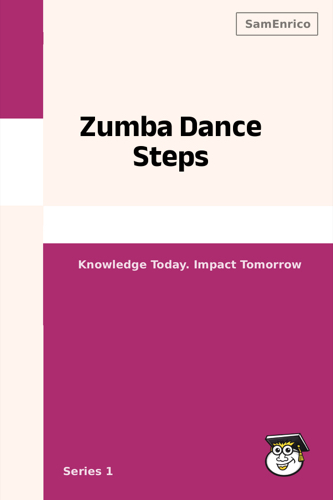
Zumba Dance Steps eBook
Teaches salsa, merengue, and cumbia basic moves.
Teaches salsa, merengue, and cumbia basic moves.
Formats
Free sample
Chapter 1: The Hidden Truth...--You have been lied to about exercise.Not by malice, but by marketing. For decades, the fitness industry has sold you a story that punishment precedes progress—that if you are not miserable, you are not working hard enough. Treadmills facing blank walls. Counting every rep like a prison sentence. The grim, humorless grind of "no pain, no gain." And you believed it because everyone around you believed it.
But here is the hidden truth that the $96 billion global fitness industry does not want you to discover: the most effective workout is the one you do not have to force yourself to do.This book is not about discipline. It is not about willpower. It is not about dragging yourself to a gym where the air smells like rubber and regret. This book is about a revolution hiding in plain sight—a workout that has spread to more than 180 countries, with over 15 million weekly participants, not because it is punishing, but because it is a party. That workout is Zumba.
And the secret ingredient has nothing to do with choreography, athleticism, or coordination.The secret ingredient is joy.The Science of Smiling: Why Fun Burns More Fat Before we teach you a single step, you need to understand why this approach works when every other fitness resolution you have made has failed. The answer lies in a concept called perceived exertion—a fancy term for how hard your brain thinks your body is working. Here is the remarkable discovery from sports psychology: two people can perform identical physical movements at identical intensity, but the one who is smiling, listening to music they love, or moving in a way that feels like dancing will report significantly lower perceived exertion. And lower perceived exertion means one thing: they keep going longer.A landmark 2015 study from the Journal of Positive Psychology found that participants who engaged in "happy movement" (dancing to upbeat music in a social or semi-social setting) burned approximately 18% more calories over a 30-minute period than those performing structured aerobic exercise at the same heart rate. Why?
Because the happy movers did not check the clock every three minutes. They did not bargain with themselves ("ten more minutes and I can stop"). They simply moved—and the minutes vanished.This is what Zumba founder Alberto "Beto" Perez discovered by accident in his native Colombia in the 1990s. Walking into an aerobics class one morning, Beto realized he had forgotten his traditional teaching tapes. The only music in his bag?
Latin salsa and merengue albums from his car. Instead of canceling the class, he improvised. He taught the same aerobic movements—lunges, squats, side-steps, arm raises—but set to a thumping salsa beat. The class, expecting the usual grim routine, started smiling. Then laughing.
Then dancing. At the end of the session, no one wanted to leave. They had worked harder than ever, but they had also had more fun than ever. By accident, Beto had stumbled onto a universal truth: when movement feels like music, exercise stops being a chore and becomes a reward.The "Fitness-Party" Balance: A New Operating System for Your Body Traditional exercise operates on a deficit model: you are not fit enough, so you must suffer until you become fit. Zumba operates on an abundance model: you already know how to move to music (you have done it at weddings, parties, concerts, or alone in your kitchen), so let us simply build on what your body already understands.
This is not a philosophy of deprivation. It is a philosophy of addition.Throughout this book, you will hear the term "Fitness-Party" balance. This is not a gimmick. It is a deliberate, research-backed ratio that appears consistently in successful long-term fitness adherence studies. The equation is simple: for every minute of structured, high-intensity movement, there must be at least thirty seconds of expressive, joyful, "dancy" movement.
This ratio keeps cortisol (the stress hormone that can lead to fat retention) in check while elevating dopamine and serotonin (the neurotransmitters associated with pleasure and reward).Here is what the Fitness-Party balance looks like in practice:Fitness component: A structured Merengue march with arms pressing at chest height, working the upper back and shoulders.Party component: A two-bar "shake it out" break where you simply sway your hips and let your arms relax.Fitness component: A Salsa cross-body step with a spot turn, engaging the core and improving coordination.Party component: A four-count "shine" where you briefly break into freeform footwork just because it feels good.Fitness component: A Cumbia back-step lunge series, strengthening the quads and glutes.Party component: A playful heel-flick (the "Cumbia Hop") that adds bounce and reduces perceived effort.The fitness keeps you progressing. The party keeps you coming back. Neither works without the other.Why This Book Exists: The Gap Between Classes and Confidence You might be wondering: if Zumba is so wonderful, why not just go to a class? That is an excellent question, and the answer reveals exactly why this book is in your hands right now.Zumba classes are extraordinary—when they work. A great instructor can transform a room of strangers into a moving, sweating, laughing community.
But here is the reality that Zumba enthusiasts rarely discuss: walking into your first class is terrifying. The lights are low (to hide the self-conscious beginners). The music is loud (to drown out the sound of off-beat feet). The regulars seem to know every move without thinking, while you are still trying to figure out which foot is left. And the instructor?
They are so focused on keeping the energy high that they rarely stop to break down the basic steps.The result is a quiet crisis: millions of people try Zumba exactly once, feel lost and embarrassed, and never return. They assume the problem is them. I have no rhythm. I am too uncoordinated. I am the only person in the room who cannot do this.None of that is true.
The problem is not you. The problem is that the foundational steps of Zumba—Merengue, Salsa, and Cumbia—are almost never taught systematically in a class setting. Instructors assume you already know them, or that you will "pick them up" over time. But picking up a dance step while also trying to breathe, sweat, and not collide with your neighbor is like learning a new language while running a marathon.This book solves that problem. Across the next twelve chapters, you will learn the three core rhythms of Zumba exactly the way professional instructors learn them: slowly, systematically, with clear breakdowns, common mistake corrections, and progressive drills.
You will not be thrown into the deep end. You will start on dry land, learn to float, and only then begin to swim.Who This Book Is For (And Who It Is Not For)Let us be ruthlessly honest about who will benefit from Zumba Dance Steps and who should probably look elsewhere.This book IS for you if:You have never taken a dance class in your life and the idea of choreography makes you nervous.You have tried Zumba before and felt lost, embarrassed, or left behind.You are over 40, 50, or 60 and worried…
This is the end of the free sample. Get the eBook to keep going. Buy now
About this book
Details
- Author
- Pippin Carlyn
- Publisher
- SamEnrico
- Language
- English
- Genre
- Non-Fiction, Health & Wellness, Dance
- Released
- 2026-06-06
- Pages (approx.)
- 145
- Available as
- eBook, Audiobook

Read better in the ZLOADR app
Your eBooks on your phone or tablet. Sign in with your SamEnrico account and start reading.
More by Pippin Carlyn
 SMART for Financial GoalsPippin Carlyn$11.99
 Burnout Prevention For CaregiversPippin Carlyn$11.99
 Hoffa Vanished In Plain Sight TheoryPippin Carlyn$11.99
 Clubhouse Room Status AnxietyPippin Carlyn$11.99
 Somalia Humanitarian Intervention CriticPippin Carlyn$11.99
 Money Mindset Reset GuidePippin Carlyn$11.99
 The Shame Urge SurfingPippin Carlyn$11.99
 The Stoic and the Sword: Marcus Aurelius, Philosopher-King of RomePippin Carlyn$11.99
 The Rise of the Tigres: How a Mexican Soccer Revolution Changed a NationPippin Carlyn$11.99
 Growing BrachylaenaPippin Carlyn$11.99
 A Collector's Handbook to the Rover 100Pippin Carlyn$11.99
 How to Produce a Multimedia Over Coax AlliancePippin Carlyn$11.99
You may also like
 Hong Kong Handover 1997Dunn Johnnie$11.99
 Zumba For Postnatal Recovery CourseNeal Christian$11.99
 Zumba for BeginnersLadner Nikia$11.99
 YouTube Comment Mining GuideHumes Pandora$12.99
 Worry Box MeditationCarlin Rudy$11.99
 Workplace Stress MeditationNguyen Lynn$11.99
 Workplace Stress and Sleep RepairHawley Ivory$11.99
 Workplace Perfectionism CureDelaney Jeffry$11.99
 Workplace Injustice Anger GuideWallen Isabelle$11.99
 Work Addiction and Burnout LinkGreenwood Ester$11.99
 Women in Yoga and WellnessBeattie Galina$11.99
 Women in Stand Up ComedyChun Evangeline$11.99