
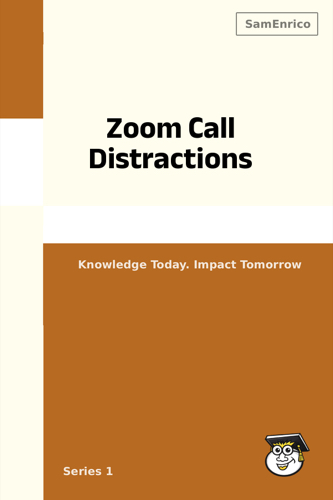
About this book
Free sample
Chapter 1: The Cognitive Toll--We begin with a confession: you are not lazy, undisciplined, or broken because you feel exhausted after a day of video calls. Something real is happening inside your skull, and naming it is the first step toward reclaiming your presence.In the spring of 2020, as offices around the world locked their doors and millions of knowledge workers migrated to Zoom, Microsoft Teams, and Google Meet, an unexpected phenomenon began appearing in internal surveys, wellness check-ins, and whispered conversations between colleagues. People reported being more tired than ever before, despite commuting zero miles and sitting in their own homes. They described a peculiar flavor of exhaustion—not the satisfying tiredness of a hard day's physical labor, nor the mental fatigue of solving complex problems, but something closer to depletion without accomplishment. They had attended seven hours of back-to-back video calls.
They had nodded, smiled, and said "great point" dozens of times. And yet, at 5 PM, they could not remember a single decision from the afternoon session.This is not a character flaw. It is not a lack of resilience or a sign that you are ill-suited for remote work. It is a predictable neurological response to a fundamentally unnatural mode of communication, and understanding its mechanics is the difference between suffering through it and mastering it.The Birth of a New Kind of Fatigue Before video conferencing became ubiquitous, the phrase "meeting fatigue" existed, but it meant something different. In-person meetings tired people because of logistics—walking across campus, finding a conference room, managing the temperature, staying awake after a heavy lunch.
The fatigue was physical and social in predictable ways. Video meetings introduced a new category altogether, one that researchers at Stanford University's Virtual Human Interaction Lab began studying in earnest during the first months of the pandemic.They called it "Zoom fatigue," though the name stuck to the platform even as the phenomenon applied universally. What they discovered was that video calls demand more from the human brain than face-to-face conversations do, while simultaneously delivering less of the information the brain relies on to make sense of…
This is the end of the free sample. Get the eBook to keep going. Buy now
Contents
- Chapter 1
- Chapter 2
- Chapter 3
- Chapter 4
- Chapter 5
- Chapter 6
- Chapter 7
- Chapter 8
- Chapter 9
- Chapter 10
- Chapter 11
- Chapter 12
Details
- Author
- Jacobs Mabel
- Publisher
- SamEnrico
- Language
- English
- Genre
- Non-Fiction, Self-Help / Virtual
- Released
- 2026-06-10
- Pages (approx.)
- 126
- Available as
- eBook, Audiobook

Read better in the ZLOADR app
Your eBooks on your phone or tablet. Sign in with your SamEnrico account and start reading.
More by Jacobs Mabel
 Voice Actor Roommate Audition TalesJacobs Mabel$11.99
 Teen Voice Finding GuideJacobs Mabel$11.99
 Stimulant Post Acute WithdrawalJacobs Mabel$11.99
 Gambling Addiction MedicationJacobs Mabel$11.99
 Required Minimum Distribution GuideJacobs Mabel$11.99
 Holiday Grief After Pregnancy LossJacobs Mabel$11.99
 Sleep and Long Term RegulationJacobs Mabel$11.99
 The Night the Sky Burned: The 2017 Grenfell Tower InfernoJacobs Mabel$11.99
 How to Produce Mortars and PestlesJacobs Mabel$11.99
 A Collector's Handbook to the Renault 5Jacobs Mabel$11.99
 Pop Up Retail for Streetwear Brands GuideJacobs Mabel$12.99
 Freemium Usage Caps for Slow NetworksJacobs Mabel$12.99
You may also like
 Hong Kong Handover 1997Dunn Johnnie$11.99
 Zumba For Postnatal Recovery CourseNeal Christian$11.99
 Zumba for BeginnersLadner Nikia$11.99
 YouTube Comment Mining GuideHumes Pandora$12.99
 Worry Box MeditationCarlin Rudy$11.99
 Workplace Stress MeditationNguyen Lynn$11.99
 Workplace Stress and Sleep RepairHawley Ivory$11.99
 Workplace Perfectionism CureDelaney Jeffry$11.99
 Workplace Injustice Anger GuideWallen Isabelle$11.99
 Work Addiction and Burnout LinkGreenwood Ester$11.99
 Women in Yoga and WellnessBeattie Galina$11.99
 Women in Stand Up ComedyChun Evangeline$11.99