
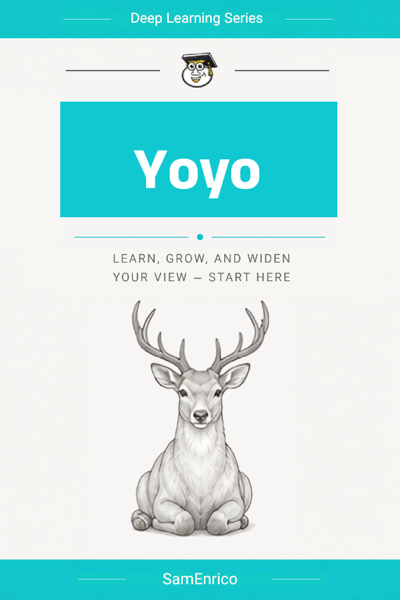
Non-FictionInformativeEducational
Yoyo eBook
A Coursebook on Yoyo
by Snead Sondra
A Coursebook on Yoyo
Formats
Free sample
Chapter 1: The Hunt for Home--The first yo-yo was not a toy. It was a weapon.Imagine standing on the forest floor of pre-colonial Philippines, the air thick with humidity and the sound of unseen animals rustling in the canopy above. In your hand is not a plastic disc with a string, but a carved wooden disk, heavy for its size, attached to a fifteen-foot rope made from twisted plant fibers. Your target is not an audience of impressed friends, but an animal—a wild pig, a deer, perhaps a monkey moving too slowly through the branches. You swing the weight in a wide arc, release it at precisely the right moment, and watch as the disk flies upward, the rope trailing behind like a serpent.
The weight wraps around the animal's legs, tangling them mid-stride, and the creature falls. You pull the rope, retrieve your tool, and reset for the next hunt. This was the original yo-yo: a hunting implement, a survival mechanism, and a piece of engineering so elegant that it would take nearly five hundred years for the rest of the world to understand what the Philippines had created.This is the story you have never heard. The yo-yo’s journey from the jungles of Southeast Asia to the bright lights of the World Yo-Yo Contest in Orlando, Florida, is a tale of immigrants and hustlers, of bankruptcy and rebirth, of a simple toy that refused to die. It is also your story, because the moment you hold a yo-yo in your hand today, you are touching a direct line to the 16th century.
The physics have not changed. The joy has not changed. Only the names and the materials have been updated.Let us begin at the beginning, before the word "yo-yo" existed, before anyone thought to put ball bearings inside a spinning disc, before the toy became a global obsession. Let us go back to the hunt.The Filipino Invention That History Almost Forgot The exact origin of the yo-yo is lost to time, but historians and anthropologists agree on the broad strokes. Somewhere between 1500 and 1600 BCE—though some evidence suggests much earlier—the indigenous peoples of the Philippine archipelago developed a hunting tool consisting of a weighted disk attached to a long rope.
This tool, known by various local names depending on the region and language, served two purposes. The first was the tangling method described above: thrown at the legs of running animals, the disk would wrap around them and bring the prey down. The second method was more direct: the weight itself could strike an animal with enough force to stun or kill it, after which the hunter would simply pull the rope to retrieve the tool. In an era before firearms, this was a revolutionary advancement. You could now hunt from a distance and recover your ammunition without walking across dangerous terrain.These early yo-yos were not uniform.
They were carved from hardwoods like mahogany or narra, shaped by hand using stone tools, and polished smooth with sand and water. The rope was made from abaca—a type of banana plant native to the Philippines that produces incredibly strong fibers. The attachment point was critical: the rope was not tied around the disk's center but was looped through a hole, allowing the disk to spin freely at the end of its tether. This is the same fundamental principle that allows a modern yo-yo to "sleep" at the bottom of its string. The hunters of the Philippines understood rotational dynamics intuitively, even if they could not have written an equation for angular momentum.
They knew that a freely spinning weight flew straighter and tangled more reliably than a fixed one.The yo-yo as a hunting tool persisted for centuries. Spanish colonists who arrived in the 16th century recorded seeing native hunters using these devices, often with great skill. One Spanish historian wrote with amazement of a hunter who could bring down a bird in flight with a thrown yo-yo—a feat that would require extraordinary timing and precision. But the colonists were not interested in the tool as a weapon. They were interested in it as a curiosity, a toy for their children.
And so the first great transformation of the yo-yo began: from a tool of survival to a plaything for the colonizer's children.This appropriation is not unique to the yo-yo. The same pattern occurred with the soccer ball, the harmonica, and countless other everyday objects that began as functional tools and became recreational devices. But in the case of the yo-yo, the transformation was so complete that the original hunting purpose was almost entirely forgotten. For most of the 20th century, yo-yo historians mistakenly claimed the device originated in ancient Greece or China. The Philippine origin was dismissed as folklore.
Only in recent decades, thanks to the work of Filipino historians and a handful of dedicated yo-yo collectors, has the truth been restored. The yo-yo is Filipino. That is not a footnote. That is the entire first chapter of its story.Pedro Flores: The Immigrant Who Named the Toy Fast forward from the 16th century to the 1920s. The yo-yo has survived colonization, war, and the passage of time, but it has not thrived.
In the Philippines, it remains a children's toy, known by various names including the Ilocano word "yóyo"—which referred to a different type of toy, a small wooden top spun on a string. In the United States, a similar device exists under the name "bandalore" or "Prince of Wales toy," imported from Europe and sold as a novelty. It has not caught fire. It is not a craze. It is a modest item found in the back of a few toy catalogs, purchased by parents who remember playing with something similar as children, then forgotten again.Then Pedro Flores walks onto the stage.Flores was born in 1896 in Vintar, a small town in the Ilocos Norte province of the Philippines.
As a young man, he immigrated to the United States, eventually settling in California. He worked odd jobs—janitor, busboy, laborer—while nursing an ambition that would define his life. Flores had seen the yo-yo as a child in the Philippines, and he believed, with a conviction that bordered on obsession, that the toy could become a nationwide sensation in America. He just needed the right opportunity.That opportunity came in 1928. Flores opened a small factory in Santa Barbara, California, and began manufacturing yo-yos under his own name: the Flores Yo-Yo Company.
His first production run was modest—just a few dozen yo-yos made by hand on a lathe, using hardwood from local lumber yards. But Flores had a secret weapon that set his yo-yos apart from every other bandalore on the market. He did not tie the string to the axle.This is the critical innovation. Every previous version of the yo-yo, from the Philippine hunting tool to the European bandalore, had the string knotted or glued to the axle. This meant the yo-yo could not sleep—it would immediately climb back up the string the moment it reached the bottom, like a dog yanking on its leash.
Flores's insight was to loop the string around the axle rather than tying it. The string could now slide freely…
This is the end of the free sample. Get the eBook to keep going. Buy now
About this book
Details
- Author
- Snead Sondra
- Publisher
- SamEnrico
- Language
- English
- Genre
- Non-Fiction, Informative, Educational
- Released
- 2026-06-02
- Pages (approx.)
- 118
- Available as
- eBook, Audiobook

Read better in the ZLOADR app
Your eBooks on your phone or tablet. Sign in with your SamEnrico account and start reading.
More by Snead Sondra
 South Korean Green Tax Credits GuideSnead Sondra$11.99
 Men's Cardiac MRI InterpretationSnead Sondra$11.99
 TM Health Insurance CoverageSnead Sondra$11.99
 The Ferber Method ExplainedSnead Sondra$11.99
 Innocence Project Oklahoma CasesSnead Sondra$11.99
 The Vanishing of the D.B. Cooper Heist: A Cold Case UnlockedSnead Sondra$11.99
 Nefertiti's Urban Revolution: The Lost Blueprint of AmarnaSnead Sondra$11.99
 Understanding Chromosome 17 TrisomySnead Sondra$17.99
 PDP For New ManagersSnead Sondra$12.99
 Federal Skilled Trades ProgramSnead Sondra$12.99
 How to Become a Camera RepairerSnead Sondra$11.99
You may also like
 Hong Kong Handover 1997Dunn Johnnie$11.99
 Zumba For Postnatal Recovery CourseNeal Christian$11.99
 Zumba for BeginnersLadner Nikia$11.99
 YouTube Comment Mining GuideHumes Pandora$12.99
 Worry Box MeditationCarlin Rudy$11.99
 Workplace Stress MeditationNguyen Lynn$11.99
 Workplace Stress and Sleep RepairHawley Ivory$11.99
 Workplace Perfectionism CureDelaney Jeffry$11.99
 Workplace Injustice Anger GuideWallen Isabelle$11.99
 Work Addiction and Burnout LinkGreenwood Ester$11.99
 Women in Yoga and WellnessBeattie Galina$11.99
 Women in Stand Up ComedyChun Evangeline$11.99