
Non-FictionSelf-HelpCommentsImposter
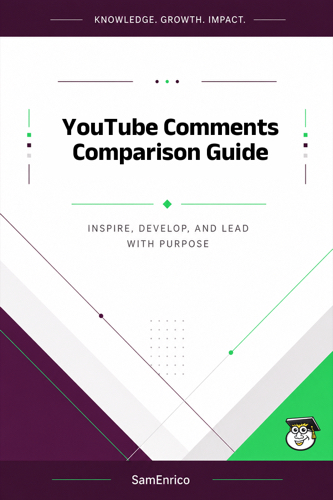
YouTube Comments Comparison Guide eBook
Stop comparing your opinions and knowledge to comm
by Gough Kyoko
Stop comparing your opinions and knowledge to comment section experts.
Formats
Free sample
Chapter 1: The Bottom Half...-- The first time you felt stupid in a You Tube comment section, you probably assumed the problem was you. You read a confident, aggressive takedown of something you thought you understood. The comment had hundreds of likes. It was pinned. It used words like "objectively" and "basic logic" and "anyone with half a brain can see." And for a moment—maybe just a flash—you thought: Maybe I don't know what I'm talking about.
Maybe they're right. Maybe I am the fool.This book exists because that moment is a lie.Not a small lie. Not a white lie. A structural, architectural, engineered lie baked into the very design of the platform you are using. The feeling of inadequacy you experienced was not evidence of your ignorance.
It was evidence of a hostile environment—a space designed not for truth-seeking, not for learning, not for genuine debate, but for something far more cynical. Engagement. Retention. Reaction. The comment section is not a courtroom, a classroom, or a public square.
It is a reaction engine. And you have been treating it like a meritocracy.This chapter will dismantle that assumption. By the time you finish reading, you will never look at the space below a You Tube video the same way again. More importantly, you will stop comparing your internal, carefully considered knowledge to the external, anonymized performances of people who spent eleven seconds typing words designed to make you feel small. Because the problem was never you.
The problem was the arena.The Architecture of a Hostile Environment Let us begin with a question that seems almost too obvious to ask: What is a You Tube comment section actually for?If you answer "for comments," you are technically correct but strategically naive. If you answer "for discussion," you are dangerously optimistic. If you answer "for community," you have not spent enough time there. The correct answer is both simpler and more disturbing: the comment section exists to keep you on the platform. That is its only job.
Every design decision, every algorithm, every affordance—every single element of the comment section was built to maximize one metric: engagement.Engagement is the currency of the attention economy. Every minute you spend reading comments, every like you click, every angry reply you type, every time you scroll back up to rewatch a segment to confirm you are not crazy—all of it generates data, all of it serves ads, all of it feeds the machine. The platform does not care if you are happy or miserable, informed or misled, enlightened or enraged. It cares only that you stay.This is not a conspiracy theory. This is public knowledge, documented by platform designers themselves, studied by researchers, and summarized in the internal documents leaked over the years.
You Tube's algorithm optimizes for watch time. The comment section optimizes for interaction. Neither optimizes for truth.Consider the structural elements of a typical comment section:The Sort Order. By default, comments are sorted by "Top," which is an algorithmically weighted combination of likes, replies, and recency. This does not sort by accuracy, nuance, expertise, or civility.
It sorts by emotional provocation. The comments that generate the strongest reactions—outrage, agreement, laughter, disgust—rise to the top. The comments that are careful, qualified, uncertain, or nuanced sink to the bottom. The algorithm literally buries the kind of discourse that would actually help you learn.The Like Button. A single click.
No accountability. No explanation required. A comment with five hundred likes appears to have five hundred endorsements, but you have no idea who those five hundred people are. They could be bots. They could be teenagers.
They could be people who liked the comment because it was funny, not because it was true. The like button conflates popularity with validity, entertainment with evidence, emotional resonance with logical soundness.The Reply Thread. Replies are nested, which creates the illusion of dialogue. But nested threads are not conversations; they are echo chambers. The first reply sets the tone.
The second reply escalates. By the third reply, both parties have forgotten the original video. By the tenth, they are calling each other names. The thread structure encourages escalation, not resolution.The Avatar and Username. You are not arguing with a person.
You are arguing with a cartoon, a stock photo, or a default icon. You are arguing with "x X_Slayer_69_Xx" or "Truth Seeker2024" or "Just Asking Questions." These are not identities. They are masks. And masks change behavior. Research consistently shows that anonymity and pseudonymity increase disinhibition, aggression, and cruelty.
The commenter who calls you an idiot would never say that to your face. Not because they are cowardly, but because the mask makes them someone else.The Pinned Comment. The creator can pin any comment to the top. This is often used to highlight a thoughtful response, but it is also used to highlight controversy, to promote a channel, or to amplify a comment that generates engagement. The pinned comment is not a mark of quality.
It is a mark of creator choice. And creators, like platforms, have incentives that are not aligned with your intellectual wellbeing.Every single one of these design elements was chosen. Someone decided that comments would be sorted by engagement, not accuracy. Someone decided that likes would be anonymous and unqualified. Someone decided that reply threads would nest rather than flatten.
These were not neutral decisions. They were decisions that prioritized platform metrics over user wellbeing. And you have been swimming in that water your whole digital life, assuming it was normal.The Psychologically Distinct Space Here is a concept that will change how you see every You Tube video you watch from now on: the bottom half is a different world.The top half of the page—the video itself—is governed by one set of rules. The creator spent hours, days, or weeks researching, writing, filming, editing, and refining. They fact-checked.
They revised. They considered counterarguments. They added citations. They made choices about tone, pacing, and clarity. The video is a product of effort, expertise, and intention.The bottom half of the page is governed by a completely different set of rules.
The commenter spent seconds. They did not fact-check. They did not revise. They did not consider counterarguments. They typed whatever came to mind, hit enter, and moved on with their day.
The comment is a product of impulse, not intention.And yet—and this is the core insanity of the comparison trap—you regularly compare your internal response to the video (shaped by your knowledge, your experience, your careful thinking) to this external, impulsive output. You hold your nuanced, qualified, uncertain reaction up against their absolute, aggressive, certainty-drenched declaration. And you feel inadequate.This is like comparing a chess grandmaster's calculated move to a toddler slamming pieces on the board. The toddler is louder. The toddler is more confident.
The toddler has no doubt. But the toddler is not winning.The bottom half is not a place where ideas compete on merit. It is a place where reactions compete for attention. And the reactions that win are not the truest or the most…
This is the end of the free sample. Get the eBook to keep going. Buy now
About this book
Details
- Author
- Gough Kyoko
- Publisher
- SamEnrico
- Language
- English
- Genre
- Non-Fiction, Self-Help, Comments, Imposter
- Released
- 2026-06-07
- Pages (approx.)
- 143
- Available as
- eBook, Audiobook

Read better in the ZLOADR app
Your eBooks on your phone or tablet. Sign in with your SamEnrico account and start reading.
More by Gough Kyoko
 New Zealand Home Energy GrantsGough Kyoko$11.99
 Key Results That Actually WorkGough Kyoko$11.99
 Opioid Use Disorder Pregnancy GuideGough Kyoko$11.99
 The Great Post Office Strike: When Britain’s Mail StoppedGough Kyoko$11.99
 Understanding Ichthyosis Linearis CircumflexaGough Kyoko$17.99
 How to Start a British Computer Society Business (Beginners Guide)Gough Kyoko$11.99
 H-1B Visa Annual Guide 2025Gough Kyoko$12.99
 AI Career Path Advisor GuideGough Kyoko$12.99
 Medical CoderGough Kyoko$11.99
You may also like
 Hong Kong Handover 1997Dunn Johnnie$11.99
 Zumba For Postnatal Recovery CourseNeal Christian$11.99
 Zumba for BeginnersLadner Nikia$11.99
 YouTube Comment Mining GuideHumes Pandora$12.99
 Worry Box MeditationCarlin Rudy$11.99
 Workplace Stress MeditationNguyen Lynn$11.99
 Workplace Stress and Sleep RepairHawley Ivory$11.99
 Workplace Perfectionism CureDelaney Jeffry$11.99
 Workplace Injustice Anger GuideWallen Isabelle$11.99
 Work Addiction and Burnout LinkGreenwood Ester$11.99
 Women in Yoga and WellnessBeattie Galina$11.99
 Women in Stand Up ComedyChun Evangeline$11.99