
Non-FictionSelf-HelpConflict Management
Workplace Conflict Resolution Guide eBook
De-escalates disagreements without emotional spill
De-escalates disagreements without emotional spillover.
Formats
Free sample
Chapter 1: The Misdiagnosis Trap--–- Every workplace argument follows a predictable pattern. Two people disagree. Voices rise. Words get personal. And within sixty seconds, they are no longer arguing about the original issue.
They are arguing about respect, about character, about who is the reasonable one and who is being difficult. The spreadsheet deadline becomes "you don't care about my time." The budget disagreement becomes "you never trust my judgment." The process debate becomes "you think you are better than everyone."This is the misdiagnosis trap. And it is the single biggest reason workplace conflicts escalate from productive friction into destructive emotional battles.Here is what the research shows, and what will become the foundation of everything in this book: seventy percent of workplace escalations occur not because people disagree, but because they misdiagnose what they are disagreeing about. A Task conflict—disagreement over what to do—is heard as a Relationship conflict—disagreement over who someone is. A Process conflict—disagreement over how to do something—is heard as a Status conflict—disagreement over who has authority.
And the moment that misdiagnosis happens, the amygdala hijack begins, the defenses go up, and the possibility of resolution drops to near zero.This chapter will teach you to see the difference. You will learn a simple four-part framework for identifying exactly what kind of conflict you are in, a thirty-second audit tool that works even when emotions are high, and a single sentence you can say that will cut through the misdiagnosis and bring the temperature down immediately.The Four Faces of Workplace Friction Not all conflict is created equal. In fact, most workplace disagreements fall into one of four distinct categories. The mistake most people make is treating every conflict as if it belongs to the same category—usually Relationship conflict, because that is the one that feels most urgent and most personal.Here are the four types. Learn them.
They will save you weeks of frustration.Type One: Task Conflict Task conflict is disagreement over what to do. Should we launch the product in March or April? Should we hire two junior developers or one senior developer? Should we prioritize the client request or the internal project? These are questions of substance, strategy, and direction.Task conflict is not only normal but necessary.
Teams that never experience Task conflict are either apathetic or suffering from groupthink. Research from Harvard Business School followed seventy-two product development teams over three years and found that the highest-performing teams had significantly more Task conflict than average-performing teams. They argued about strategy constantly. They just did it without personalizing.The problem with Task conflict is not the disagreement itself. The problem is that Task conflict is极易—easily—misheard as Relationship conflict.
When someone says "Your approach won't work," what the other person often hears is "You are incompetent." When someone says "We should delay the launch," what the project lead often hears is "You are too optimistic and naive."This mishearing is not accidental. It is neurological. The brain processes social rejection and criticism in the same regions where it processes physical pain. A study from the University of Michigan found that the dorsal anterior cingulate cortex activates both when you are touched by a hot probe and when you are excluded from a simple ball-tossing game. Your brain literally cannot tell the difference between "your idea is bad" and "you are bad" without conscious intervention.That conscious intervention is what this chapter will give you.Type Two: Process Conflict Process conflict is disagreement over how to do something.
Should we use agile or waterfall? Should we approve expenses before or after the trip? Should the design team hand off files on Monday or Wednesday? Process conflict is about methods, procedures, and sequences.Process conflict is the most common type of friction in matrix organizations and cross-functional teams, where people from different functional backgrounds bring different assumptions about how work should flow. A marketer wants to iterate quickly based on feedback.
A compliance officer wants to follow a linear approval chain. An engineer wants to test thoroughly before release. None of them is wrong. They simply have different process defaults.The danger of Process conflict is that it feels like it should be easy to resolve—"just pick a method and move on"—and when it is not easy, people assume something is wrong with the relationship. In fact, Process conflict is often hard to resolve because it touches on identity and training.
Your process is not just a set of steps. It is how you were taught to work. It is what has made you successful in the past. Asking someone to change their process can feel like asking them to abandon part of their professional identity.Type Three: Relationship Conflict Relationship conflict is disagreement rooted in personal dislike, clashing values, or perceived disrespect. This is the type that most people think of when they hear the word "conflict." It includes personality clashes, grudges, tone arguments, and any situation where the issue is not what you did but who you are.Relationship conflict is almost always destructive to team performance.
A meta-analysis of forty-two studies involving over eight thousand work teams found that Relationship conflict was consistently associated with lower team performance, lower satisfaction, and higher turnover. Unlike Task conflict, which can be productive, Relationship conflict has no upside.Here is the crucial insight: Relationship conflict is rarely the starting point. It is almost always the destination. People do not begin by disliking each other. They begin by disagreeing about a task or a process.
Then they misdiagnose that disagreement as personal. Then they treat each other as adversaries. Then the personal dislike becomes real. The conflict becomes Relationship conflict not because it started there, but because no one intervened during the misdiagnosis stage.This means that preventing Relationship conflict is largely about catching misdiagnosed Task and Process conflicts early. If you can label a Task conflict as a Task conflict in the first sixty seconds, you can often prevent it from turning into something much uglier.Type Four: Status Conflict Status conflict is disagreement over who has the authority, credit, or standing to make decisions, receive recognition, or set direction.
It is the most underrecognized and underdiscussed type of workplace friction.Status conflict appears in many forms. A junior employee proposes an idea that a senior employee dismisses not because the idea is bad but because it came from the wrong person. Two department heads disagree about budget allocation, and beneath the numbers is a question about whose function is more valuable to the organization. A team member publicly corrects a peer, and the peer feels not just corrected but demoted.Status conflict is particularly dangerous because it is rarely named. People talk about "respect" and "collaboration" and "alignment," but they are actually fighting about standing.
Because status is uncomfortable to discuss directly, the conflict goes underground and expresses itself through passive aggression, silent withdrawal, or sudden explosions over minor procedural issues.A classic study from Stanford University placed MBA students into teams with artificially assigned status markers. Some were told they had high status within the team based on a fake assessment.…
This is the end of the free sample. Get the eBook to keep going. Buy now
About this book
Details
- Author
- Hickson Sharleen
- Publisher
- SamEnrico
- Language
- English
- Genre
- Non-Fiction, Self-Help, Conflict Management
- Released
- 2026-06-06
- Pages (approx.)
- 118
- Available as
- eBook, Audiobook

Read better in the ZLOADR app
Your eBooks on your phone or tablet. Sign in with your SamEnrico account and start reading.
More by Hickson Sharleen
 Mindful Listening MBSR Exercise WorkbookHickson Sharleen$11.99
 Cooperative Pig Farming GuideHickson Sharleen$11.99
 Titanic's Collapsible BoatsHickson Sharleen$11.99
 The MDD and Chronic Pain LinkHickson Sharleen$11.99
 Queen Elizabeth I: The Virgin Queen’s Golden ReignHickson Sharleen$11.99
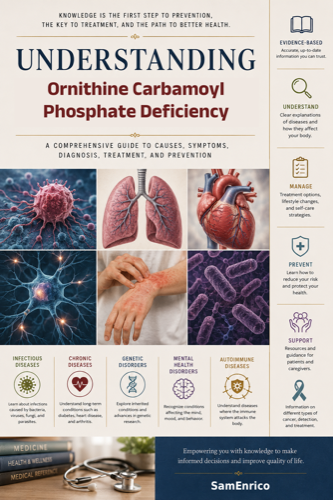 Understanding Ornithine Carbamoyl Phosphate DeficiencyHickson Sharleen$17.99
 Canadian Job Offer AdvantageHickson Sharleen$12.99
 Capital One SWOTHickson Sharleen$12.99
 Private Banking OfficerHickson Sharleen$11.99
 How to Start a Chrome Production and Refining Business (Beginners Guide)Hickson Sharleen$11.99
You may also like
 Hong Kong Handover 1997Dunn Johnnie$11.99
 Zumba For Postnatal Recovery CourseNeal Christian$11.99
 Zumba for BeginnersLadner Nikia$11.99
 YouTube Comment Mining GuideHumes Pandora$12.99
 Worry Box MeditationCarlin Rudy$11.99
 Workplace Stress MeditationNguyen Lynn$11.99
 Workplace Stress and Sleep RepairHawley Ivory$11.99
 Workplace Perfectionism CureDelaney Jeffry$11.99
 Workplace Injustice Anger GuideWallen Isabelle$11.99
 Work Addiction and Burnout LinkGreenwood Ester$11.99
 Women in Yoga and WellnessBeattie Galina$11.99
 Women in Stand Up ComedyChun Evangeline$11.99