
Non-FictionSelf-HelpPsychiatric Support
Work Addiction Medication Options eBook
Explore pharmaceutical support for underlying anxi
Explore pharmaceutical support for underlying anxiety or depression fueling overwork.
Formats
Free sample
Chapter 1: The Invisible Cage--–- The email arrived at 11:47 PM on a Tuesday. Sarah, a 38-year-old corporate litigation partner, had just finished reviewing a 200-page merger document. Her neck throbbed. Her vision blurred. Her daughter's school play – the one she'd promised to attend – had ended three hours ago.
She opened the email: "Urgent: Client needs revised brief by 7 AM." She closed her eyes, took a breath, and typed: "On it." Then she worked until 3 AM, slept four hours, and did it all again. At her annual physical that year, her doctor noted elevated blood pressure, insomnia, and anxiety. "You need to reduce stress," the doctor said. Sarah laughed – a hollow, exhausted sound. "That's not how this works," she replied.
She wasn't lazy. She wasn't weak. She was winning. And she was destroying herself one eighty-hour week at a time. Sarah is not a failure.
She is a prisoner in a cage she built herself, brick by brick, with every late-night email, every missed dinner, every exhausted "I'll make it up to you." The cruelest part of her cage is that it is made of gold. Society applauds her. Her firm rewards her. Her clients depend on her. And yet, she cannot stop.
Not because she lacks willpower, but because stopping triggers a cascade of neurological terror that feels worse than any physical pain. This chapter dismantles the single most dangerous myth about work addiction: that it is a badge of honor, a sign of dedication, or a necessary price for success. We will explore why high achievers are the most vulnerable, how work addiction meets every clinical criterion for substance use disorders, and why the very traits our culture rewards – perfectionism, persistence, endurance – become the chains that bind. You will meet two people whose stories will appear throughout this book: Sarah, whose work addiction is driven by unrelenting anxiety, and Michael, a forty-five-year-old tech executive whose work addiction is fueled by a depression so atypical that he does not even recognize it as depression. By the end of this chapter, you will understand that work addiction is not a moral failure.
It is a neurobiological trap. And the first step out is not working less – it is understanding why stopping feels impossible.The Mask of High Performance Work addiction hides in plain sight. Unlike alcohol use disorder, where a person might hide bottles in a desk drawer, or opioid use disorder, where visible intoxication leads to social consequences, work addiction wears a tailored suit and accepts awards. It gets promoted. It is celebrated at dinner parties where guests say, "I don't know how you do it all," as if the ability to destroy oneself for a paycheck were a superpower rather than a pathology.
The language we use to describe work addiction is itself part of the problem. We call it "workaholism" with a wry smile, as if it were a charming quirk rather than a debilitating condition. We say someone is "crushing it" when they are, in fact, being crushed. We admire the founder who sleeps under her desk, the lawyer who never logs off, the executive who replies to emails during his daughter's recital. We have built a culture that pathologizes rest and glorifies self-destruction.But the data tells a different story.
A 2021 meta-analysis published in the Journal of Behavioral Addictions found that approximately eight to fifteen percent of working adults meet clinical criteria for work addiction, with rates significantly higher in certain professions: lawyers at twenty-five percent, physicians at twenty-two percent, executives at twenty percent, and software developers at eighteen percent. These are not the burned-out, checked-out employees at risk of termination. These are the stars. The rainmakers. The ones who reply to emails at 2 AM and call it dedication.
The ones whose obituaries will eventually read "died suddenly" at fifty-two, leaving behind confused colleagues who say, "But she seemed so driven."Here is the paradox that defines work addiction: The same behaviors that produce professional success produce personal destruction. The lawyer who wins the billion-dollar case loses her marriage. The surgeon who performs five hundred successful operations cannot attend his son's baseball game. The startup founder who raises fifty million dollars cannot remember the last time she laughed without checking her phone. The cage is built from achievements, each one a new bar.
This chapter is not about laziness. It is not about time management, productivity hacks, or the virtues of a four-day workweek. If you have picked up this book, you have likely already tried those things. You have downloaded the calendar apps, set the boundaries, told yourself "this weekend will be different." And then Sunday night arrived and you were, once again, answering emails. That is because work addiction is not a scheduling problem.
It is a brain problem. You cannot organize your way out of a neurobiological trap.What Work Addiction Actually Is The clinical definition of work addiction draws directly from the diagnostic criteria for substance use disorders and behavioral addictions. The most widely accepted framework, validated in numerous studies across seventeen countries, identifies six core components that distinguish work addiction from simple overwork or high performance.First, salience. Work becomes the single most important activity in the person's life, dominating their thinking, feeling, and behavior. Even when not working, the person is thinking about work – planning, worrying, anticipating.
Sarah found herself mentally drafting briefs during her daughter's bedtime stories. Michael checked his email while walking his dog, while eating dinner, while supposedly "present" with his wife. The work never leaves the mind because the mind has been trained to believe that work is survival.Second, mood modification. The person uses work to change their emotional state. For Sarah, work provides relief from panic.
When she is drafting a brief, her catastrophic thoughts quiet. For Michael, work provides the only source of pleasure or activation he experiences. For others, work might numb sadness, provide excitement, or create a sense of control in an otherwise chaotic internal world. This is not a side effect of work; it is the primary reason the work addict works.Third, tolerance. Over time, the person needs increasing amounts of work to achieve the same emotional effect.
Where forty hours once provided relief, now sixty does not feel like enough. Sarah noticed that a single successful deposition used to carry her through a weekend. Now she needs three. Michael used to feel satisfied after closing a deal; now the feeling lasts only hours before the emptiness returns. The baseline shifts upward, relentlessly, as the brain adapts.Fourth, withdrawal.
When the person stops working – or even when they anticipate having to stop – they experience unpleasant emotional and physical symptoms. These can include anxiety, irritability, insomnia, restlessness, and a sense of impending doom. This withdrawal is not metaphorical. It has measurable neurobiological correlates: elevated cortisol, decreased GABA activity, and increased norepinephrine. Sarah described it as "feeling like my skin is buzzing off my body." Michael called it "a black hole opening under my feet."Fifth, conflict.
The person experiences interpersonal, intrapersonal, or occupational conflict as a result of their work. This might mean strained relationships with family – Sarah's daughter stopped inviting her to school events. It might mean health…
This is the end of the free sample. Get the eBook to keep going. Buy now
About this book
Details
- Author
- Walston Carlee
- Publisher
- SamEnrico
- Language
- English
- Genre
- Non-Fiction, Self-Help, Psychiatric Support
- Released
- 2026-06-09
- Pages (approx.)
- 146
- Available as
- eBook, Audiobook

Read better in the ZLOADR app
Your eBooks on your phone or tablet. Sign in with your SamEnrico account and start reading.
More by Walston Carlee
 Menstrual Cycle Anger PatternsWalston Carlee$11.99
 Trinidadian Energy TalentWalston Carlee$11.99
 Gaming Addiction and Mental HealthWalston Carlee$11.99
 The Deep Mind of the Indian Ocean: Unraveling the Psychology of DiscoveryWalston Carlee$11.99
 Echoes of the Forgotten: The Parallel Life of Nikola TeslaWalston Carlee$11.99
 R Studio SPSS Replacement GuideWalston Carlee$12.99
 Real Estate Strategic BuyersWalston Carlee$12.99
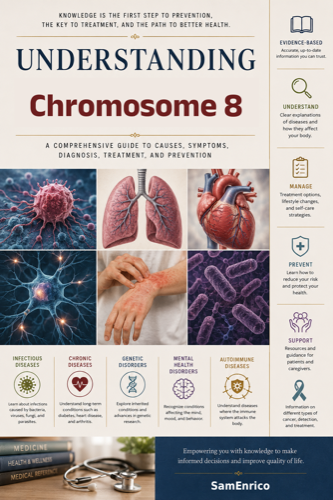 Understanding Chromosome 8Walston Carlee$17.99
 How to Become a Insole BevelerWalston Carlee$11.99
You may also like
 Hong Kong Handover 1997Dunn Johnnie$11.99
 Zumba For Postnatal Recovery CourseNeal Christian$11.99
 Zumba for BeginnersLadner Nikia$11.99
 YouTube Comment Mining GuideHumes Pandora$12.99
 Worry Box MeditationCarlin Rudy$11.99
 Workplace Stress MeditationNguyen Lynn$11.99
 Workplace Stress and Sleep RepairHawley Ivory$11.99
 Workplace Perfectionism CureDelaney Jeffry$11.99
 Workplace Injustice Anger GuideWallen Isabelle$11.99
 Work Addiction and Burnout LinkGreenwood Ester$11.99
 Women in Yoga and WellnessBeattie Galina$11.99
 Women in Stand Up ComedyChun Evangeline$11.99