
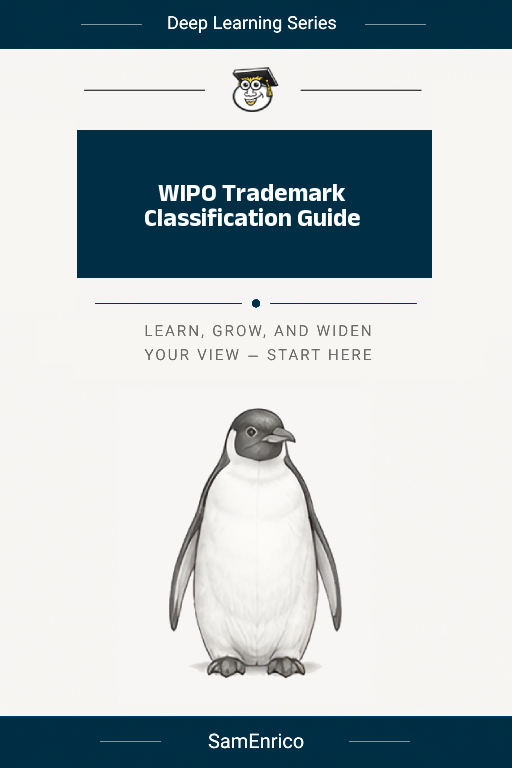
WIPO Trademark Classification Guide eBook
Select correct Nice classes for goods and services
Select correct Nice classes for goods and services under international classification.
Formats
Free sample
Chapter 1: The $50,000 Mistake--–- The email arrived at 11:47 on a Tuesday morning. Sarah, the founder of a promising skincare startup, had just received word that her trademark application for "Lume Pure" had been rejected. Not because the name was taken. Not because it was too descriptive. But because she had picked the wrong class.
She had filed under Class 3 – cosmetics. The examining attorney determined that her hero product, a medicated acne cream, belonged in Class 5 – pharmaceuticals and sanitary preparations. The difference seemed trivial to Sarah. To the trademark office, it was a chasm. Her application was dead.
Her branding, packaging, and marketing materials – all printed with the ™ symbol – were now potentially infringing on who knows what. Her legal fees had already reached 12,000.Thecosttorefile,reprint,andrelaunchwouldexceed12,000. The cost to refile, reprint, and relaunch would exceed 12,000.Thecosttorefile,reprint,andrelaunchwouldexceed50,000. And worst of all, a competitor had filed for a similar mark in Class 5 just two weeks before her rejection. She had lost her spot in line.
Forever.This is not a hypothetical story. It happens hundreds of times each year. And it happens because trademark classification – the seemingly mundane task of picking numbers from a list of 45 – is one of the most misunderstood and underestimated elements of brand protection.Most entrepreneurs and even many lawyers treat classification as administrative paperwork. Click a few boxes. Pay a few hundred dollars.
Move on. But classification is not paperwork. It is the legal definition of your brand's territory. Get it wrong, and your trademark protects nothing. Get it right, and you build a fortress around your business.This chapter is not an introduction.
It is a warning, a roadmap, and a promise. By the time you finish reading these pages, you will understand exactly why classification matters, what is at stake, and how this book will transform you from a confused filer into a confident strategist.The Invisible Foundation of Every Great Brand Every successful brand rests on an invisible foundation: the legal right to exclude others from using a similar name or logo in connection with similar products or services. That right does not come from the brilliance of your marketing. It does not come from the size of your social media following. It comes from a trademark registration – and that registration is only as strong as the classification system upon which it is built.The Nice Classification system, named for the city in France where the international agreement was signed in 1957, divides all commercial products and services into 45 numbered classes.
Thirty-four classes for goods – physical things you can touch, from chemicals to clothing to computers. Eleven classes for services – actions performed for others, from advertising to transportation to medical care.Each class represents a distinct commercial arena. Filing in Class 25 gives you rights over clothing. Filing in Class 9 gives you rights over computers and scientific apparatus. Filing in Class 35 gives you rights over advertising and retail services.
The system is logical, comprehensive, and – when used correctly – powerful.But here is the problem the system creates: a single trademark registration only protects you within the classes you select. If you sell coffee (Class 30) and also operate a coffee shop (Class 43), a registration in only one class leaves the other completely exposed. A competitor could open a shop with your exact name in your exact neighborhood, and your registration would offer no defense whatsoever.This is not a theoretical risk. In 2019, a well-known bakery brand discovered this painful reality. They had registered their name in Class 30 for baked goods but never in Class 43 for café services.
A former employee opened a competing café using the same name. The bakery sued. They lost. The judge ruled that their registration did not cover café services, and the former employee had every right to use the name. The bakery spent over $200,000 on litigation only to be told that their own paperwork had failed them.Classification is not bureaucracy.
It is battle lines. And you are drawing those lines the moment you file.The Hidden Costs of Getting It Wrong When trademark applicants make classification errors, the consequences fall into four categories. Each one can cripple a business. Together, they can destroy a brand.Category One: Narrowed Protection The most common error is under-classification – picking too few classes or picking the wrong classes. The result is a registration that covers products or services you do not actually sell while leaving your actual offerings exposed.Imagine you sell athletic leggings.
You file in Class 25 (clothing). That is correct, but incomplete. Your leggings are made from proprietary moisture-wicking fabric. That fabric could be protected in Class 22 (textiles) or Class 24 (fabrics). Your leggings have a smartphone pocket with a proprietary closure system.
That closure system could be protected in Class 6 (metal hardware) or Class 20 (plastic hardware). Your brand offers a subscription service for monthly legging deliveries. That service belongs in Class 35 (retail services) or Class 39 (delivery services).If you only file in Class 25, a competitor could copy your fabric, copy your closure system, and copy your subscription model – all using your brand name – and face no legal consequences. Your registration only protects "leggings as a product." Everything else is a free-for-all.This is not fear-mongering. It is the letter of the law.
Trademark rights are exclusive only within the classes and specific goods or services listed in your registration. If you did not list it, you do not own it.Category Two: Registration Refusals The second consequence is more immediate. National trademark offices – including the United States Patent and Trademark Office (USPTO), the European Union Intellectual Property Office (EUIPO), and the World Intellectual Property Organization (WIPO) – examine applications for classification accuracy. If your selected class does not match the goods or services described in your application, the examining attorney will issue a refusal.Refusals are not merely delays. They reset timelines.
They create opportunities for competitors to file intervening applications. They generate additional legal fees that often exceed the cost of the original filing. And in some jurisdictions, they cannot be cured by simply paying a fee; you must refile entirely, losing your original filing date.The USPTO reported that in fiscal year 2024, over 18% of trademark applications received at least one office action related to classification errors. That is nearly one in five applications. Tens of thousands of businesses each year lose time, money, and legal position because of mistakes that could have been avoided with proper guidance.Category Three: Opposition Vulnerability A trademark registration that narrowly covers your products invites challenges from competitors.
If your registration is clearly under-inclusive, a competitor can file for a similar mark in a different class, then argue that your overlapping commercial activities create a likelihood of confusion. Without a registration in that class, your position is weak.Consider a company that sells natural soaps. They file in Class 3 (cosmetics and cleaning preparations). A competitor files in Class 5 (sanitary preparations) for a medicated soap. The competitor then argues that the original company's use of the same name on soap – even non-medicated soap – creates consumer confusion.
Because the original company has no registration in Class 5, they must prove their rights through common law use, an expensive and uncertain process. Had they filed defensively in both classes…
This is the end of the free sample. Get the eBook to keep going. Buy now
About this book
Details
- Author
- Christie Keesha
- Publisher
- SamEnrico
- Language
- English
- Genre
- Non-Fiction, Business Brief
- Released
- 2026-06-01
- Pages (approx.)
- 149
- Available as
- eBook, Audiobook

Read better in the ZLOADR app
Your eBooks on your phone or tablet. Sign in with your SamEnrico account and start reading.
More by Christie Keesha
 Loneliness Social PrescribingChristie Keesha$11.99
 Wholesaling Nextdoor GuideChristie Keesha$11.99
 Lucid Dreaming for Recurring DreamsChristie Keesha$11.99
 Wholesaling Text Message GuideChristie Keesha$11.99
 Drive Through Rage GuideChristie Keesha$11.99
 Office Door Signal SystemChristie Keesha$11.99
 Spin Virtual Class ImmersionChristie Keesha$11.99
 Left Behind in the WoodsChristie Keesha$11.99
 Eating Mindful Breath PracticeChristie Keesha$11.99
 The Last Whistle of the Delphic MineChristie Keesha$11.99
 The Frozen Hoax: How Prehistoric Explorers Tricked the WorldChristie Keesha$11.99
 The Four Days' Fury: The Battle of the Downs That Shattered Dutch Invincibility (1639)Christie Keesha$11.99
You may also like
 Hong Kong Handover 1997Dunn Johnnie$11.99
 Zumba For Postnatal Recovery CourseNeal Christian$11.99
 Zumba for BeginnersLadner Nikia$11.99
 YouTube Comment Mining GuideHumes Pandora$12.99
 Worry Box MeditationCarlin Rudy$11.99
 Workplace Stress MeditationNguyen Lynn$11.99
 Workplace Stress and Sleep RepairHawley Ivory$11.99
 Workplace Perfectionism CureDelaney Jeffry$11.99
 Workplace Injustice Anger GuideWallen Isabelle$11.99
 Work Addiction and Burnout LinkGreenwood Ester$11.99
 Women in Yoga and WellnessBeattie Galina$11.99
 Women in Stand Up ComedyChun Evangeline$11.99