
Non-FictionHealth & WellnessForaging
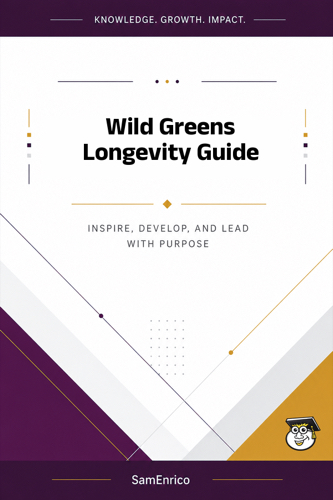
Wild Greens Longevity Guide eBook
Forage and eat wild dandelion purslane and nettles
Forage and eat wild dandelion purslane and nettles.
Formats
Free sample
Chapter 1: The Three-Weed Revolution--–- The first time I watched a neighbor spray glyphosate on a patch of dandelions growing through a crack in his driveway, I felt something between despair and disbelief. Here was a man who spent twelve dollars on a bag of organic kale at the grocery store, who took fish oil capsules for his joints, who complained about the rising cost of blood pressure medication. And there, at his feet, was a plant that could have addressed all three concerns—for free, without a prescription, growing defiantly in the exact spot he was trying to sterilize. He was poisoning his medicine. He was not alone.We have been trained to see weeds as enemies.
The word itself comes from Old English weod, meaning any plant that grows where it is not wanted. Notice the subject of that sentence is not the plant but the human. A dandelion in a lawn is a weed. A dandelion in a salad bowl is a superfood. The only difference is perception—and the multi-billion-dollar herbicide industry that profits from our perception.This book makes a simple argument: three common "weeds"—dandelion, purslane, and stinging nettle—are among the most nutritionally dense, medicinally valuable, and ecologically accessible plants on earth.
They grow in every climate, on every continent, often in the spaces we neglect most. They require no irrigation, no fertilizer, no shipping, no packaging. And they contain precisely the nutrients that modern industrial diets have stripped away: omega-3 fatty acids, bioavailable minerals, prebiotic fiber, anti-inflammatory compounds, and adaptogenic compounds that help the body manage stress.This is the Three-Weed Revolution. It does not require you to move to a cabin in the woods or spend hours hiking remote trails. It requires only that you learn to see what is already growing beneath your feet.The Case Against Industrial Produce Before we celebrate what wild plants offer, we must understand what grocery store produce has lost.
The tomato you buy in February has been hybridized for durability, not nutrition. It has been picked green, gassed with ethylene to ripen artificially, shipped an average of 1,500 miles, and stored in refrigeration for days or weeks. Each step degrades its nutritional value.A 2004 study in the Journal of the American College of Nutrition compared the nutrient content of forty-three garden crops between 1950 and 1999. The findings were stark: average declines of 6 percent for protein, 16 percent for calcium, 9 percent for phosphorus, 15 percent for iron, and 38 percent for riboflavin. These declines correlate with the shift toward high-yield, low-nutrient varieties and the depletion of soil minerals through industrial farming practices.Wild plants face no such pressures.
They are not selected for shelf life or uniform appearance. They are selected by nature for survival—which means producing potent phytochemicals to defend against pests, diseases, and environmental stress. These phytochemicals are precisely the compounds that reduce inflammation, support detoxification, and protect against chronic disease in humans.Consider a simple comparison. Spinach is widely celebrated as a health food. And it is—relative to potato chips.
But wild dandelion leaves contain approximately seven times more polyphenols (antioxidant compounds) and three times more vitamin A than spinach, gram for gram. Nettle contains more bioavailable calcium than milk, more iron than spinach, and more magnesium than almost any cultivated green. Purslane contains more omega-3 fatty acids than some fish oils—from a plant that grows in sidewalk cracks.The industrial food system has taught us to pay for what we could have for free, to trust packaging over direct observation, and to believe that health comes from a store rather than from the living world. This book is an antidote to that conditioning.Introducing the Longevity Trinity Dandelion, purslane, and stinging nettle form what I call the Longevity Trinity. They are not the only edible wild plants, but they are the most strategic.
Together, they provide a complete nutritional and medicinal toolkit that addresses the root causes of chronic disease: inflammation, metabolic dysregulation, mineral depletion, and environmental toxicity.Let me introduce each member of the Trinity briefly. The following three chapters will explore each plant in exhaustive detail.Dandelion (Taraxacum officinale)The most hated weed in North America is also one of the most thoroughly studied medicinal plants in human history. Every part of the dandelion is useful. The leaves are a gentle, potassium-sparing diuretic—meaning they help the body shed excess water without depleting this critical mineral, unlike pharmaceutical diuretics. The leaves also contain high levels of inulin, a prebiotic fiber that feeds beneficial gut bacteria.
Their bitterness stimulates digestive enzyme production, improving nutrient absorption from every meal you eat.The roots, roasted and brewed, create a coffee-like beverage that supports liver detoxification pathways. Research suggests dandelion root increases bile flow, enhances phase I and phase II liver detoxification, and contains taraxasterol, a compound with anti-inflammatory properties comparable to some non-steroidal anti-inflammatory drugs.The flowers, often ignored, are rich in luteolin and zeaxanthin—antioxidants that protect eye health and reduce systemic inflammation. They can be eaten raw, fried as fritters, or infused into honey for sore throats.Dandelion addresses three pillars of longevity: liver function (the body's primary detoxification organ), digestive health (where chronic inflammation often begins), and fluid balance (critical for blood pressure regulation).Purslane (Portulaca oleracea)If dandelion is the liver's ally, purslane is the metabolic regulator. This low-growing succulent contains more alpha-linolenic acid (ALA)—a plant-based omega-3 fatty acid—than any other leafy green. One hundred grams of purslane provides about 400 milligrams of ALA, comparable to some fish oil supplements.
For vegetarians, vegans, or anyone seeking to reduce reliance on marine sources of omega-3s, purslane is a revelation.But the omega-3 content is only the beginning. Purslane also contains high levels of melatonin, the sleep-regulating hormone that also functions as a powerful antioxidant. It contains betalain pigments, the same compounds that give beets their anti-inflammatory properties. And it contains a unique polysaccharide profile that has been shown in studies to blunt post-meal blood sugar spikes—a property researchers have nicknamed the "glucose knife."For anyone managing diabetes, pre-diabetes, metabolic syndrome, or simply the energy crashes that follow high-carbohydrate meals, purslane is a practical tool. Add it to a meal, and the glycemic impact of that meal is reduced.
The mechanism appears to involve delayed gastric emptying and inhibited alpha-glucosidase enzymes, the same targets of some pharmaceutical diabetes medications.Purslane also provides hydration and electrolyte balance. Its succulent leaves store water and minerals, making it a perfect food for hot weather or for anyone who struggles to drink enough water.Stinging Nettle (Urtica dioica)The third member of the Trinity is the most intimidating and the most generous. Nettle's stinging hairs—hollow needles that inject a mixture of histamine, formic acid, and serotonin—have given it a fearsome reputation. But heat or complete drying neutralizes the sting entirely, leaving behind a plant of extraordinary nutritional density.Nettle contains more bioavailable calcium than milk. More iron than spinach.
More magnesium than almost any cultivated green. It is rich in silica, essential for hair, skin, nails, and bone density. It provides vitamins A, C, and K in highly absorbable forms. It is, quite simply, nature's multivitamin.Beyond basic nutrition, nettle offers specific…
This is the end of the free sample. Get the eBook to keep going. Buy now
About this book
Details
- Author
- Sibley Chanelle
- Publisher
- SamEnrico
- Language
- English
- Genre
- Non-Fiction, Health & Wellness, Foraging
- Released
- 2026-06-08
- Pages (approx.)
- 152
- Available as
- eBook, Audiobook

Read better in the ZLOADR app
Your eBooks on your phone or tablet. Sign in with your SamEnrico account and start reading.
More by Sibley Chanelle
 Global Talent Migration Outlook 2035Sibley Chanelle$11.99
 Suicide Loss and DepressionSibley Chanelle$11.99
 Elon Musk Risk Taking PlaybookSibley Chanelle$11.99
 The Forensic Consultant Failure GuideSibley Chanelle$11.99
 Cobblestone to Concrete: The Rise of the Industrial TitanSibley Chanelle$11.99
 DealerSibley Chanelle$11.99
 Borderless Trade Payment Solutions WorkbookSibley Chanelle$12.99
 Singapore Fintech Gateway GuideSibley Chanelle$12.99
 Understanding Lewandowski–kikolich SyndromeSibley Chanelle$17.99
 How to Start a Chartered Surveyor Business (Beginners Guide)Sibley Chanelle$11.99
You may also like
 Hong Kong Handover 1997Dunn Johnnie$11.99
 Zumba For Postnatal Recovery CourseNeal Christian$11.99
 Zumba for BeginnersLadner Nikia$11.99
 YouTube Comment Mining GuideHumes Pandora$12.99
 Worry Box MeditationCarlin Rudy$11.99
 Workplace Stress MeditationNguyen Lynn$11.99
 Workplace Stress and Sleep RepairHawley Ivory$11.99
 Workplace Perfectionism CureDelaney Jeffry$11.99
 Workplace Injustice Anger GuideWallen Isabelle$11.99
 Work Addiction and Burnout LinkGreenwood Ester$11.99
 Women in Yoga and WellnessBeattie Galina$11.99
 Women in Stand Up ComedyChun Evangeline$11.99