
Non-FictionInformativeEducational
Weathering Testing (Quv) eBook
A Coursebook on Weathering Testing (Quv)
A Coursebook on Weathering Testing (Quv)
Formats
Free sample
Chapter 1: The $47 Million Fade–- In 2016, a major automotive supplier quietly recalled 1.2 million tail-light assemblies. The official statement cited a "manufacturing irregularity." The truth was far more expensive: a UV stabilizer that performed perfectly in the lab failed catastrophically after eleven months on sun-baked highways in Arizona and Florida. The cost of that single oversight—including replacement parts, logistics, brand damage, and lost future contracts—exceeded 47million.Andthemostpainfulpart?A47 million. And the most painful part? A 47million.Andthemostpainfulpart?A35,000 weathering tester running for 2,000 hours would have caught the problem before the first production unit shipped.This book exists because stories like this happen every day.
They happen to billion-dollar corporations and small startups alike. They happen to vinyl siding manufacturers whose products turn chalky and brittle after two summers. They happen to ink formulators whose labels become unreadable after six months on a warehouse shelf near a window. They happen to roofing material suppliers who face class-action lawsuits when their "30-year shingles" fail in eight.The common thread in all these failures is not bad luck, not corner-cutting, and not even necessarily bad materials. The common thread is a failure to understand and properly execute weathering testing—specifically, testing using the QUV accelerated weathering tester, the most widely used device in the world for predicting how sunlight, heat, and moisture will destroy your product.This chapter establishes the business case for weathering testing.
It will answer three questions that every product designer, quality manager, and CEO should ask before approving a new material or product for market:What is weathering testing, and why does it matter to my bottom line?How much money do companies lose by skipping or doing poor weathering testing?What return on investment can I expect from implementing a proper QUV testing program?By the end of this chapter, you will understand why weathering testing is not a cost to be minimized but an investment that pays for itself many times over. You will also understand the fundamental limits of accelerated testing—because knowing what the QUV cannot do is just as important as knowing what it can do.The Hidden Costs of Sunlight Sunlight is free, abundant, and seemingly benign. We bask in it. We take vacations to experience more of it. But to a polymer chemist, sunlight is a weapon.
Every photon of ultraviolet radiation that strikes a plastic, coating, textile, or sealant carries enough energy to break chemical bonds. Given enough time and exposure, sunlight will reduce the most robust engineering plastic to a brittle, discolored, cracked shadow of its former self.The cost of this degradation is staggering. Consider these real-world examples drawn from public records and industry analyses:Automotive Industry: A study by a major OEM found that UV-related warranty claims cost the global automotive industry approximately $1.2 billion annually. These claims cover everything from faded interior plastics to cracked exterior trim to delaminated clear coats. The average cost per claim is relatively low—often just a few hundred dollars for a replacement part—but the volume is enormous, and the brand damage from a "my car is falling apart" perception lasts for years.Building Materials: In 2018, a class-action lawsuit against a vinyl siding manufacturer resulted in a 120millionsettlement.Theplaintiffsallegedthatthesidingbecamebrittle,fadedunevenly,anddevelopedhairlinecracksafteraslittleasthreeyearsofexposure—farshortoftheadvertised25−yearlifespan.Internalcompanyemailsrevealedthatthemanufacturerhadskipped UVtestingonanewstabilizerpackagetosave120 million settlement.
The plaintiffs alleged that the siding became brittle, faded unevenly, and developed hairline cracks after as little as three years of exposure—far short of the advertised 25-year lifespan. Internal company emails revealed that the manufacturer had skipped UV testing on a new stabilizer package to save 120millionsettlement.Theplaintiffsallegedthatthesidingbecamebrittle,fadedunevenly,anddevelopedhairlinecracksafteraslittleasthreeyearsofexposure—farshortoftheadvertised25−yearlifespan.Internalcompanyemailsrevealedthatthemanufacturerhadskipped UVtestingonanewstabilizerpackagetosave50,000 in testing costs. That decision ultimately cost the company more than 2,400 times that amount.Consumer Goods: A well-known electronics brand suffered a $90 million recall when the white plastic housings of its laptop chargers turned yellow after 18 months of normal use. The yellowing was purely cosmetic—the chargers still worked—but customers perceived the discoloration as a sign of overheating or fire risk. The brand's reputation for premium quality took years to recover.Packaging: A beverage company reformulated its plastic bottle closures to reduce material costs.
The new formulation passed all mechanical tests but failed to account for UV exposure during outdoor storage at distribution centers. After six summer weeks in Texas, the closures became brittle and cracked during opening, leading to customer complaints, spilled product, and a $15 million emergency replacement program.What do all these failures have in common? In every case, a simple accelerated weathering test using a QUV tester would have revealed the problem before production began. In every case, the cost of testing was a tiny fraction of the cost of failure.The Weathering Triangle: UV, Heat, and Moisture To understand why materials fail outdoors, you must first understand the three primary environmental stressors that attack them. These three factors—ultraviolet radiation, heat, and moisture—do not act independently.
They work together in a destructive synergy that is far more aggressive than the sum of its parts. Weathering professionals call this the Weathering Triangle.Ultraviolet Radiation: The Bond Breaker Ultraviolet radiation is the most damaging of the three stressors for most materials. UV photons have higher energy than visible light photons. When a UV photon strikes a polymer chain, it can transfer enough energy to break a carbon-carbon bond, carbon-nitrogen bond, or carbon-oxygen bond. This process, called photodegradation, creates free radicals that then react with oxygen in a chain reaction, causing progressive material breakdown.Not all UV is equally dangerous.
The solar spectrum that reaches the Earth's surface contains UVA (315–400 nanometers) and UVB (280–315 nanometers). UVB photons are higher in energy and more damaging per photon, but UVA photons are more numerous and penetrate deeper into materials. The "danger zone" for most polymers is the UVB region, particularly wavelengths between 290 and 320 nanometers—exactly the region that the QUV's UVA-340 and UVB-313 lamps are designed to simulate.Different materials have different activation spectra—the specific wavelengths that cause degradation. Polycarbonate, for example, is most sensitive to UV around 290–300 nanometers. Polypropylene degrades most rapidly at 310–320 nanometers.
Polyethylene is sensitive across a broader range. Using the wrong lamp for your material will either underestimate degradation (if the lamp lacks the critical wavelengths) or produce unrealistic failure modes (if the lamp includes wavelengths not present in sunlight). Chapter 2 provides a complete treatment of UV physics and lamp selection.Heat: The Accelerator Heat alone rarely damages polymers at temperatures below their melting point. But heat dramatically accelerates UV-induced degradation. As a general rule, every 10°C increase in temperature doubles the rate of chemical reactions—including photodegradation reactions.This temperature dependence creates a challenge for accelerated testing.
If you test at unrealistically high temperatures, you may accelerate degradation too much, causing failure modes that would never occur outdoors. For example, some materials that are vulnerable to thermal oxidation may fail primarily due to heat rather than UV in an accelerated test, leading you to reject a material that would perform perfectly in the real world.The QUV tester controls temperature precisely, typically maintaining specimens at 50–80°C during UV exposure and 40–60°C during condensation cycles. The standard ASTM G154 Cycle 1 (discussed in detail in Chapter 4) uses 60°C during UV exposure and 50°C during…
This is the end of the free sample. Get the eBook to keep going. Buy now
About this book
Details
- Author
- Bartley Eustolia
- Publisher
- SamEnrico
- Language
- English
- Genre
- Non-Fiction, Informative, Educational
- Released
- 2026-05-09
- Pages (approx.)
- 151
- Available as
- eBook, Audiobook

Read better in the ZLOADR app
Your eBooks on your phone or tablet. Sign in with your SamEnrico account and start reading.
More by Bartley Eustolia
 The Email Automation FunnelBartley Eustolia$11.99
 Burnout Nutrition RecoveryBartley Eustolia$11.99
 Group Creative Warm Up Library HandbookBartley Eustolia$11.99
 Tiger Woods Career BiographyBartley Eustolia$11.99
 Feeling Misunderstood TriggerBartley Eustolia$11.99
 The Silence That Spoke: The Lost Children of ThalidomideBartley Eustolia$11.99
 The Last Flight of the Hindenburg: A Balloon’s Final BreathBartley Eustolia$11.99
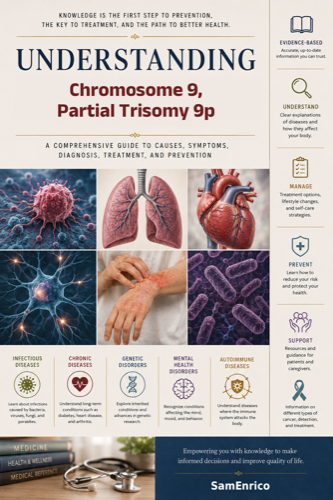 Understanding Chromosome 9, Partial Trisomy 9pBartley Eustolia$17.99
 How to Start a Hobby in ReadingBartley Eustolia$11.99
 Focalboard Trello Alternative GuideBartley Eustolia$12.99
 OEM Strategic Buyer ProfilesBartley Eustolia$12.99
You may also like
 Hong Kong Handover 1997Dunn Johnnie$11.99
 Zumba For Postnatal Recovery CourseNeal Christian$11.99
 Zumba for BeginnersLadner Nikia$11.99
 YouTube Comment Mining GuideHumes Pandora$12.99
 Worry Box MeditationCarlin Rudy$11.99
 Workplace Stress MeditationNguyen Lynn$11.99
 Workplace Stress and Sleep RepairHawley Ivory$11.99
 Workplace Perfectionism CureDelaney Jeffry$11.99
 Workplace Injustice Anger GuideWallen Isabelle$11.99
 Work Addiction and Burnout LinkGreenwood Ester$11.99
 Women in Yoga and WellnessBeattie Galina$11.99
 Women in Stand Up ComedyChun Evangeline$11.99