
Walking Meditation Workbook eBook
Weekly practices and reflections to deepen walking
by Briggs Teri
Weekly practices and reflections to deepen walking mindfulness.
Formats
Free sample
Chapter 1: The Feet Remember...--You have taken hundreds of millions of steps in your lifetime. Almost none of them have been conscious.Consider this for a moment. From the moment you first stood on unsteady legs in a living room somewhere, you have been walking. You have walked through hallways and parking lots, across kitchen floors and airport terminals, up staircases and down city blocks. Your feet have touched concrete, carpet, grass, sand, tile, gravel, mud, snow, and a thousand other surfaces.
And in nearly every single one of those steps, your mind was somewhere else.You were planning dinner while walking to work. You were replaying an argument while walking to your car. You were making a mental shopping list while walking the dog. You were worrying about a deadline while walking to a meeting. You were reliving an old regret while walking through a park on a beautiful day.
The feet kept moving, faithfully, dutifully, while the mind traveled to the past, the future, the imagined, the feared—anywhere but here.This is not a criticism. It is simply the human condition. The mind wanders because that is what minds do. Evolution did not design us to savor each step; it designed us to survive, which meant scanning for threats, planning for resources, and learning from past mistakes. A caveman who was fully absorbed in the sensation of his heel touching the ground would have been eaten by a saber-toothed tiger.
Your wandering mind is not a flaw. It is a survival adaptation that has outlived its usefulness in a world where the primary threat is no longer predators but chronic stress.And yet. Something is lost in this arrangement. Something precious.You have taken millions of steps without ever feeling the miracle of a single one.The Step You Never Felt Close this book for a moment. Just for ten seconds.
Stand up where you are. Take three steps. Any direction. Then sit back down.What did you notice?If you are like most people who do this exercise for the first time, the answer is: almost nothing. You felt the general fact of movement.
You might have noticed that the floor was hard or soft. But the specific, moment-by-moment sensations of the foot meeting the ground? The rolling weight from heel to ball to toe? The subtle shifts in the ankle, the knee, the hip? The textural differences between the left foot and the right foot?
Almost certainly not.This is not because you are unobservant. It is because your brain has learned, over decades, to compress the experience of walking. The brain receives billions of sensory signals every second. It cannot process all of them consciously. So it creates habits, shortcuts, and automated routines.
Walking became automated when you were about two years old. Your brain filed it under "background processes" and never looked back.Walking meditation is the process of looking back. It is the deliberate, patient, compassionate act of decompressing the automated step. It is the decision to feel what your body has been doing all along, behind the curtain of your distracted mind.This is simultaneously the simplest and most difficult thing you will ever attempt.It is simple because you already know how to walk. You need no special equipment, no app, no teacher, no retreat center, no cushion, no particular beliefs.
The path is literally under your feet at this very moment. You could begin this practice in the next sixty seconds.It is difficult because you will be fighting against several hundred million years of evolutionary programming. Your brain will want to wander. Your mind will want to plan. Your attention will want to escape into the past or the future.
The feet will feel boring. The step will feel repetitive. The whole enterprise will seem silly, pointless, or embarrassingly new-age.All of that is normal. All of that is expected. And all of that is exactly why you need this practice.The Gentle Return: Your Only Job Before we go any further, I need to teach you the single most important skill in this entire workbook.
It is a skill so simple that it can be stated in one sentence. It is also a skill so profound that it will take you the rest of your life to master.Here it is: When you notice that your mind has wandered from the step, you gently return your attention to the step. That is all. That is the entire practice.This is called The Gentle Return. We will use this phrase throughout the workbook.
When you see those words, you will know exactly what to do: notice the wandering without self-criticism, and then, as if you were guiding a small child or a beloved pet back to a safe place, bring your attention back to the anchor of the moment (this week, the feet).There are three hidden instructions inside The Gentle Return, and each one is essential.First: "When you notice." Most people read this as "if you notice." But the practice assumes that you will wander. Not might wander. Will wander. Constantly. Compulsively.
Every few seconds at first. This is not a sign of failure. It is the raw material of the practice. The noticing is the victory, not the failure. A single moment of noticing that you have wandered is a small enlightenment—a tiny crack in the trance of automaticity.Second: "Without self-criticism." This is where most meditation practices go wrong.
The beginner wanders, then notices, then thinks, "I'm so bad at this. My mind is a mess. I'll never get it right." That self-criticism is just another thought. It is the ego's way of hijacking the practice. When you notice self-criticism arising, you simply label it "judging" and return to the step.
No second arrow. No punishment. Just the return.Third: "Gently." The word "gently" is doing the most important work here. You are not yanking your attention back like a frustrated parent dragging a child by the arm. You are not scolding yourself for wandering.
You are simply, softly, kindly, turning the spotlight of awareness back to the feet. The gentleness is the practice. Forcefulness creates tension. Gentleness creates space.We will practice The Gentle Return hundreds of times in this chapter alone. By the end of this workbook, you will have practiced it thousands of times.
And still, on your deathbed, you may be practicing it. That is not a failure of the method. That is the method.The Anatomy of a Single Step Before you begin walking, let us look closely at what a step actually is. You have performed this action millions of times, but you have almost certainly never looked at it. Not really.A complete step, from one foot to the other, unfolds in approximately one second at normal walking speed.
In that one second, the following events occur:First, your heel lifts off the ground behind you. The calf muscle contracts. The Achilles tendon tenses. The toes, which were gripping for stability, begin to relax.Then, your leg swings forward. The hip flexor engages.
The knee bends and then straightens. The foot clears the ground by about an inch. The ankle adjusts its angle…
This is the end of the free sample. Get the eBook to keep going. Buy now
About this book
Details
- Author
- Briggs Teri
- Publisher
- SamEnrico
- Language
- English
- Genre
- Non-Fiction, Self-Help, Workbook
- Released
- 2026-06-07
- Pages (approx.)
- 143
- Available as
- eBook, Audiobook

Read better in the ZLOADR app
Your eBooks on your phone or tablet. Sign in with your SamEnrico account and start reading.
More by Briggs Teri
 Spouse Loss Finances GuideBriggs Teri$11.99
 Ghee Benefits HandbookBriggs Teri$11.99
 The Kuka Movement ConnectionBriggs Teri$11.99
 The Stress Dental HealthBriggs Teri$11.99
 Tension Headache ReleaseBriggs Teri$11.99
 Okinawa Yakuza PresenceBriggs Teri$11.99
 The Industrial Design Engineering GuideBriggs Teri$11.99
 Anki For Neurology ResidencyBriggs Teri$11.99
 The Last Ice Guardians: Antarctica’s Modern ShackletonsBriggs Teri$11.99
 The Last Broadcast: The Day the Radio DiedBriggs Teri$11.99
 Blood and Bandages: The Crimean War's Medical RevolutionBriggs Teri$11.99
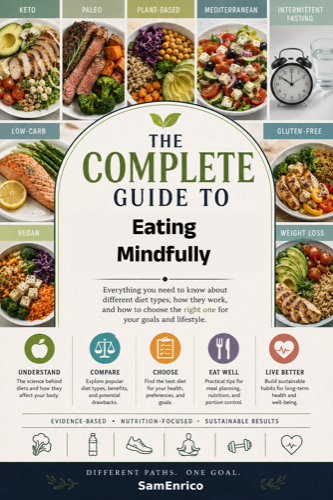 The Complete Guide to Eating MindfullyBriggs Teri$11.99
You may also like
 Hong Kong Handover 1997Dunn Johnnie$11.99
 Zumba For Postnatal Recovery CourseNeal Christian$11.99
 Zumba for BeginnersLadner Nikia$11.99
 YouTube Comment Mining GuideHumes Pandora$12.99
 Worry Box MeditationCarlin Rudy$11.99
 Workplace Stress MeditationNguyen Lynn$11.99
 Workplace Stress and Sleep RepairHawley Ivory$11.99
 Workplace Perfectionism CureDelaney Jeffry$11.99
 Workplace Injustice Anger GuideWallen Isabelle$11.99
 Work Addiction and Burnout LinkGreenwood Ester$11.99
 Women in Yoga and WellnessBeattie Galina$11.99
 Women in Stand Up ComedyChun Evangeline$11.99