
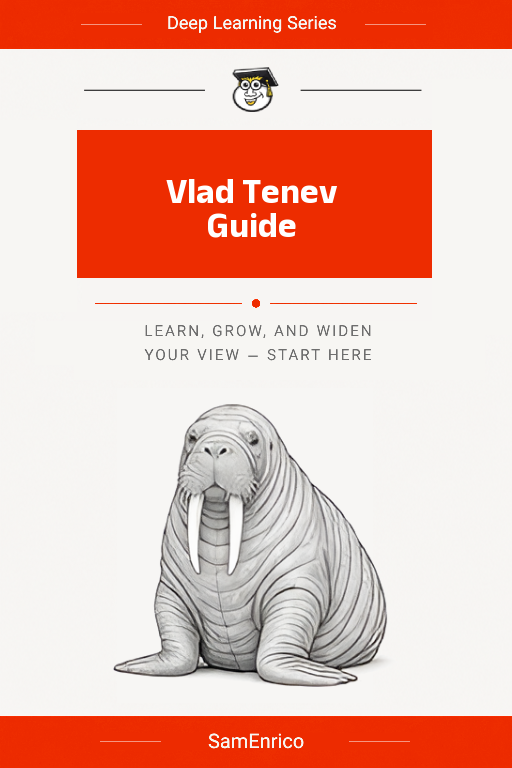
Non-FictionStrategic AtlasFintech Leadership
Vlad Tenev Guide eBook
Explore Robinhood CEO priorities: crypto expansion
Explore Robinhood CEO priorities: crypto expansion, regulatory management, PFOF scrutiny, and retail engagement cycles.
Formats
Free sample
Chapter 1: The Margin Call...--The number on the screen was $3,700,000,000, and Vlad Tenev could not look away.It was 3:47 AM on January 28, 2021. The conference room on the third floor of Robinhood's temporary Menlo Park headquarters smelled of burnt coffee and cold panic. A dozen executives stood in various states of exhaustion—shirts untucked, eyes bloodshot, phones buzzing with messages none of them had the courage to read. The only light came from a single laptop screen mounted on a rolling cart, casting a pale glow across faces that had aged years in the past seventy-two hours.The number on that screen represented the collateral the National Securities Clearing Corporation was demanding from Robinhood by 8:00 AM Eastern Time. The firm had 1billionincashandavailablecreditlines.Thegapwas1 billion in cash and available credit lines.
The gap was 1billionincashandavailablecreditlines.Thegapwas2.7 billion. The sun would rise in four hours. If Robinhood could not post the collateral, the clearinghouse would halt all of its trades. The app would go dark. Millions of retail investors would wake up to find their money frozen, their positions trapped, and their revolution dead on arrival."How is this possible?" Tenev asked.
His voice was quiet, almost calm. This was the mathematician in him—the part that believed every problem had a solution if you stared at it long enough.The head of clearing operations answered. "The volume, Vlad. It's unprecedented. Game Stop alone is settling more trades than the entire NYSE did in some years.
The NSCC's risk models are designed for normal markets. This isn't normal."No one in the room needed to be told that. They had all been watching the same screens for the past week. Game Stop had gone from 18to18 to 18to40 to 100to100 to 100to300 to $480. The hedge funds that had shorted the stock were bleeding billions.
The retail traders on Reddit's Wall Street Bets were celebrating like they had conquered Rome. And Robinhood—the app that had armed those traders with zero-commission weapons—was caught in the middle, its infrastructure groaning under a weight it was never designed to bear.Tenev picked up his phone and began making calls.The Birth of an Outlaw To understand how the son of Bulgarian immigrants ended up in that conference room at 3:47 AM, you have to go back to a different number entirely: $10.That was the average commission most online brokers charged per trade in 2012. For a young investor with 500toputinthemarket,that500 to put in the market, that 500toputinthemarket,that10 represented 2% of their capital—gone before they even made their first bet. For someone trading in small increments, commissions could wipe out any hope of profit before the trade began.Vlad Tenev was a mathematics and computer science student at Stanford when he first encountered this problem. He had grown up in the Washington, D.C.
suburbs, the son of a computer scientist father and a mathematician mother. Numbers were his first language. He saw the world in probabilities and payoffs, in expected values and risk-adjusted returns. And what he saw in the retail brokerage industry was a system designed to keep poor people poor.The incumbents—Charles Schwab, TD Ameritrade, E-Trade—had no incentive to lower commissions. Their customers were wealthy, older, and loyal.
The cost of acquiring a new customer was high, but the lifetime value was higher. They competed on service, research, and brand recognition. Price competition was beneath them.Tenev and his co-founder, Baiju Bhatt, saw an opening. They would build a brokerage with no commissions, no minimums, and no physical branches. The interface would be beautiful, mobile-first, and so simple that someone who had never bought a stock could do it in under thirty seconds.
They would make their money on interest from uninvested cash and from a little-known mechanism called Payment for Order Flow—PFOF—that allowed market makers to pay brokers for the right to execute their customers' trades.They called the company Robinhood, after the outlaw who stole from the rich and gave to the poor. The branding was deliberate, almost taunting. This was a declaration of war against the financial establishment.The establishment barely noticed.The Plumbing That Made Free Possible Most investors have never heard of Payment for Order Flow, and that's exactly how the industry likes it. PFOF is the hidden engine that powers zero-commission trading. Understanding it is essential to understanding everything that happened next.Here's how it works: When you click "buy" on Robinhood, your order doesn't go directly to the New York Stock Exchange or Nasdaq.
It goes to a market maker—a firm like Citadel Securities or Virtu Financial—that specializes in executing trades quickly and efficiently. The market maker finds someone who wants to sell the same stock at approximately the same price, matches the two orders, and captures the tiny difference between the bid and the ask price. That difference is called the spread.The spread is usually less than a penny per share. For a single trade, it's invisible. But across millions of trades, the spread adds up to billions of dollars in profit.
The market maker shares a portion of that profit with the broker that sent them the order. That portion is PFOF.Critics call PFOF a "hidden tax" because it means investors aren't getting the absolute best possible price on their trades. The difference is usually fractions of a penny—so small that no human would ever notice—but over time, those fractions compound. Proponents argue that PFOF is the only reason zero-commission trading exists at all. Without it, brokers would have to charge fees, and millions of small investors would be priced out of the market.Tenev fell squarely in the proponent camp.
In his telling, PFOF was a feature, not a bug. It democratized access. It lowered barriers. It allowed a twenty-two-year-old with $50 to buy a piece of Tesla without losing 20% of their capital to commissions. The fractions of a penny that the market maker captured were a small price to pay for inclusion.What Tenev underestimated—what almost everyone underestimated—was what would happen when the plumbing was tested at scale.The Gamification Machine While the industry obsessed over PFOF, Tenev was obsessed with something else entirely: the user experience.
He had studied the work of B.F. Skinner, the behavioral psychologist who discovered that variable reinforcement schedules create the strongest addictive responses. A rat that receives a food pellet every time it presses a lever will eventually stop pressing. A rat that receives a food pellet randomly—sometimes after one press, sometimes after ten, sometimes after fifty—will press the lever until it collapses from exhaustion.Tenev built that lever into Robinhood. The "swipe to trade" gesture was designed to feel satisfying, almost tactile, like pulling the arm of a slot machine.
The confetti animation that exploded across the screen after certain trades was a variable reward—users never knew when it would appear, so they kept trading to find out. The push notifications were timed to coincide with market volatility, when emotions were highest and rational decision-making was lowest.The results were extraordinary. The average Robinhood user checked the app seventeen times per day in 2020, compared to three times per week for the…
This is the end of the free sample. Get the eBook to keep going. Buy now
About this book
Details
- Author
- Sisk Brittaney
- Publisher
- SamEnrico
- Language
- English
- Genre
- Non-Fiction, Strategic Atlas, Fintech Leadership
- Released
- 2026-06-01
- Pages (approx.)
- 135
- Available as
- eBook, Audiobook

Read better in the ZLOADR app
Your eBooks on your phone or tablet. Sign in with your SamEnrico account and start reading.
More by Sisk Brittaney
 Affirmations For Grief HandbookSisk Brittaney$11.99
 Austria Consumer ReportSisk Brittaney$11.99
 Stress And Bone DensitySisk Brittaney$11.99
 Estate Planning for Retirement AccountsSisk Brittaney$11.99
 DBT for Borderline Personality DisorderSisk Brittaney$11.99
 Conan the Barbarian: The Sumo Warrior Who Conquered AmericaSisk Brittaney$11.99
 Content Authority Building in Niche MarketsSisk Brittaney$11.99
 Campaign Pause and Restart GuideSisk Brittaney$12.99
 Understanding Palsy CerebralSisk Brittaney$17.99
 How to Start a Perry Business (Beginners Guide)Sisk Brittaney$11.99
You may also like
 Hong Kong Handover 1997Dunn Johnnie$11.99
 Zumba For Postnatal Recovery CourseNeal Christian$11.99
 Zumba for BeginnersLadner Nikia$11.99
 YouTube Comment Mining GuideHumes Pandora$12.99
 Worry Box MeditationCarlin Rudy$11.99
 Workplace Stress MeditationNguyen Lynn$11.99
 Workplace Stress and Sleep RepairHawley Ivory$11.99
 Workplace Perfectionism CureDelaney Jeffry$11.99
 Workplace Injustice Anger GuideWallen Isabelle$11.99
 Work Addiction and Burnout LinkGreenwood Ester$11.99
 Women in Yoga and WellnessBeattie Galina$11.99
 Women in Stand Up ComedyChun Evangeline$11.99